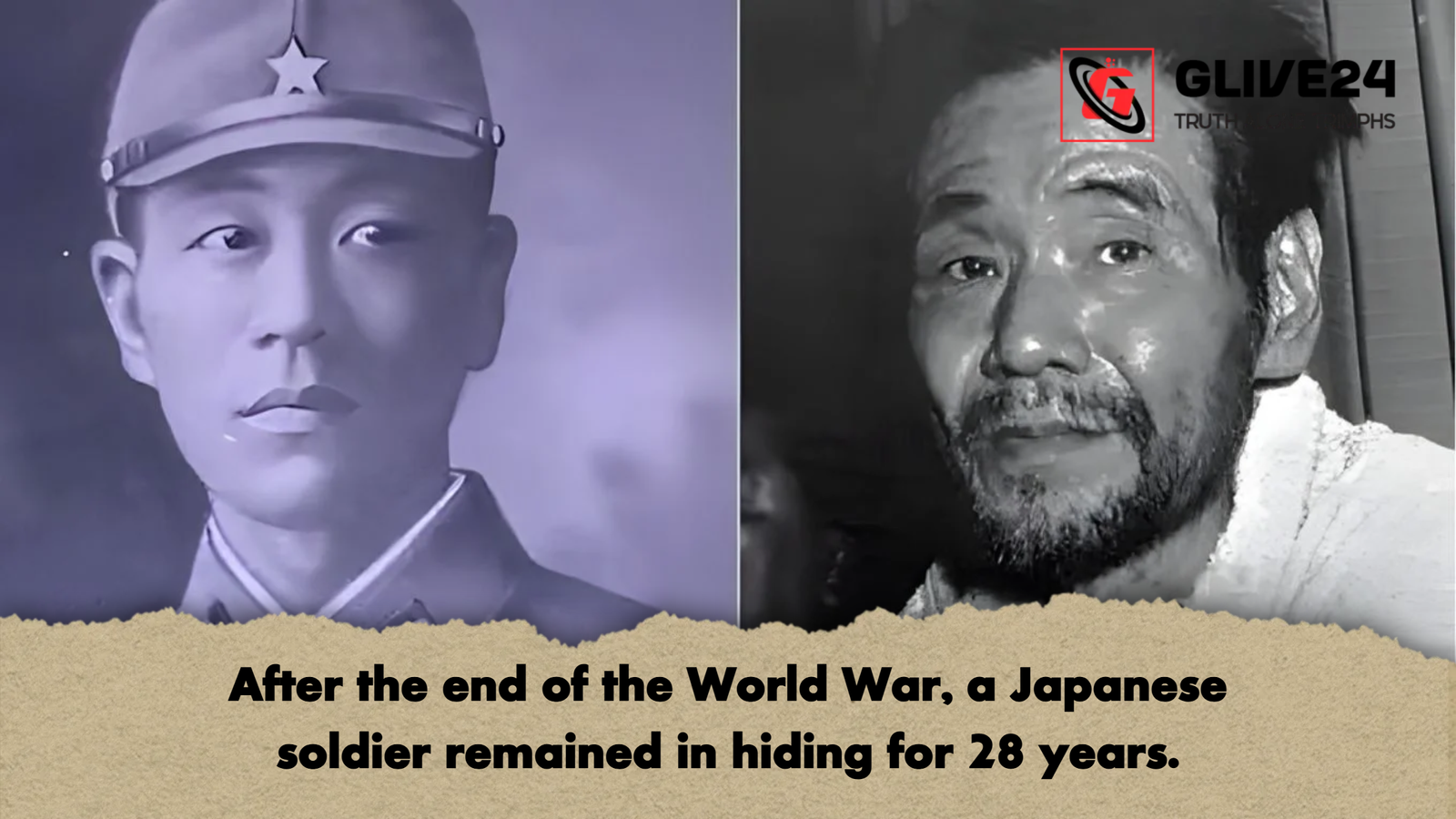
Amid the ferocious battles of the Pacific during the Second World War, the island of Guam became a theatre of intense conflict between Japanese and American forces. In July 1944, the overwhelming advance of the United States military shattered Japanese defensive positions across the island. It was at this moment that Lance Corporal Shoichi Yokoi, a soldier of the Imperial Japanese Army, retreated into the dense jungles of Guam, never to return to the world he once knew.
Yokoi’s decision to vanish into the jungle was driven by fear of capture. Initially, he had companions, but one by one, hunger, disease, and the harsh realities of the wilderness claimed them. By the catastrophic floods of 1964, Yokoi found himself utterly alone. Over the following eight years, he survived in near-total isolation, relying on frogs, river eels, and even poisonous rats for sustenance—a testament to his resourcefulness and sheer will to survive.
It was not until 24 January 1972 that local hunters finally discovered him. At the time, Yokoi was 57 years old, nearly three decades after the Second World War had ended. Speaking later, his grandnephew Ami Hatashin recalled: “Shoichi was terrified when rescued. He believed they would capture him, and he feared it would bring shame to himself and his family.”
Following his rescue, Yokoi returned to Japan, where he was honoured as a “war hero.” Yet, the rapidly modernising nation felt alien to him. Observing the new Japanese banknotes, he famously remarked, “This is worthless now,” reflecting the dissonance between his long isolation and the post-war world.
Yokoi’s remarkable story was chronicled in a book published by Hatashin in 1974 in Japanese, later translated into English in 2009 as Private Yokoi’s War and Life on Guam, 1944–1972. His experiences remain a profound testament to human endurance and psychological resilience.
The legacy of Yokoi’s time in the jungle is preserved in the Guam Museum, where traps he fashioned for eels, photographs, and other artifacts remain on display, offering new generations a window into one of the most extraordinary chapters of wartime survival.
Shoichi Yokoi: Life and Military Timeline
| Detail | Information |
|---|---|
| Birth | 31 March 1915, Shavari, Aichi Prefecture, Japan |
| Military Enlistment | 1941, Imperial Japanese Army |
| Deployment to Guam | 1944–1972 |
| Period of Isolation | 1964–1972 (8 years) |
| Rescue | 24 January 1972, Guam |
| Death | 22 September 1997, Nagoya, Japan |
Shoichi Yokoi’s survival is not merely a tale of wartime endurance; it stands as a monument to the resilience of the human spirit. His life reminds us that courage and ingenuity can endure even in the most extreme isolation, leaving an indelible mark on history.