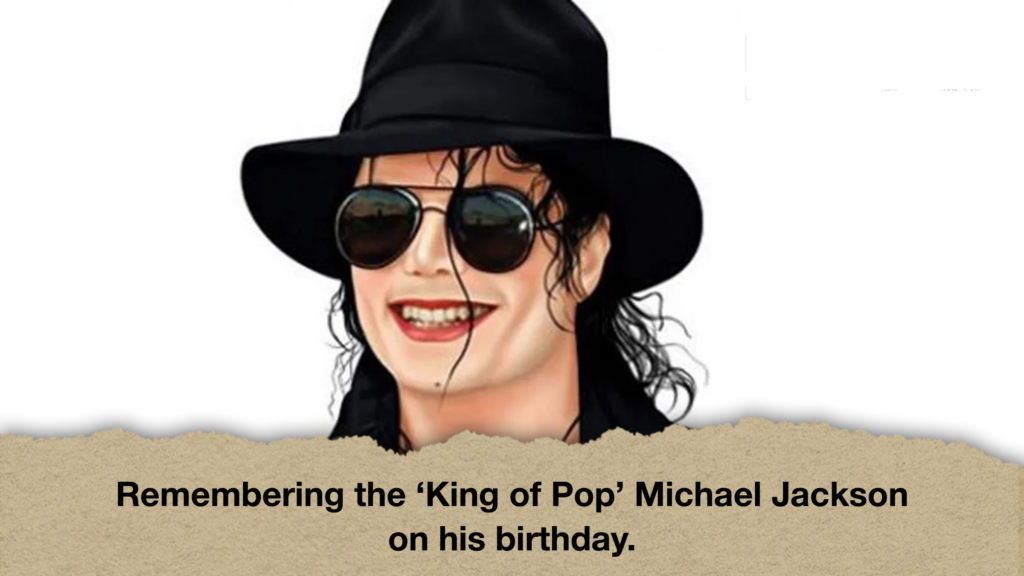
Some artists leave behind songs. A rare few leave behind an era. Michael Jackson belonged to the latter group. His influence stretched far beyond music, shaping dance, fashion, stage performance and the visual language of popular culture.
Born Michael Joseph Jackson on 29 August 1958 in Gary, Indiana, he entered the music industry as a child with his brothers in the Jackson 5. His extraordinary vocal ability and natural command of the stage quickly distinguished him from his peers. Even at a young age, Jackson displayed the precision, energy and charisma that would later become hallmarks of his career.
His transition into a solo career transformed him into one of the most influential entertainers in modern history. The 1979 album Off the Wall marked a major turning point, establishing him as a formidable solo performer. Three years later came Thriller, the album that would redefine his career and leave an enduring mark on global music.
Released in 1982, Thriller became a landmark in popular music. It spent 37 weeks at number one on the US Billboard 200 and helped Jackson make Grammy history at the 1984 awards, where he won eight Grammys in a single night. Songs such as Billie Jean, Beat It, Human Nature, P.Y.T., The Girl Is Mine, Wanna Be Startin’ Somethin’ and Thriller became international favourites, demonstrating the extraordinary breadth of the album.
Yet Jackson’s impact cannot be measured by record sales alone. He changed the way music was presented to audiences.
The Thriller music video, directed by John Landis, was particularly significant. Running for nearly 14 minutes, it combined music, choreography, acting, make-up, special effects and cinematic storytelling. Rather than treating a music video simply as a promotional tool, Jackson helped establish it as an ambitious visual art form in its own right.
Dance was another defining element of his artistry. Jackson’s performances were meticulously choreographed, yet they carried an extraordinary sense of spontaneity and excitement. His moonwalk, famously showcased during a performance of Billie Jean, became one of the most recognisable dance movements in popular culture.
His influence also extended beyond entertainment. As a Black artist who achieved unprecedented international success, Jackson became a major figure in the globalisation of popular music. His visibility and commercial reach helped challenge barriers within mainstream entertainment and influenced generations of singers, dancers and performers who followed.
Jackson was also associated with humanitarian causes. His involvement in We Are the World, recorded in 1985 to raise funds for famine relief in Africa, reflected his engagement with charitable efforts. His music itself often carried themes of compassion, social responsibility and personal reflection, particularly in songs such as Heal the World and Man in the Mirror.
His life, however, was far from uncomplicated. Extraordinary fame brought intense media scrutiny, controversies, allegations and profound pressures in his personal life. The attention surrounding Jackson frequently extended well beyond his music, creating a complicated public image that continues to generate discussion.
On 25 June 2009, Jackson died at the age of 50. His death triggered an extraordinary worldwide reaction. Fans gathered, broadcasters interrupted regular programming and his songs returned to prominence across different parts of the world. For millions of admirers, the loss felt deeply personal.
But Jackson’s artistic life did not end with his death.
His recordings continue to reach younger audiences. His choreography remains a reference point for performers. His music videos are still studied for their combination of sound, movement and visual storytelling. Songs such as Billie Jean, Thriller, Man in the Mirror and Heal the World continue to be heard across generations.
That enduring appeal is perhaps the clearest measure of his legacy. Trends change, musical styles evolve and new stars emerge, but certain artists remain part of the cultural vocabulary long after they are gone.
Michael Jackson is one of them.
His voice may have fallen silent, but his songs remain. His footsteps may have stopped, but his dance continues to be imitated. The stage lights that once followed him have gone dark, yet the performances remain alive through recordings and memory.
His birthday, 29 August, offers an opportunity to remember not only the superstar, but also the artist who continually pushed the boundaries of what a singer, dancer and performer could achieve.
Michael Jackson is no longer here in person. Yet he remains present wherever his music is played, wherever a dancer attempts the moonwalk, wherever a performer studies his stagecraft, and wherever a listener discovers his songs for the first time.
Some stars belong to their time.
Michael Jackson became part of the history of music itself.
He is gone, but his music remains.
He is absent, but his influence endures.
He is no longer on the stage, yet the world still hears him.
That is the legacy of Michael Jackson—the King of Pop.