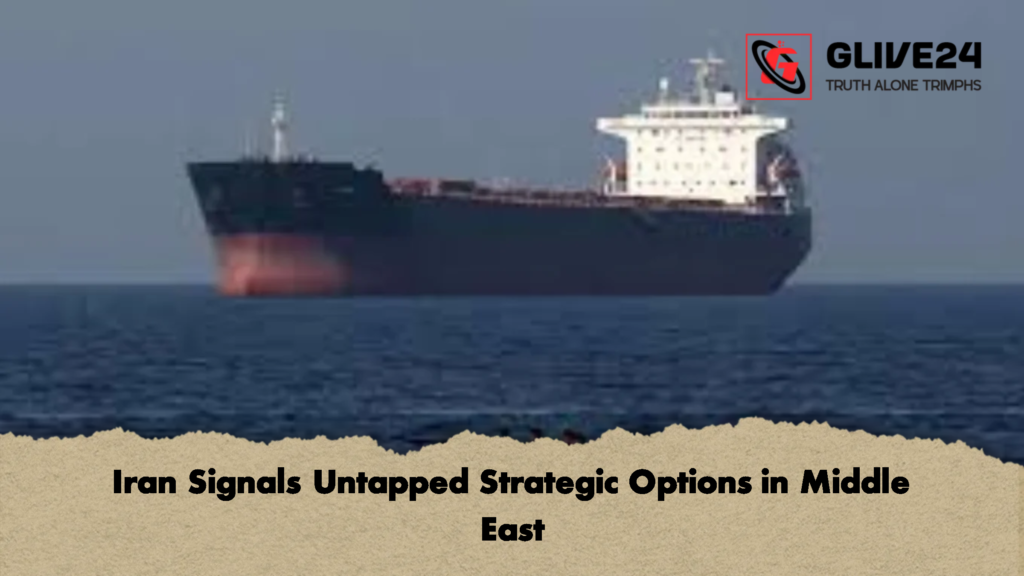
Amid rising tensions across the Middle East, Iran has indicated that it retains multiple strategic “cards” to exert pressure over its adversaries, according to Hamid Reza Azizi, a visiting fellow at the German Institute for International and Security Affairs. His remarks underscore Tehran’s cautious yet resolute approach as regional hostilities intensify.
Historical Context and Strategic Capabilities
Azizi recalled a 2018 statement by then-Iranian President Hassan Rouhani, who asserted that Tehran possesses “not just one mechanism, but many more” to safeguard national interests and project influence. At the time, analysts interpreted this as a reference to Iran’s multi-layered strategic capabilities, spanning military, economic, and diplomatic dimensions.
In the current context, with regional crises unfolding, Iran appears to be signalling that it still holds a variety of tools and contingencies to shape outcomes in its favour.
Strategic Focus on Maritime Chokepoints
Central to Iran’s leverage are critical maritime passages, particularly the Bab-el-Mandeb Strait, a vital artery for international shipping. Azizi indicated that Iran could exert influence indirectly via allied forces, such as the Houthi rebels in Yemen, by threatening or disrupting these crucial shipping lanes.
| Strategic Asset | Potential Leverage | Significance |
|---|---|---|
| Bab-el-Mandeb Strait | Indirect control via Houthi forces | Key chokepoint for global oil and LNG shipments |
| Strait of Hormuz | Military or strategic threats | Critical for nearly 20% of global oil exports |
| Kharg Island | Threat to oil export infrastructure | Major Iranian oil terminal vulnerable to attack |
| Allied proxies | Regional influence | Enhances Iran’s ability to apply asymmetric pressure |
Escalation Risks
Azizi highlighted concerns about a potential limited U.S. ground operation targeting Iran, particularly the Kharg Island oil export hub. In response, Tehran has suggested that any such action could trigger countermeasures targeting a wider network of energy facilities across the region.
“Iran is signalling that any direct military intervention may prompt counteractions affecting the region’s energy infrastructure,” Azizi explained, emphasising Tehran’s reliance on a combination of conventional and asymmetric strategies to protect national interests and deter adversaries.
Regional and Global Implications
Analysts note that Iran’s strategic signalling serves multiple objectives: deterring foreign intervention, consolidating domestic political support, and asserting regional influence. The developments are being closely monitored by global energy markets, as disruptions in oil and LNG shipments could drive price volatility and exacerbate inflationary pressures worldwide.
The situation highlights the fragility of Middle Eastern stability, where even limited military or proxy actions could have disproportionate effects on international trade and energy security. Experts stress that careful diplomacy, coupled with robust defence preparedness, is essential to prevent miscalculations and contain escalating tensions.