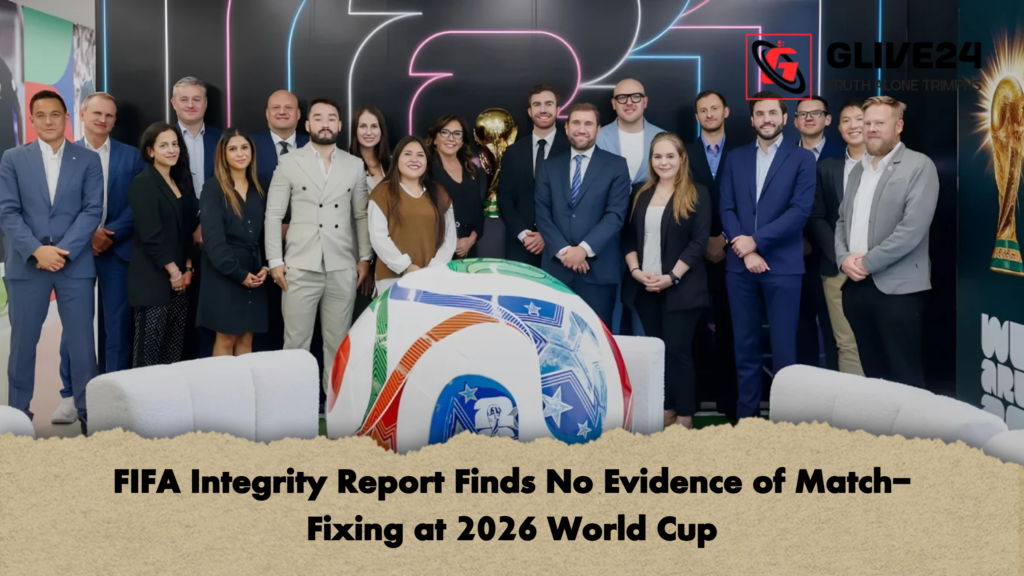
FIFA has confirmed that no instances of match-fixing, illicit gambling, or match manipulation were detected throughout the entirety of the 2026 FIFA World Cup.
The 23rd edition of football’s flagship tournament made history as the largest ever staged, featuring 48 national teams and spanning 104 matches over more than a month of intense competition. The action concluded on 19 July with a thrilling final between Spain and Argentina. Following the conclusion of the event, the governing body’s dedicated Integrity Task Force published its comprehensive evaluation report, giving the tournament a completely clean bill of health.
Established to safeguard FIFA competitions against the threat of match manipulation, the specialized task force maintained round-the-clock surveillance across all fixtures. According to their official post-tournament summary, rigorous data collection and real-time analysis uncovered no suspicious betting patterns or integrity threats during the event.
Throughout the competition, FIFA centrally gathered information sent by task force members, including betting monitoring reports, intelligence feeds, and alerts generated through existing reporting mechanisms. This centralized data was systematically processed, evaluated, and shared amongst committee experts according to strict operational protocols. The collaborative framework ensured that any potential red flags could be assessed rapidly, efficiently, and with total coordination. Every participating entity contributed through its respective area of expertise.
Expressing satisfaction with the outcome, Liam Rich, Senior Integrity Manager at FIFA, commended the multi-agency operation for its vigilance. He pointed out that the FIFA Integrity Task Force had constructed a robust framework for intelligence sharing, risk assessment, and rapid response ahead of the 2026 tournament. He extended his gratitude to all members for their skill and commitment, adding that FIFA looks forward to continuing this vital collaboration across future football competitions.
The extensive oversight body brought together an unprecedented coalition of international stakeholders from sport, law enforcement, and integrity monitoring. Participating continental bodies included the Asian Football Confederation (AFC), the Confederation of African Football (CAF), CONMEBOL, UEFA, CONCACAF, and the Oceania Football Confederation (OFC). Host nation interests were represented by the football federations of the United States, Canada, and Mexico.
Law enforcement and regulatory bodies formed a crucial layer of defence, featuring the FBI, Interpol, the United Nations Office on Drugs and Crime (UNODC), the Council of Europe, the Group of Copenhagen, and the US Department of Justice. Complementing these were specialized sports integrity organizations and data monitoring firms, including Sportradar, the International Betting Integrity Association (IBIA), United Lotteries for Integrity in Sports, IC360, and Genius Sports. Regional watchdog agencies such as Sport Integrity Canada, Competition Bureau Canada, and Mexico’s Federal Economic Competition Commission also provided localized expertise alongside independent industry specialists.