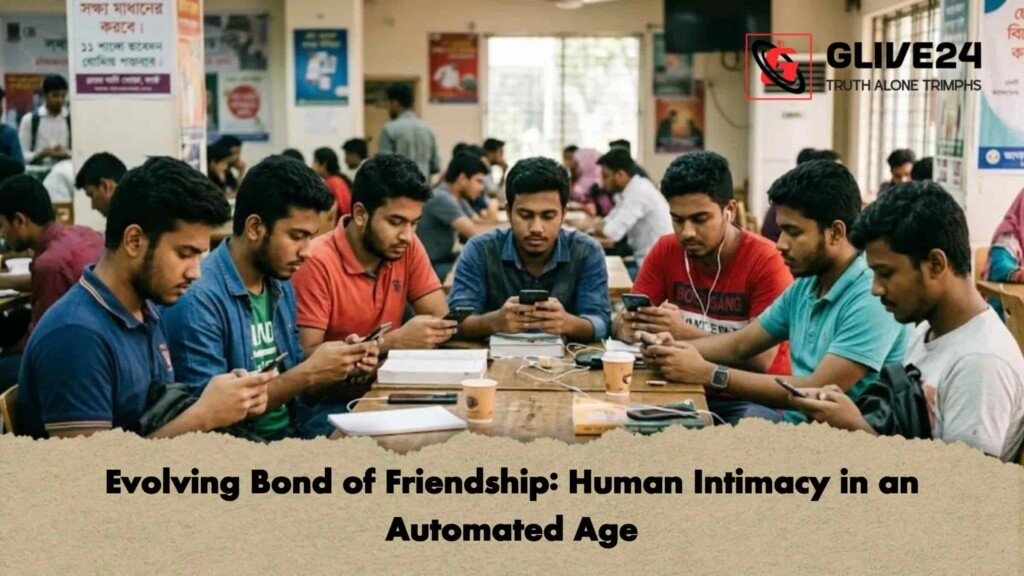
Across bustling city cafés, the familiar atmospheric hum of conversations competes with the soft glow of smartphone displays. Timelines and messaging platforms are inundated with digital greetings, curated photo albums, and algorithmic memories, heralding the arrival of Friendship Day. What originated as a 1930 commercial initiative by Joyce Hall, founder of Hallmark Cards, eventually gained formal recognition from the United Nations in 2011 as the International Day of Friendship. Whilst the UN officially marks the event on 30th July, nations such as India and Bangladesh traditionally observe it on the first Sunday of August. Standing amidst the hyper-connected, technology-driven landscape of 2026, the occasion invites a crucial interrogation: has the intrinsic warmth of human fellowship been subtly eroded by artificial intelligence and automated engagement?
The contrast with the pre-digital era of the 1990s is strikingly sharp. Prior to the ubiquity of personal computing and mobile technology, relationships matured through physical presence, shared spaces, and sustained attention. Emotional closeness was cultivated through simple, tangible moments: the distinctive chime of a bicycle bell at the neighbourhood corner, the communal scramble to answer a single domestic landline, or the patient wait for a hand-written letter. The night before Friendship Day involved hours spent diligently weaving coloured threads into handmade tokens of affection. When disagreements occurred, the modern escape routes of an ‘instant block’ or ‘unfollow’ did not exist; resolving conflicts demanded direct conversation and emotional maturity. That era of limited medium required patience, which ultimately built durable, lifelong companionships.
In the present era, extensive technological integration has fundamentally reshaped social dynamics. Paradoxically, while humanity has achieved an unprecedented degree of global connectivity, it is simultaneously encountering a profound wave of social isolation. Spontaneous physical gatherings have gradually been replaced by AI-augmented messaging services, automated video feeds, and algorithmically targeted interaction. The typical social media user today may maintain an expansive network of hundreds or thousands of virtual contacts, yet this numerical breadth often masks a pervasive loneliness. The availability of a trusted confidant during times of personal or emotional hardship is increasingly rare. Highlighting this shift, the World Health Organization (WHO) has formally identified global loneliness as a serious public health concern, noting that the physiological impact of chronic social isolation is comparable to smoking 15 cigarettes daily.
As personal obligations expand with age, professional commitments and family duties naturally limit leisure time. Historically, an authentic friendship served as a vital emotional anchor during stressful periods. By 2026, however, constant connectivity has frequently reduced social obligations to automated birthday notifications, rapid emoji reactions, and superficial interactions. Digital graphics and virtual tokens, however convenient, cannot replace the psychological security derived from unhurried, face-to-face dialogue or an empathetic voice on the phone.
At the same time, technological progress offers undeniable structural advantages. Unlike the late twentieth century, geographic distance no longer necessitates the permanent loss of contact. High-definition video conferencing allows individuals across continents to converse in real time, while digital networks enable rapid mobilization of financial and practical assistance during sudden emergencies.
Despite commercial evolution and shifting platforms, the foundational essence of friendship remains unchanged: an authentic, judgment-free space grounded in mutual trust. Beyond the metrics of digital followings and screen-based validation, meaningful connection ultimately relies on deliberate, heartfelt outreach—such as reaching out to an old acquaintance with a simple, direct enquiry: “How are you doing?” In an increasingly automated world, that genuine human gesture transcends digital barriers and preserves the vital essence of true fellowship.