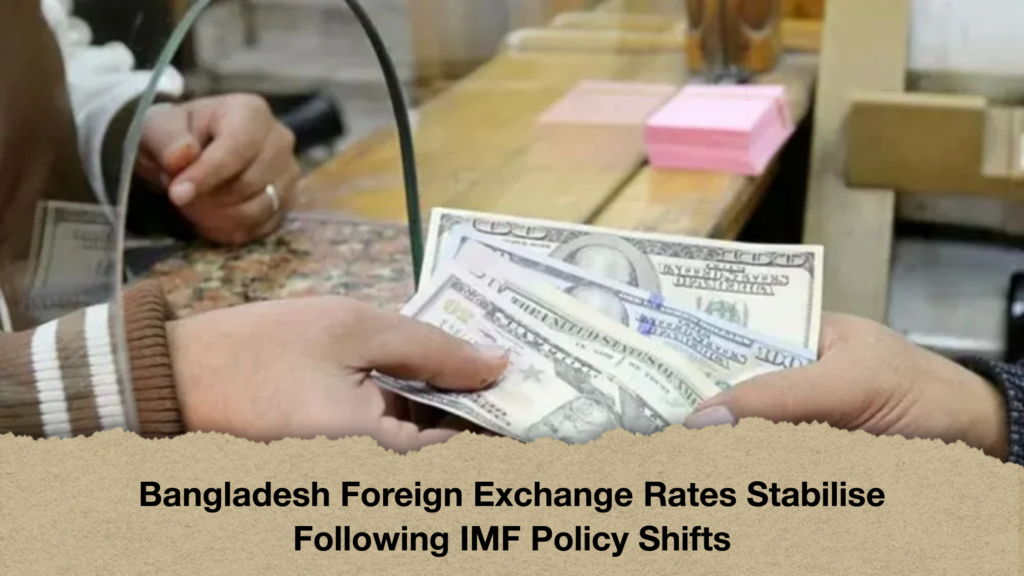
Bangladesh’s international trade landscape continues to expand in tandem with the global economy. To sustain this commercial momentum, foreign exchange rates fluctuate continuously according to market dynamics. Despite adequate currency reserves within the domestic market, the implementation of conditions set by the International Monetary Fund (IMF) last month prompted a gradual depreciation of the taka and a corresponding rise in the value of the US dollar. Consequently, the average interbank exchange rate for the dollar climbed by approximately one taka over the course of the previous month. However, market indicators show that the greenback has since retreated from those recent peaks.
Data from the central bank and commercial institutions indicate that the maximum and minimum interbank rates for the dollar held steady at 122.85 taka at the beginning of last month. The rate subsequently climbed to reach a ceiling of 123.82 taka before returning to 122.85 taka. Financial analysts attribute this stabilisation to rigorous central bank oversight and a robust inward flow of remittances, which have successfully narrowed the gap between official exchange rates and open-market valuations. This downward correction offers a welcome measure of relief to domestic importers and commercial enterprises navigating foreign procurement costs.
The official minimum exchange rates for major foreign currencies against the Bangladeshi taka are detailed below.
| Foreign Currency | Exchange Rate in Bangladeshi Taka (BDT) |
| US Dollar | 122.85 |
| Euro | 142.70 |
| Pound Sterling | 166.42 |
| Canadian Dollar | 88.66 |
| Australian Dollar | 88.03 |
| Chinese Yuan | 18.28 |
| Singapore Dollar | 96.61 |
| Indian Rupee | 1.29 |
| Malaysian Ringgit | 30.42 |
| Saudi Riyal | 32.54 |
| Qatari Riyal | 33.62 |
| Kuwaiti Dinar | 397.17 |
| UAE Dirham | 33.43 |
Note: Foreign exchange rates are subject to continuous market fluctuations.