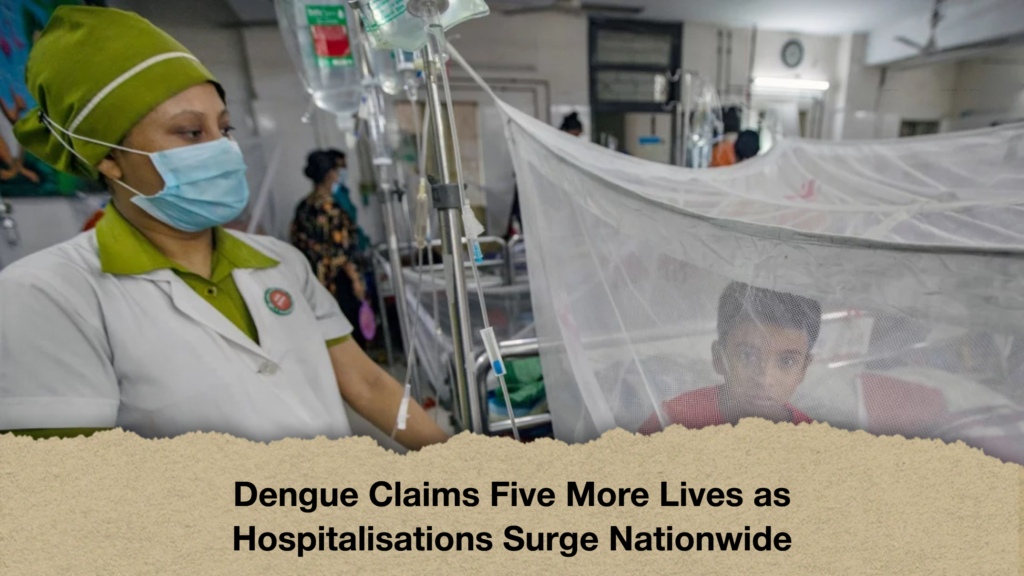
Five more people have succumbed to Aedes mosquito-borne dengue fever across Bangladesh over the past 24 hours, bringing the total death toll from the disease to 102 this year.
The latest figures were released on Tuesday in a regular bulletin issued by the Directorate General of Health Services. According to the health directorate, 1,324 new patients were admitted to hospitals nationwide within the same 24-hour reporting period. This latest influx pushes the cumulative number of hospitalised dengue patients seeking medical treatment this year to 37,170.
A geographic breakdown of the newly admitted patients highlights widespread transmission across multiple administrative divisions, with the Dhaka division recording the highest number at 578 admissions. Following the capital region, the Khulna division registered 246 new cases, while Chattogram recorded 139. Other regions also reported significant numbers, including 121 admissions in Barishal, 114 in Rajshahi, 87 in Mymensingh, 34 in Rangpur, and 5 in Sylhet. These statistics indicate that dengue transmission remains active across nearly every part of the country, though medical facilities in and around Dhaka continue to bear the heaviest burden.
The sharp rise in single-day hospitalisations places immense strain on medical infrastructure, requiring hospitals in densely populated urban centres to bolster their emergency capacities. Healthcare professionals consistently emphasise that early detection and prompt medical intervention are vital to preventing severe complications, such as dengue haemorrhagic fever or dengue shock syndrome, which can rapidly prove fatal if left unmanaged. Patients experiencing persistent high fever, severe abdominal pain, persistent vomiting, bleeding gums, or extreme lethargy are strongly advised to seek immediate hospital care rather than relying on self-medication or home remedies.
Public health authorities, city corporations, and local government bodies routinely conduct anti-larval drives, fogging operations, and awareness campaigns to destroy mosquito breeding grounds. However, experts stress that municipal efforts alone are insufficient without active community participation. Citizens bear a shared responsibility to inspect their homes and surrounding premises regularly, ensuring that water is not allowed to accumulate in stagnant pools. The Aedes aegypti mosquito thrives in artificial containers holding clean, stagnant water—such as discarded plastic containers, flower pots, construction sites, and roof gardens—making urban environments exceptionally vulnerable during monsoon and post-monsoon periods.
Installing window screens, using mosquito nets day and night, and applying insect repellents are practical preventative measures recommended by medical practitioners to safeguard families against vector-borne infections. Furthermore, isolating an infected individual under a mosquito net helps prevent the virus from spreading further through uninfected mosquitoes. As seasonal transmission patterns fluctuate with changing weather conditions, sustained vigilance and a coordinated response from both healthcare providers and the general public remain essential to mitigating the annual toll of this preventable disease.