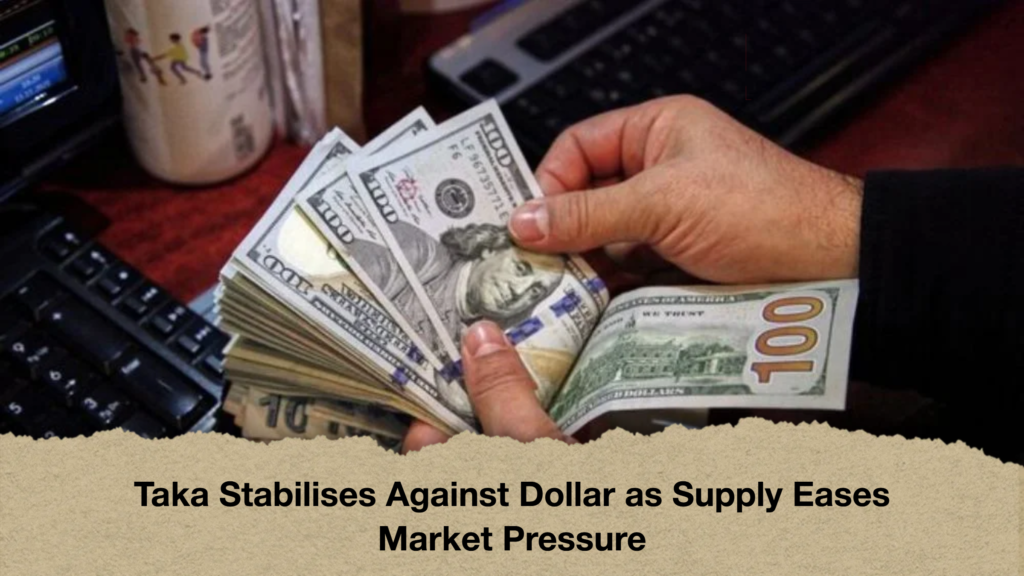
Bangladesh’s foreign exchange market has shown marked signs of steadying, with the Bangladeshi Taka regaining lost ground against the US Dollar following weeks of upward pressure. On Monday, 7 September 2026, the US Dollar was trading at 122.76 Taka in the interbank market, signaling a gradual retreat to its previous price baseline after a temporary surge.
Data compiled from Bangladesh Bank and commercial lenders shows that interbank Dollar rates were holding around 122.85 Taka at the start of July. Monetary adjustments aligned with the International Monetary Fund (IMF) support programme subsequently pushed rates to a peak of 123.82 Taka. The recent correction down to 122.76 Taka reflects a balanced foreign exchange supply, driven by healthy remittance flows through official banking channels and vigilant central bank oversight.
For Bangladesh’s import-reliant economy, this relative calm brings immediate practical benefits. Businesses settling international trade obligations for raw materials, industrial machinery, and essential commodities face reduced currency conversion costs, helping mitigate imported inflation across domestic supply chains.
According to baseline data released by Bangladesh Bank and commercial financial institutions on 7 September 2026, foreign currency exchange rates stand as follows:
| Currency | Value in Bangladeshi Taka (BDT) |
| US Dollar (USD) | 122.76 |
| Euro (EUR) | 142.56 |
| British Pound (GBP) | 165.98 |
| Canadian Dollar (CAD) | 88.68 |
| Australian Dollar (AUD) | 88.41 |
| Singapore Dollar (SGD) | 96.88 |
| Kuwaiti Dinar (KWD) | 396.94 |
| Qatari Riyal (QAR) | 33.71 |
| UAE Dirham (AED) | 33.46 |
| Saudi Riyal (SAR) | 32.97 |
| Malaysian Ringgit (MYR) | 30.39 |
| Chinese Yuan (CNY) | 18.30 |
| Indian Rupee (INR) | 1.29 |
Rates represent minimum baseline values and remain subject to intraday fluctuations across authorised institutions.
Financial analysts note that while central bank policy realignments caused brief volatility, robust remittance inflows continue to anchor market sentiment. As long as supply matches ongoing import demands, the exchange rate is expected to remain manageable, though businesses conducting large transactions are advised to check real-time institutional rates before executing trades.