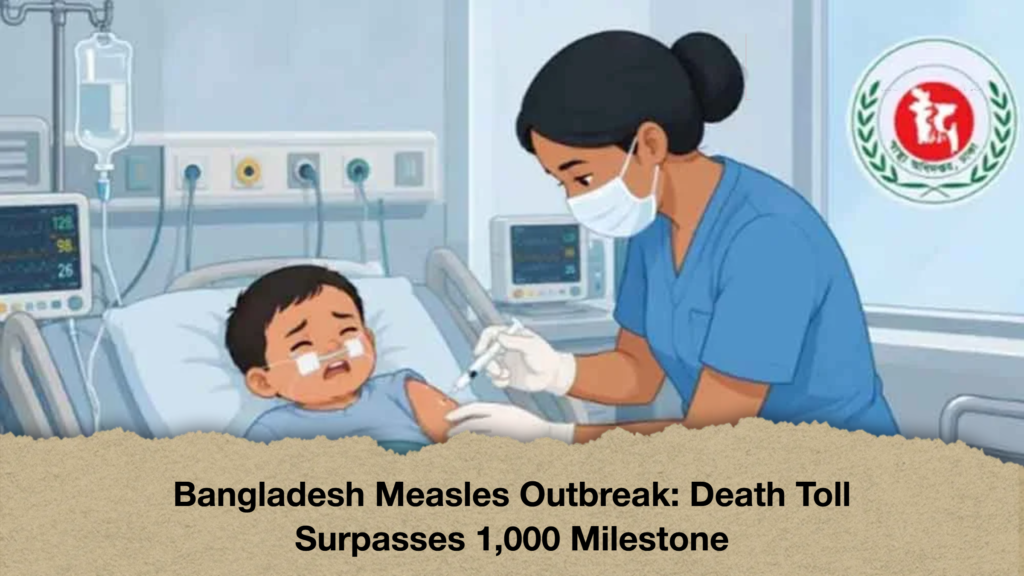
Health authorities in Bangladesh have recorded five additional fatalities from measles and related symptoms over the past 24 hours, bringing the overall nationwide death toll past a grim threshold. Figures released on Saturday, 19 September, by the Directorate General of Health Services (DGHS) show that 1,053 people have died from confirmed or suspected measles since systematic tracking began on 15 March this year.
During the same 24-hour window, clinicians across the country identified 1,020 new confirmed and symptomatic cases. Data logged by the DGHS demonstrates a distinct split between laboratory-confirmed fatalities and clinical observations: 101 individuals have died from confirmed measles cases, whilst 952 succumbed after displaying characteristic clinical symptoms. The overwhelming majority of recorded deaths have thus occurred among suspected cases awaiting full viral isolation.
The trajectory of the outbreak highlights severe operational pressure on the national health sector. Between 15 March and 19 September, local medical centres registered 178,666 suspected infections. Targeted diagnostic testing subsequently confirmed measles in 20,474 of those patients.
Hospital admissions reflect the widespread footprint of the illness. Across all districts, 157,556 individuals showing symptoms of measles required formal hospitalisation during this period. Medical staff successfully treated and discharged 151,395 individuals, providing relief to families amidst an escalating public health challenge.
Since mid-March, the DGHS has published periodic epidemiological bulletins to capture the dynamics of the outbreak. These reports separate laboratory-verified cases from broad clinical diagnoses, providing a clear analytical baseline for field epidemiologists and health policy coordinators monitoring the situation nationwide.
Measles remains an exceptionally contagious airborne disease caused by a virus in the paramyxovirus family. It spreads rapidly through coughing, sneezing, or direct contact with infected nasal secretions. Early symptoms include high fever, runny nose, cough, and red eyes, followed several days later by a distinct maculopapular skin rash. In severe instances, particularly among malnourished young children or individuals with compromised immune systems, the virus leads to serious complications such as pneumonia, encephalitis, severe diarrhoea, and permanent blindness.
Preventing large-scale outbreaks relies almost entirely on achieving high coverage with two doses of the measles-rubella vaccine. Public health experts stress that maintaining routine childhood immunisation schedules, expanding active community surveillance, and ensuring rapid access to supportive care are vital measures to curb transmission and lower mortality rates in affected communities.