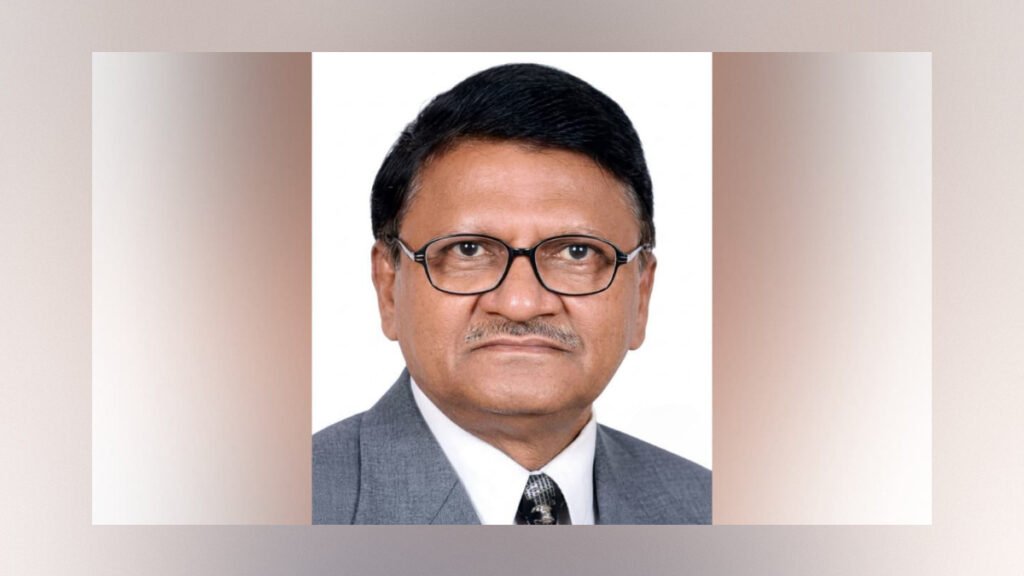
Some figures in the world of Bangla language and literature do more than write books or teach students. They help a generation understand its time, question its society and reflect on the relationship between people and the state. Professor Abul Quasem Fazlul Huq was one such intellectual figure, whose long career encompassed teaching, essay writing, research, literary criticism, translation, social analysis and political thought.
At the heart of his intellectual work were questions about people, society, the state, morality, culture and the future of Bangladesh. Across decades of writing and teaching, he examined the country’s social and political realities while remaining closely engaged with Bangla language and literature.
Early life and education
Abul Quasem Fazlul Huq was born on 30 September 1940 in a village in Pakundia, Kishoreganj. His parents were Muhammad Abdul Hakim and Jahanara Khatun.
He passed his matriculation examination from Mymensingh Zilla School in 1959 and completed his higher secondary education at Ananda Mohan College in 1961. He then entered the Department of Bengali at the University of Dhaka, where he obtained his honours degree in 1965 and master’s degree in 1966.
His years at the University of Dhaka were also formative in shaping his intellectual outlook. He came into contact with prominent teachers and thinkers of the period, and the university’s academic environment influenced the development of his approach to literature, society and public life.
After completing his studies, he joined the Department of Bengali at the University of Dhaka. He spent nearly four decades teaching there and eventually served as chairman of the department. Over the years, many of his students went on to establish themselves in literature, journalism, education and other professions.
Teaching as a lifelong intellectual pursuit
For Huq, teaching was not simply a profession. It was closely connected with his wider commitment to knowledge and intellectual inquiry. He sought to encourage students to look beyond textbooks and examine society, history, culture, politics and human life through questioning and critical thought.
His essays were known for their analytical and argumentative character, while also reflecting a concern for human values. He viewed social progress as something broader than economic development alone, giving importance to moral, cultural and intellectual growth.
This perspective can be seen throughout his writings, where questions of morality, politics, culture, the middle class, the state and Bangladesh’s future repeatedly emerge.
A strong voice for the Bangla language
The status and use of Bangla was another important area of his public engagement. As convener of the State Language Bangla Protection Committee, he worked for the wider use and recognition of the language.
For Huq, Bangla was more than a means of communication. It was closely connected with cultural identity, heritage and the wider national life of Bengalis. His sustained research and writing on Bangla language and literature also established him as a distinctive voice in the country’s literary and cultural sphere.
The intellectual project of Lokayat
From 1982, Huq edited Lokayat, a periodical devoted to intellectual discussion. Through the publication, he continued discussions on society, philosophy, politics, literature and culture.
He also wrote regularly for newspapers and periodicals. His articles examined social problems, people’s struggles and questions concerning the state and politics. Rather than limiting his attention to literary subjects, he frequently connected literature and culture with wider social realities.
From 2000 to 2013, he served as president of Swadesh Chinta Sangha. His involvement with the organisation was also linked to his longstanding interest in Bangladesh’s society and the future of the state.
Understanding Bangladesh through political thought
Understanding Bangladesh through its history, society, politics, culture and people’s aspirations was a central concern of Huq’s intellectual work.
He did not regard politics simply as a contest for power. His writings addressed the character of the state, morality, social justice, the role of the middle class and the aspirations of ordinary people.
These concerns are reflected in books including Rashtrachintay Bangladesh, Rajneeti O Sanskriti: Sambhabanar Nabodiganta, Noitikota: Shreyoniti O Durniti and Manusher Swarup.
His other notable works include Muktisangram, Kaler Jatrar Dhwani, Unish Shataker Madhyashreni O Bangla Sahitya, Rajneeti O Darshan, Sahityachinta, Bangladesher Rajnitite Buddhijibider Bhumika, Abakshoy O Uttaran, Sahitya O Sanskriti Prasange, Adhunikatabad O Jibananander Jibanonktha and Prachurye Riktota.
The range of these works illustrates the breadth of his interests. Literature, philosophy, politics, morality and culture formed interconnected parts of his wider intellectual engagement with society.
Presidency of Bangla Academy
Huq remained involved in intellectual and cultural affairs during the later years of his life. On 27 October 2024, he was appointed president of Bangla Academy.
The appointment came after decades of involvement with Bangla language, literature and cultural discourse. Even in his final years, he continued to speak on education and society and remained associated with intellectual and cultural discussions.
The loss of his son Dipan
Huq’s personal life was marked by a profound tragedy. His son, Faisal Arefin Dipan, was the owner and publisher of Jagriti Prokashani. Dipan was killed in Dhaka on 31 October 2015.
The death was a devastating loss for the family. Despite the tragedy, Huq continued his intellectual work, writing and engagement with questions concerning society, politics, literature and human life.
His daughter, Suchita Sharmin, is a teacher at the University of Dhaka.
Recognition and honours
Huq received the Bangla Academy Literary Award in 1981 in recognition of his contribution to literature and intellectual life. He was also honoured with the Bangladesh Lekhak Shibir Award, Alaol Literary Award and Alokto Literary Award.
Yet his public identity extended beyond formal honours and institutional positions. His decades of teaching, extensive body of writing and sustained engagement with social and political questions formed the principal basis of his intellectual career.
His final journey
Professor Abul Quasem Fazlul Huq died on the afternoon of 5 July 2026 at the age of 85. He was taken to hospital after falling suddenly ill and was pronounced dead by doctors.
The following day, people from different sections of society paid their final respects to him at Bangla Academy, the Central Shaheed Minar and the University of Dhaka. He was later buried at the Mirpur Martyred Intellectuals Cemetery.
His death brought to an end the life of a teacher who had influenced generations of students, a writer who left behind an extensive body of work, and a thinker whose writings addressed some of the enduring questions surrounding Bangladeshi society and public life.
His intellectual legacy lies not only in the subjects he discussed but also in the questions he raised: what kind of state should people seek, what kind of society should they build, and what values should shape human life?
Those questions remain relevant beyond the period in which he wrote them. His books provide readers with material for examining Bangladesh’s literature, culture, politics, society and ideas from different perspectives.
On 30 September 2026, his birth anniversary, remembering Abul Quasem Fazlul Huq means looking back at a life devoted to teaching, writing and intellectual inquiry. It is also an opportunity to revisit the works through which he sought to understand people and society.
A person’s life eventually comes to an end, but ideas can continue to travel through books, classrooms and readers. Huq’s writings remain part of that continuing conversation.
As a teacher of Bangla language and literature, a prolific essayist and a thinker concerned with society and the state, Professor Abul Quasem Fazlul Huq leaves behind a body of work that remains part of Bangladesh’s intellectual and literary heritage.
His birth anniversary offers a moment to remember that legacy, revisit his writings and reflect on the questions that shaped his long intellectual journey.
Deep respect and remembrance for Professor Abul Quasem Fazlul Huq.