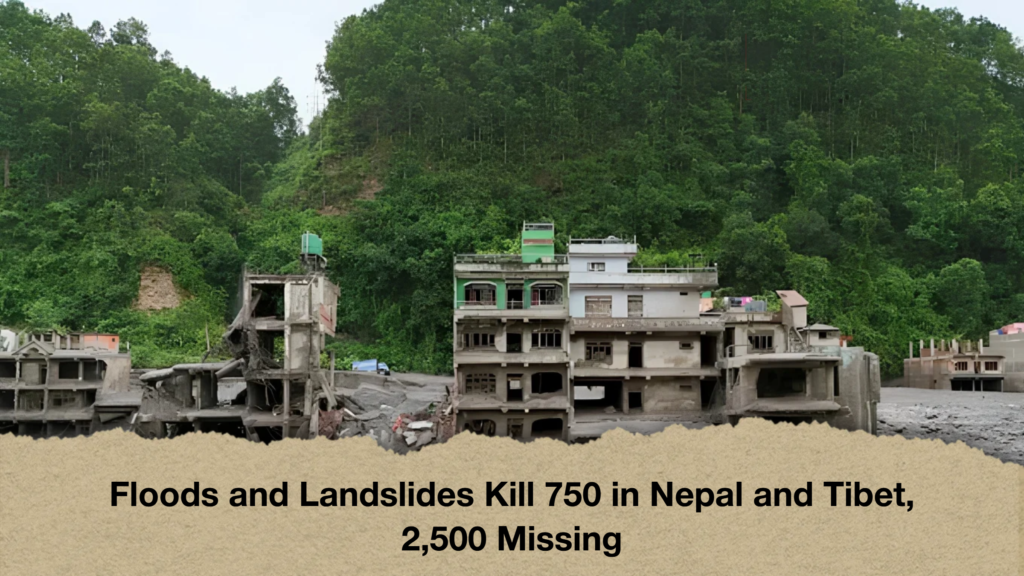
The catastrophic toll of flash floods and relentless landslides sweeping across the Himalayan region has continued to mount, with confirmed fatalities reaching 750 across Nepal and Tibet. Rescue agencies report that approximately 2,500 individuals remain unaccounted for, a figure that includes 589 foreign nationals, complicating international tracking efforts. As the disaster enters its fifth harrowing day, joint rescue operations involving the Nepalese military, civil defence units, and local volunteers are racing against time. Despite treacherous terrain and adverse weather conditions, emergency personnel have successfully rescued 8,186 survivors from isolated mountain pockets, according to reports released by Reuters.
The unfolding humanitarian crisis has left vast swathes of the rugged terrain completely unrecognisable, reducing rural settlements to fields of debris and mud. Grieving family members wander anxiously among makeshift camps and temporary relief hubs, frantically searching for missing loved ones. At the same time, thousands of stranded residents continue a desperate battle for survival amidst freezing temperatures, cut off from vital supply lines. Although persistent adverse weather temporarily grounded aerial search missions earlier in the week, rescue teams managed to intensify operations, deploying military helicopters to reach cut-off valleys and deliver life-saving food parcels, clean drinking water, and emergency medical supplies.
Compounding the crisis, fresh environmental threats have emerged along the river basins. The National Disaster Risk Reduction and Management Authority of Nepal issued an urgent high-alert warning as water levels in the turbulent Bhote Koshi River began surging dangerously high once again. Authorities have strongly advised riverside communities to relocate to higher ground immediately while disaster management teams monitor hydrological shifts around the clock.
Across the northern border in Tibet, the situation remains deeply concerning, though official transparency has proven elusive. Local tallies confirm at least 16 deaths and over 500 missing persons in the region. According to assessments by the British Broadcasting Corporation (BBC), strict information controls implemented by Chinese authorities have heavily restricted the flow of verified data, making it exceptionally difficult for international observers to gauge the true scale of destruction and human suffering in Tibet. As relief efforts push forward, humanitarian organisations warn that the full magnitude of this regional disaster may take weeks to fully uncover.