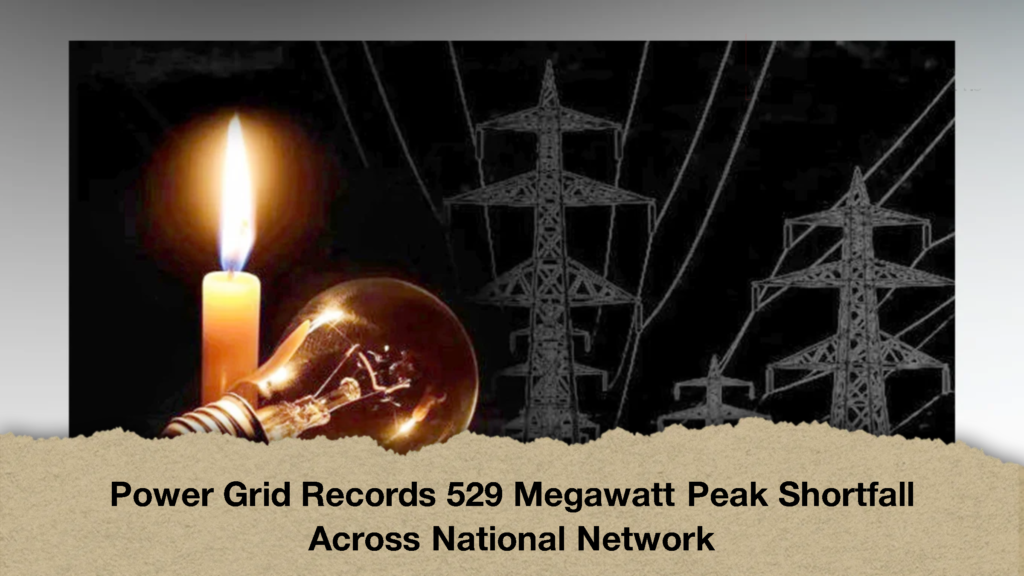
Bangladesh recorded a nation-wide power deficit of 529 megawatts (MW) during the evening peak operational window at 7:30 PM on Wednesday. Total electricity demand climbed to 16,211 MW during this high-consumption interval, obliging state grid operators to implement rotational load-shedding to prevent system imbalances across primary transmission corridors.
Regional Supply Deficits and Grid Distribution
Data released on Wednesday night by Power Grid Bangladesh PLC (PGCB), the country’s high-voltage transmission authority, reveals that the Mymensingh zone experienced the most acute energy shortfall. Facing a regional peak demand of 1,421 MW, distribution utilities were forced to shed up to 256 MW—accounting for nearly half of the total national deficit during peak hours.
By contrast, the Dhaka division—which encompasses the capital city and represents the largest concentration of domestic, commercial, and industrial loads—recorded a peak demand of 6,184 MW. Grid managers satisfied the vast majority of this load, restricting power cuts across the metropolitan area to 154 MW.
Moderate supply gaps were registered across several other key industrial and agricultural regions. The Comilla distribution zone recorded a 50 MW deficit against a total demand of 1,455 MW, while the Khulna zone faced a 49 MW shortfall against a requirement of 1,924 MW. In the north-western Rajshahi division, power utilities recorded a minor deficit of 20 MW against a regional demand of 1,533 MW.
Uninterrupted Supply across Four Major Zones
Despite the supply constraints affecting central and eastern districts, grid operators maintained full power delivery across four major distribution zones, meeting 100 percent of consumer demand without resorting to forced outages.
In the south-eastern port city of Chittagong, power companies fully supplied the regional peak demand of 1,512 MW. The Sylhet zone received its full allocation of 668 MW, the Barisal region met its total demand of 481 MW, and the northern agricultural belt of Rangpur received its complete allocation of 1,033 MW without disruption.
The peak-hour deficit reflects persistent fuel supply management challenges and generation constraints within the domestic energy sector. During evening peak hours, rapid increases in residential cooling and lighting demand regularly push the national transmission grid toward maximum capacity, exposing specific regional pockets to localized supply deficits.