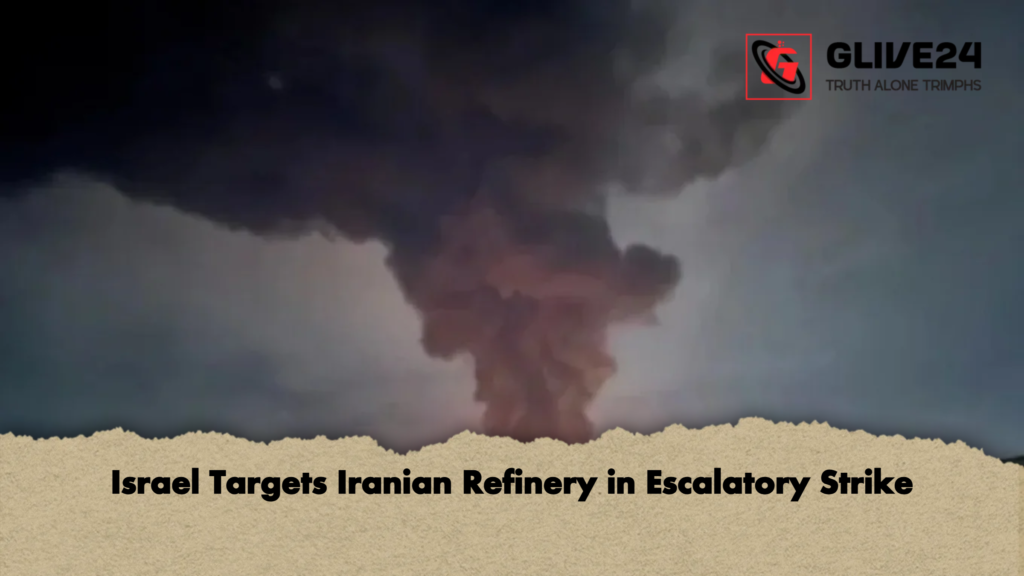
In a significant escalation of tensions in the Middle East, the Israeli Defence Forces (IDF) have launched a direct assault on Iran’s oil infrastructure, striking a major refinery in northern Tehran. This marks the first time Israel has openly targeted Iranian oil facilities, signalling a sharp intensification of hostilities between Tehran and Jerusalem.
Assault Overview
Following the attack, videos shared on social media showed massive plumes of smoke and towering flames rising from the refinery. Eyewitnesses reported explosions and widespread fires engulfing sections of the facility, raising immediate concerns over environmental damage and economic disruption.
Reports indicate this may be the first instance in modern conflict history where civilian-linked industrial infrastructure has been deliberately targeted on such a scale. The IDF confirmed that several fuel storage facilities were struck, highlighting the precision of the operation. Official casualty figures have not yet been disclosed, though the strike is expected to significantly disrupt regional fuel supply.
| Parameter | Details |
|---|---|
| Target | Oil refinery and fuel storage facilities, northern Tehran |
| Attacking Force | Israeli Defence Forces (IDF) |
| Date of Attack | Reported 8 March 2026 |
| Damage | Extensive fires and structural destruction |
| Civilian Casualties | Not reported |
| Iran’s Response | Blames Israel and United States for the attack |
| Strategic Importance | Key refinery supplied fuel to Tehran and northern provinces |
Tehran’s Response
The Iranian government condemned the assault, attributing responsibility to both Israel and the United States. Officials described the refinery as a vital energy hub for Tehran and northern provinces, warning that the attack could trigger fuel shortages and broader economic repercussions.
Military analysts view the strike as a significant intensification of the ongoing shadow conflict over Iran’s energy and nuclear infrastructure. The targeting of civilian-linked industrial sites signals Israel’s readiness to exert strategic pressure far beyond conventional military installations.
Regional and Global Implications
Experts warn that the attack may exacerbate tensions across the Middle East, potentially prompting retaliatory action by Iran. Disruption to fuel supplies could affect domestic transportation, industrial activity, and international energy markets, raising geopolitical uncertainty.
Observers note that the operation also functions as a strategic signal to Tehran, demonstrating Israel’s capacity for high-precision strikes deep within Iranian territory and serving as a warning against future military or nuclear initiatives.
With both countries engaged in a cycle of military posturing and strategic messaging, the strike on Tehran’s refinery is likely to mark a turning point in regional security dynamics, heightening concerns over further confrontations and the possibility of retaliatory operations.