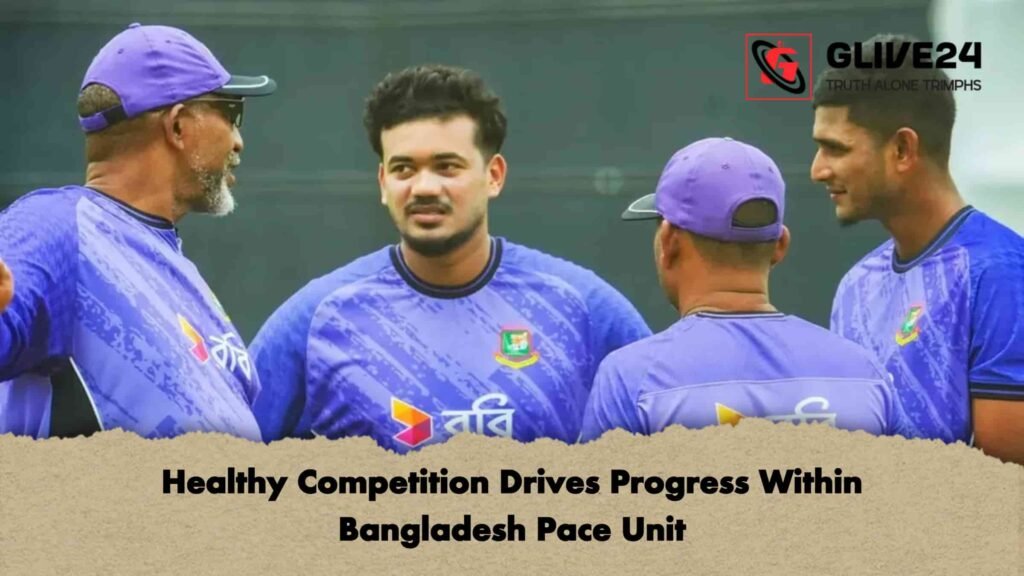
The performance of the Bangladesh national cricket team’s fast bowling unit has demonstrated significant structural improvement over recent years. According to national all-rounder Mohammad Saifuddin, a primary catalyst behind this sustained success is the prevailing “healthy competition” among the squad’s fast bowlers. He noted that as the internal contention for positions intensifies, the collective on-field output of the national team continues to advance.
Speaking to the media, Saifuddin highlighted the undeniable progression of the country’s pace attack over the preceding twenty-four to thirty-six months. He specifically underscored the shifting dynamics in the longest format of the game, observing that fast bowlers are now playing the most substantial role in securing Test match victories—a notable departure from historical eras when the national team routinely struggled to compete in Test cricket.
Key Pacers Contributing Across Diverse Cricket Formats
The contemporary fast bowling department features a rotation of versatile players who have delivered critical performances across all three major formats of international cricket, as outlined below:
| Bowler Name | Bowling Style | Core Operational Formats | Tactical Contribution Impact |
| Taskin Ahmed | Right-arm fast-medium | Test, ODI, T20I | Senior leadership, opening breakthroughs, and raw pace. |
| Nahid Rana | Right-arm fast | Test, ODI, T20I | Extreme express pace, steep bounce, and middle-over wickets. |
| Mohammad Saifuddin | Right-arm fast-medium | ODI, T20I | All-round capabilities, death-over bowling, and variation. |
Internal Motivation and Systemic Progression
Saifuddin praised the consistency of his peers, including young express pacer Nahid Rana and the experienced Taskin Ahmed, stating that every individual selected for the pace unit is contributing effectively across One Day Internationals (ODIs), Twenty20 Internationals (T20Is), and Test matches.
The all-rounder explained that witnessing the rigorous work ethic and extensive physical labor invested by teammates naturally heightens individual accountability. This highly competitive training environment serves as an internal motivator, compelling each bowler to increase their personal workload and continuously refine their technical skills. Saifuddin concluded that this self-reinforcing cycle of improvement is an exceptionally positive indicator for the long-term future of Bangladeshi cricket, reiterating that a higher density of healthy rivalry within the team directly translates to superior international performances.