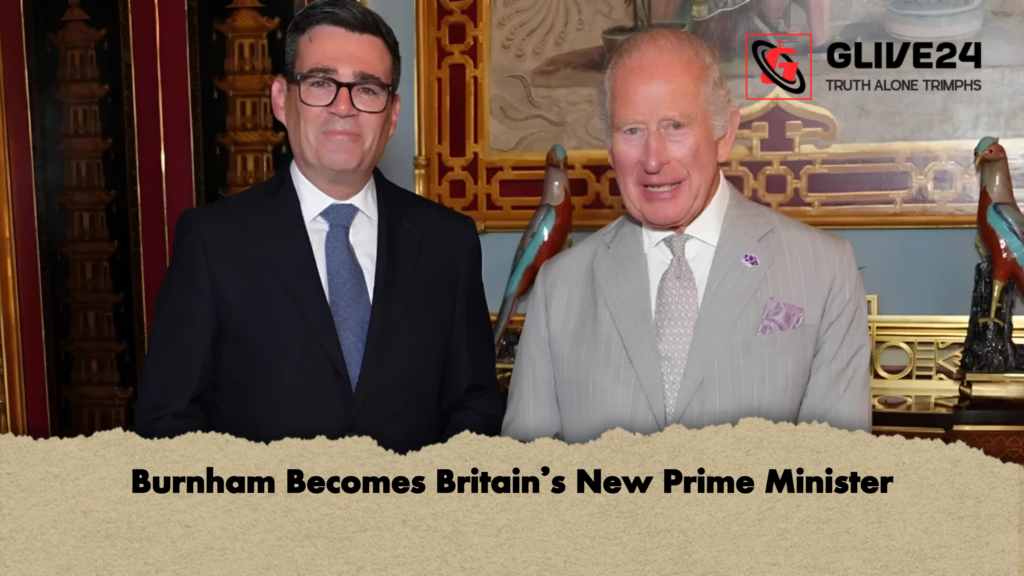
Labour Party leader Andy Burnham has become the United Kingdom’s new Prime Minister, marking another significant change in British leadership during a decade of political upheaval. On Monday (20 July), Burnham formally took office and formed a new government after being invited by King Charles III to do so, bringing Sir Keir Starmer’s tenure as Prime Minister to an end.
The leadership transition comes nearly two years after Labour secured a commanding victory in the general election under Starmer. With Burnham now entering 10 Downing Street, Britain has its seventh Prime Minister in less than a decade, underscoring the rapid turnover that has characterised the country’s political landscape in recent years.
Burnham arrives in office with extensive experience in both national and local government. Before becoming Prime Minister, he served as Mayor of Greater Manchester, a role in which he built a strong public profile through his advocacy for regional investment, public transport, healthcare and greater devolution of powers. His prominence in northern England earned him the widely recognised nickname “King of the North”. Earlier in his political career, he also held several Cabinet positions under previous Labour governments, giving him considerable experience in national policymaking.
Despite his strong political credentials, Burnham inherits a demanding agenda. Domestically, he faces the challenge of restoring public confidence in Labour at a time when the party’s popularity has shown signs of weakening. The political landscape has become increasingly competitive, with Nigel Farage’s right-wing Reform UK attracting growing support, while the Green Party has been gaining traction among progressive voters concerned about environmental and social issues.
Economic issues are also expected to dominate the new government’s priorities. Rising living costs, pressure on public services and the need to maintain economic stability remain key concerns for voters. Political observers believe Burnham’s ability to address these issues effectively will be crucial in determining the long-term success of his administration.
On the international stage, Burnham is expected to face immediate diplomatic challenges. Relations with the administration of US President Donald Trump are likely to be closely watched after Trump reportedly described Burnham as “extremely liberal” before he assumed office. Managing the transatlantic relationship while protecting British interests is expected to be one of the defining tests of his premiership.
Burnham succeeds a succession of recent Prime Ministers that includes Boris Johnson, Liz Truss, Rishi Sunak and Sir Keir Starmer. His appointment represents the latest chapter in a period of frequent political change in the United Kingdom.
Analysts say the new Prime Minister’s greatest challenge will be rebuilding public trust while delivering tangible improvements in living standards and economic performance. If his government can provide stability, strengthen public services and sustain economic growth, Burnham may succeed where many of his recent predecessors struggled, securing a longer and more stable tenure at 10 Downing Street.