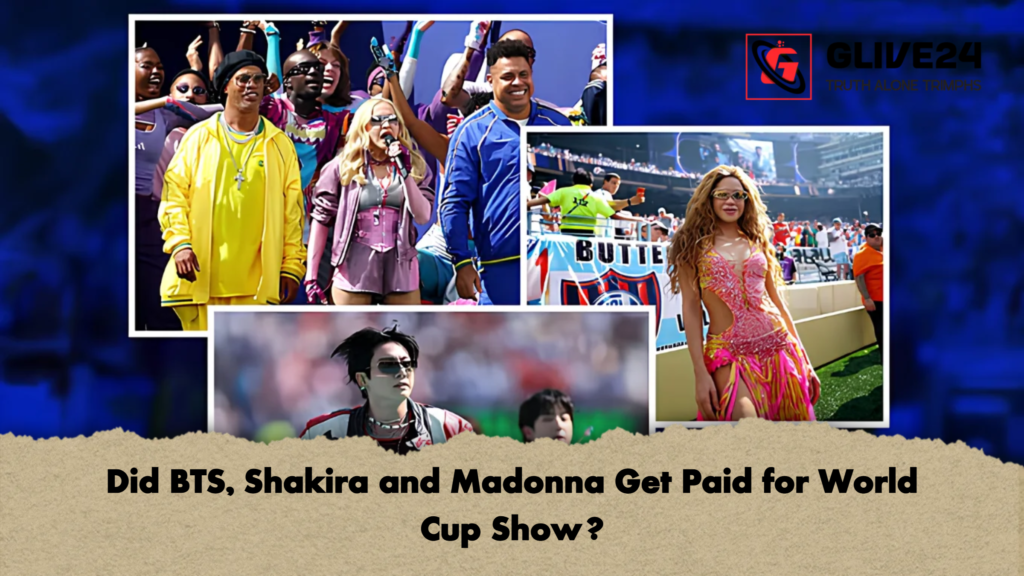
The 2026 FIFA World Cup final made history not only for the football played on the pitch but also for introducing a spectacular half-time show inspired by the entertainment format associated with the Super Bowl.
The star-studded performance featured global music icons including Madonna, Latin pop sensation Shakira, Canadian singer Justin Bieber and internationally acclaimed K-pop group BTS. They were joined by Jason Sudeikis and Brendan Hunt, stars of the popular television series Ted Lasso, while the beloved children’s characters from The Muppets also formed part of the entertainment programme.
Given the scale of the event and the international fame of the performers, many viewers assumed that the artists must have received substantial fees for appearing at one of the world’s most watched sporting events.
But, according to a report by The Athletic, the reality was quite different. None of the performers received a direct performance fee for appearing in the World Cup half-time show.
A new chapter for the World Cup
A major half-time entertainment show is a relatively new concept for the FIFA World Cup. For decades, the NFL’s Super Bowl has been renowned for bringing some of the biggest names in global music to its half-time stage. Artists such as Michael Jackson, Prince, Beyoncé, Rihanna, Lady Gaga and Kendrick Lamar have all performed at the event.
The 2026 World Cup adopted a similar approach, bringing elements of North America’s sporting and entertainment culture into football’s biggest international tournament.
The tournament itself was historic for another reason. It was the first World Cup to feature 48 teams, while the United States, Canada and Mexico jointly hosted the competition. Against that backdrop, organisers sought to broaden the final’s appeal by combining elite football with a major global entertainment spectacle.
Football takes a break for music
The final itself featured Spain and Argentina. The match remained goalless during normal time before Spain eventually secured a 1-0 victory in extra time through a goal from Ferran Torres.
Yet the football was not the only subject of debate. The half-time performance attracted almost as much attention as the match itself.
A traditional football half-time interval lasts around 15 minutes. However, the special entertainment programme extended the break to roughly 27 minutes. Some supporters criticised the decision, arguing that the extended interval disrupted the rhythm and traditional flow of the game.
Former England captain and BBC Sport pundit Wayne Rooney was among those who expressed reservations. While acknowledging his appreciation for the performers, he said he did not enjoy the half-time show. The event also triggered a lively debate on social media.
Some fans welcomed the spectacle, arguing that it gave the World Cup an even more global entertainment dimension. Others felt that such a lengthy performance was out of keeping with the traditions of international football.
No performance fees despite the star power
Madonna, Shakira, Justin Bieber and BTS are among the biggest names in the global entertainment industry. Hiring even one of them for a major private concert or commercial event can involve substantial sums, with fees for top international performers sometimes reaching millions of dollars.
That made the question of their World Cup appearance fees particularly intriguing.
However, The Athletic reported that none of the artists were paid a direct fee for their performances. Instead, they appeared voluntarily as part of the wider initiative connected with the event.
That does not mean the production itself came without significant costs. A performance on such a vast international stage requires extensive planning, staging, technical equipment, production crews and logistical arrangements. The key point is that the performers themselves reportedly did not receive a traditional appearance fee.
A performance linked to a social initiative
The half-time show was not intended simply as a musical spectacle. It was also connected to a social initiative involving FIFA and Global Citizen.
The artists reportedly performed without fees to help draw global attention to the FIFA Global Citizen Education Fund, which aims to support efforts to expand access to education and football opportunities for disadvantaged children around the world.
The initiative gave the entertainment programme a wider purpose beyond the football match itself. With millions of viewers watching the World Cup final, the half-time show provided a high-profile platform for promoting messages centred on education, opportunity and social inclusion.
FIFA president Gianni Infantino had previously described the concept as more than a celebration of entertainment, highlighting its potential to promote messages of education, unity and humanity through the world’s biggest football match.
Following the Super Bowl model
The arrangement also reflects a long-standing practice associated with the Super Bowl. Major artists performing at the NFL’s flagship event do not always receive a traditional performance fee. Instead, the organisers typically cover production-related expenses, while performers benefit from the enormous global exposure that comes with appearing before one of the world’s largest television audiences.
The World Cup half-time show followed a broadly similar philosophy. For globally recognised artists, performing during the final of the world’s biggest football tournament offers unparalleled exposure and an opportunity to connect with audiences across continents.
The decision to introduce such a show has nevertheless opened a broader debate about the future identity of the World Cup. For some, combining football with global music and entertainment reflects the changing nature of major sporting events. For others, the extended break raises questions about whether the spectacle should take precedence over the traditions of the game.
Either way, the 2026 World Cup final will be remembered for more than its result. The introduction of a major half-time show marked a significant new intersection between international football and global entertainment, while the decision by high-profile performers to appear without direct performance fees added another intriguing chapter to the story.