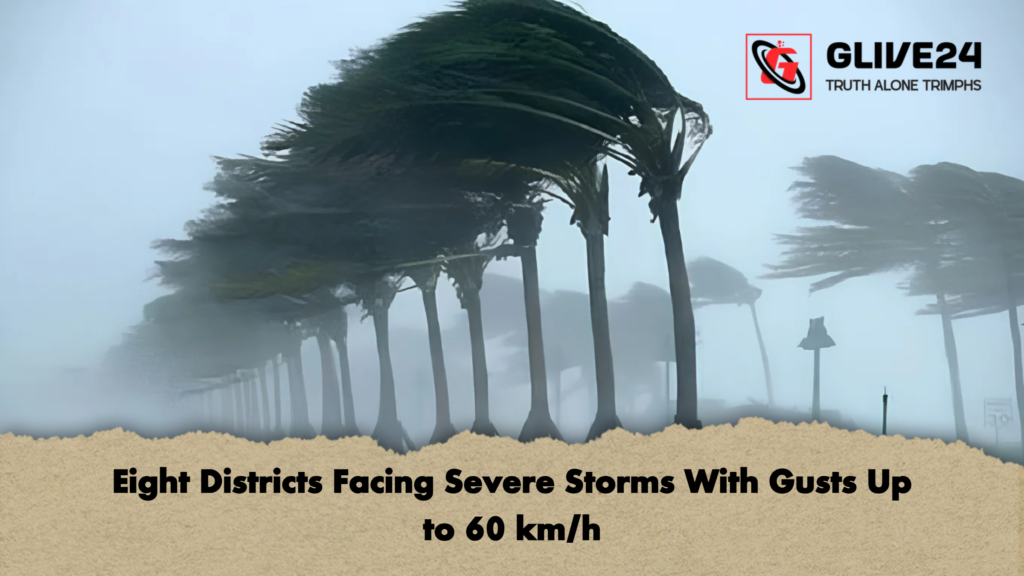
Squally weather packing temporary gusts of between 45 and 60 kilometres per hour is expected to sweep across eight districts in Bangladesh, accompanied by thunder and torrential rain. Driven by active monsoon conditions over the Bay of Bengal and inland river basins, weather officials issued an urgent advisory for inland river ports, valid until late on Thursday, 23 July.
According to the specialized bulletin released by the Bangladesh Meteorological Department, temporary squalls originating from the south or south-east will affect Faridpur, Khulna, Barisal, Patuakhali, Comilla, Noakhali, Chittagong, and Cox’s Bazar. Thunderstorms and sudden downpours are likely to hit these regions, accompanied by dark cloud cover and localized turbulence.
In light of the deteriorating atmospheric conditions, authorities have instructed river ports within these eight districts to hoist distant cautionary signal number 1. The advisory aims to alert small commercial vessels, passenger ferries, and fishing boats navigating inland waterways to exercise extreme prudence. Navigators have been specifically advised to remain close to the shoreline and avoid entering deeper river stretches during sudden surges in wind speed.
Beyond the targeted coastal and southern belt, a broader weather bulletin indicates that monsoon activity will maintain nationwide coverage over the coming days. Light to moderate rain or thunder showers accompanied by temporary gusty winds are forecast across all administrative divisions. Certain regions may also experience isolated spells of heavy to very heavy rainfall, raising concerns over localized waterlogging in urban hubs and low-lying agrarian communities.
Agricultural experts note that while monsoon precipitation provides essential irrigation for seasonal crops, strong gusty winds and excessive rain can temporarily disrupt standing produce and low-lying farmlands. Maritime and river traffic authorities, alongside local administrative bodies, continue to monitor river water levels and atmospheric changes closely to ensure public safety and minimize operational disruptions across the country’s extensive waterway network.