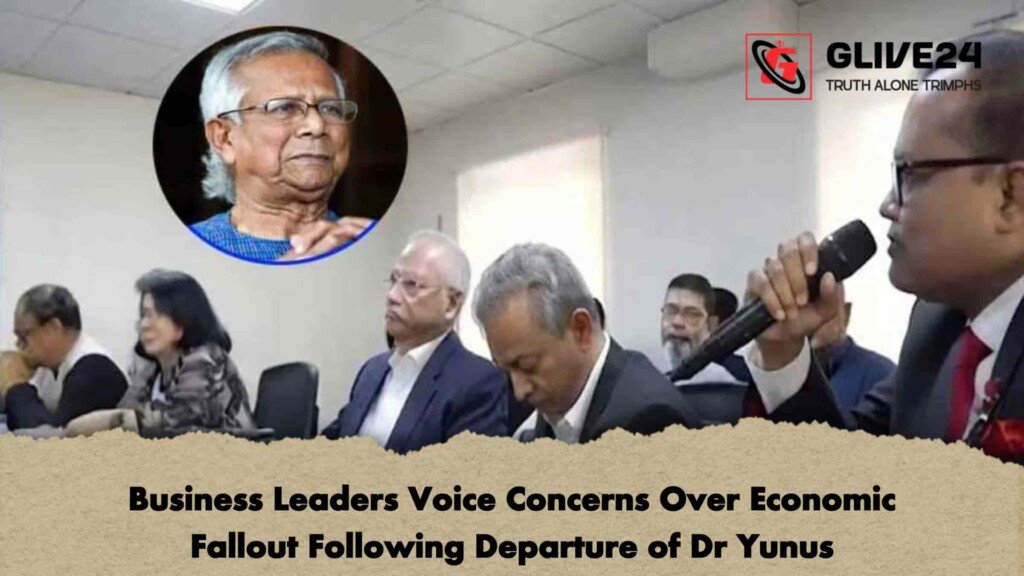
Prominent business leaders in Dhaka have voiced strong dissatisfaction with the economic legacy left by the outgoing interim administration, accusing its former Chief Adviser, Nobel Laureate Dr Muhammad Yunus, of leaving the country in a state of severe economic distress. The allegations, raised during a discussion meeting held in the capital, have ignited a fresh political and economic debate regarding the nation’s transition period and current financial stability.
Allegations of Economic Distress
During the forum, representatives from the business community asserted that trade, commerce, and general macroeconomic stability suffered unprecedented setbacks during the tenure of the interim government. The business leaders claimed that the administration concluded its term without establishing a resilient framework to revive trade or stabilise key economic indicators, effectively leaving the commercial sector stranded in “uncharted waters”.
However, these allegations were firmly rejected by the chief guest of the event, Dr Anisuzzaman Chowdhury, a former special assistant to the Chief Adviser. Addressing the gathering, Dr Chowdhury refuted claims that Dr Yunus had abandoned his responsibilities voluntarily or fled the situation. Instead, he clarified that the leadership was compelled to step down due to mounting pressure from continuous political demonstrations, public protests, and an escalation of unrest that culminated in the besieging of the Chief Adviser’s official residence, Jamuna.
According to Dr Chowdhury, the escalating political volatility and persistent protests rendered it practically unfeasible for the interim administration to continue its governance smoothly.
Political and Economic Background
The interim government, headed by Dr Muhammad Yunus, was formed in August 2024 in the aftermath of a historic mass uprising that brought about significant political restructuring in Bangladesh. Tasked with restoring institutional order, preparing the nation for democratic governance, and managing a fragile economy, the interim administration held power until the 13th National Parliamentary Election in February 2026. Following the election, power was formally transferred to the newly elected sovereign government, marking the end of the transitional period.
Despite the democratic transition, the economic fallout from months of disruption, supply chain interruptions, and reduced industrial output continues to weigh heavily on the business community. While critics view the interim government’s exit as sudden amidst unresolved fiscal challenges, defenders maintain that the administration successfully fulfilled its core mandate—delivering a credible democratic election under extraordinary political pressure.