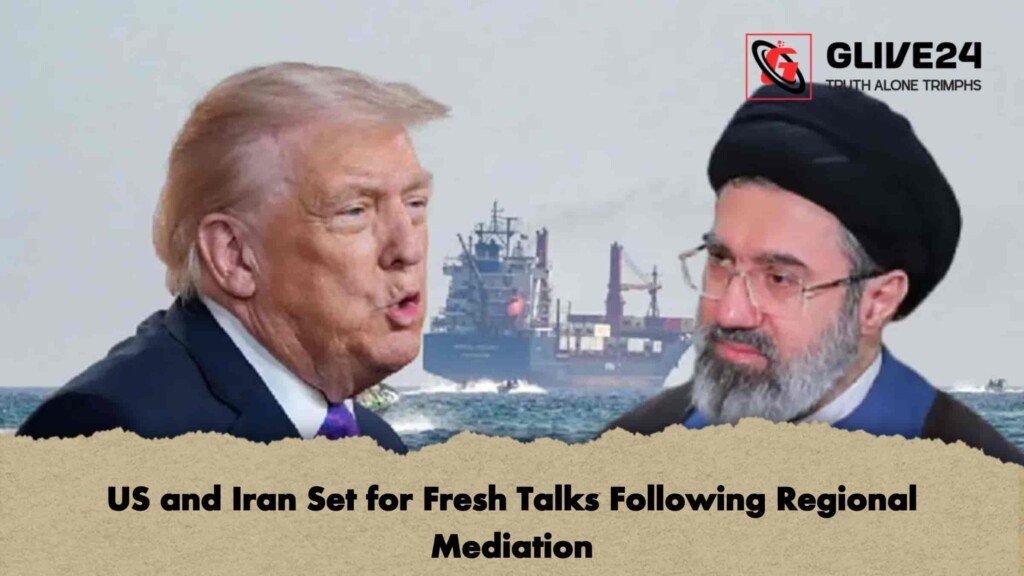
United States President Donald Trump has announced that direct diplomatic engagements between Washington and Tehran are scheduled to resume, potentially commencing on Monday afternoon local time. The sudden shift towards dialogue comes in the immediate aftermath of a decision by the US administration to suspend previously planned military strikes against Iranian targets, signalling a temporary pause in escalating bilateral tensions across the Middle East.
According to President Trump, the decision to halt military action was heavily influenced by direct intervention from key partners in the Gulf region. Highlighting the pivotal role of regional diplomacy, Trump claimed that mediators representing Saudi Arabia, the United Arab Emirates, and Qatar had explicitly requested Washington to refrain from executing armed strikes. Gulf nations have expressed increasing concern over the prospect of an all-out regional conflict, which could severely disrupt global energy transport through the Strait of Hormuz and jeopardize regional economic stability.
Official responses from Tehran remain cautious. While the Iranian government has yet to issue an official statement regarding Trump’s assertions, Iranian state-aligned media outlets have offered a contrasting narrative. Iran’s semi-official Mehr News Agency swiftly rejected claims that Tehran had sought foreign intervention to avert American aggression, stating firmly that the Iranian regime had made no appeal to Washington or third-party intermediaries to halt potential military action.
The development underscores the fragile equilibrium characterising US-Iranian relations since Washington’s unilateral withdrawal from the 2015 Joint Comprehensive Plan of Action (JCPOA) nuclear deal. The subsequent implementation of a “maximum pressure” campaign—defined by crippling economic sanctions, targeted measures against key Iranian officials, and an expanded American military presence in the Gulf—has repeatedly pushed the two nations to the precipice of direct conflict.
Diplomats and geopolitical analysts observe that neighbouring Gulf states, which have historically maintained a hostile stance towards Tehran’s nuclear programme and regional proxy network, are increasingly prioritising de-escalation. The diplomatic channels opened by Riyadh, Abu Dhabi, and Doha reflect a broader strategy to prevent broader regional instability. Whether these impending discussions will lay the groundwork for a broader diplomatic framework or merely serve as a brief pause in hostilities remains uncertain.