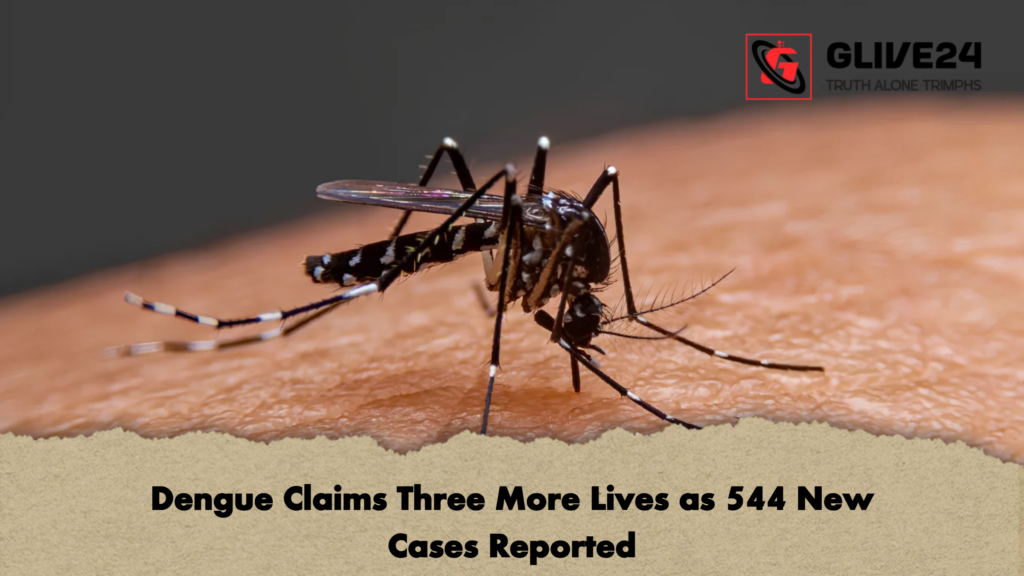
Bangladesh’s dengue situation has taken another worrying turn, with three more people dying from the mosquito-borne disease in the past 24 hours and 544 new infections being reported across the country.
The latest figures were disclosed in the regular dengue situation report issued on Monday (3 August) by the Health Emergency Operations Centre and Control Room of the Directorate General of Health Services (DGHS).
The fresh deaths and infections come as health authorities continue to monitor the spread of dengue across Bangladesh, where the disease remains a recurring public health concern, particularly during periods when weather conditions favour the breeding of Aedes mosquitoes. The latest increase in reported cases is likely to add further pressure on hospitals and healthcare facilities treating dengue patients.
Dengue is transmitted primarily through the bite of infected Aedes mosquitoes. These mosquitoes commonly breed in stagnant water collected in containers, flower pots, discarded tyres, construction materials and other places around homes and neighbourhoods. As a result, public health officials have repeatedly stressed that controlling mosquito breeding sites is an essential part of preventing transmission.
The disease can initially appear similar to other viral illnesses, with symptoms such as fever, headache, body aches, weakness and, in some cases, nausea or vomiting. While many patients recover with appropriate medical care, severe dengue can lead to serious complications, including bleeding, fluid loss and shock. Patients whose condition deteriorates rapidly require urgent medical attention.
The latest report has renewed concerns over the need for continued surveillance and preventive measures. Health authorities routinely urge people to remove stagnant water from their surroundings and to take measures to reduce exposure to mosquito bites. Individual precautions, combined with effective mosquito-control operations, are regarded as key components of dengue prevention.
The number of new infections recorded in a single day also highlights the continuing burden on the country’s healthcare system. Hospitals must maintain adequate capacity to manage patients, while health workers remain alert to cases that may progress to severe illness.
For families, early recognition of warning signs is particularly important. Persistent or worsening symptoms should not be ignored, especially when a patient develops severe abdominal pain, repeated vomiting, unusual bleeding, extreme weakness or other signs of deterioration. Seeking medical advice promptly can help ensure that serious cases receive timely treatment.
The three deaths reported in the latest 24-hour period serve as a reminder that dengue remains a serious health threat. With 544 additional infections confirmed, health officials and local authorities face the continuing challenge of limiting transmission while ensuring that those who fall ill receive appropriate care.
The DGHS is expected to continue publishing regular updates as part of its ongoing monitoring of the country’s dengue situation.