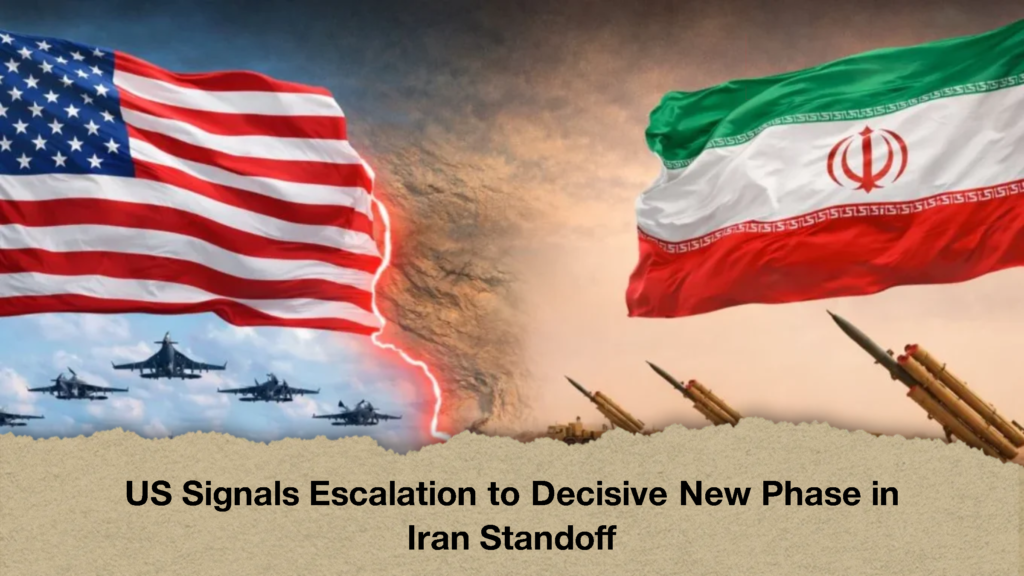
The United States is preparing to transition into an intensified operational phase of its ongoing military conflict with Iran, with senior American officials calling upon international allies to bolster collective strategic efforts. United States House Speaker Mike Johnson outlined the planned posture during an interview with Fox News on Sunday, indicating that Washington expects partner nations to join active maritime enforcement and security measures to bring the protracted confrontation to a definitive close.
Addressing the trajectory of the standoff, Johnson asserted that allied coordination would prove critical as military engagements widen across key theatres. He contended that conventional diplomatic avenues had yielded little progress, arguing that Iranian authorities could not be relied upon to honour negotiated agreements at the conference table. The House Speaker also commended former President Donald Trump for implementing policies aimed at curbing Tehran’s nuclear ambitions, framing the prevention of an Iranian nuclear weapons programme as an overriding national security objective that had tested successive administrations.
The tangible effects of this assertive strategy are already unfolding across critical shipping lanes in the Middle East. Since mid-July, the United States Navy has enforced a rigorous maritime blockade aimed at restricting vessel traffic into and out of key Iranian ports. Naval figures reveal that American warships have intercepted and redirected the routes of at least 70 commercial cargo vessels navigating designated exclusion zones, up from 68 ships reported only two days prior. Naval boarding teams have carried out inspections on two vessels and disabled three others that refused to comply with maritime instructions.
To sustain this extensive cordon, the Pentagon has stationed a task force of more than 20 naval vessels throughout the Persian Gulf and surrounding waters. The deployment features advanced Arleigh Burke-class guided-missile destroyers, including USS John Finn and USS Ross, which maintain round-the-clock patrols to enforce trade restrictions, safeguard commercial transit corridors, and counter potential asymmetric threats from fast-attack craft.
The expanding naval campaign has coincided with increasingly robust political declarations in Washington. Donald Trump recently published a contentious map on Truth Social that designated the vital Strait of Hormuz—a narrow waterway handling roughly a fifth of global petroleum transit—as new American territory. The online post mirrored remarks delivered at a campaign rally a day earlier, where Trump similarly described the strategic passage as US domain. These heightened naval interdictions and uncompromising political statements signal a sharp escalation in regional tensions, raising concerns over broader geopolitical instability across the Gulf.