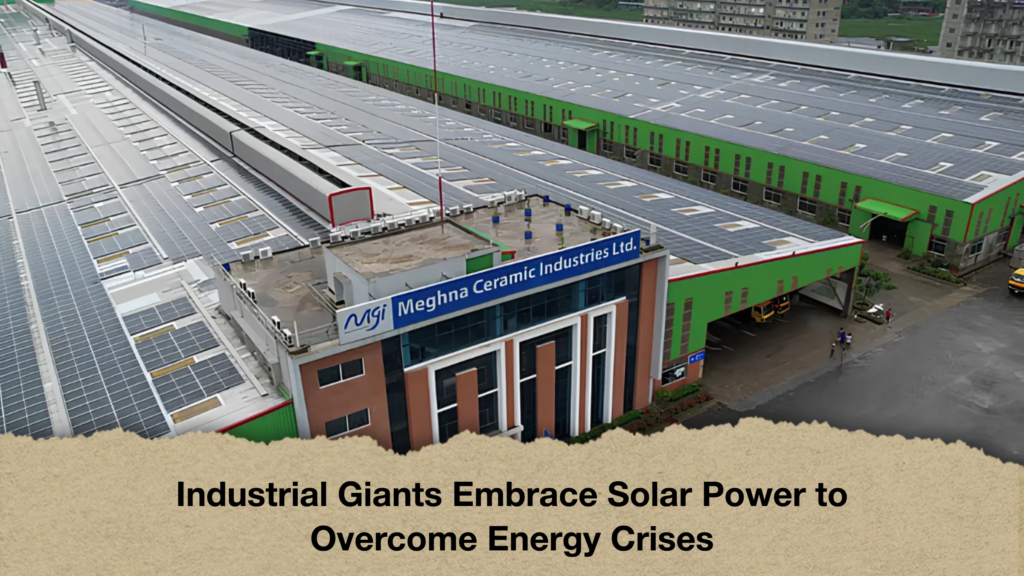
Bangladesh is witnessing a quiet green revolution as major industrial conglomerates aggressively pivot towards rooftop solar energy. Faced with escalating utility costs, frequent grid instabilities, and mounting pressure from international buyers to lower carbon footprints, top-tier manufacturing groups are heavily investing in renewable energy infrastructure. Recent industry assessments indicate that cumulative rooftop solar capacity across major industrial units has already surpassed 600 megawatts, fundamentally transforming how large-scale factories manage their day-to-day power demands.
Prominent market leaders are spearheading this transition with ambitious multi-megawatt projects. DBL Group has successfully installed 5.5 megawatts of solar capacity across seven of its readymade garment and textile units, with plans to expand by another 16 megawatts. Similarly, Pran-RFL Group has outlined targets to generate over 100 megawatts from its factory rooftops, while Akij Bashir Group currently yields around 75 megawatts across its diverse manufacturing units, including fully solar-powered jute operations. Other corporate heavyweights, such as Meghna Group of Industries and Rising Group, have integrated substantial solar arrays to buffer against chronic gas shortages and soaring grid electricity tariffs.
Independent research underscores the massive potential lying dormant on factory rooftops. While official government figures place installed rooftop solar capacity at 418 megawatts, recent analyses by the Institute for Energy Economics and Financial Analysis suggest that real-world output across major industrial sites has reached 667 megawatts. Expanding these initiatives to smaller commercial establishments could push national rooftop solar potential past the 1,000-megawatt milestone, significantly alleviating daytime strain on the national grid. Industry experts note that while solar installations typically offset only 5 to 15 percent of a large factory’s total energy consumption, they provide crucial operational continuity during peak hours. Furthermore, with levelised generation costs sitting at roughly half the price of commercial grid electricity, the financial incentives for long-term investments are compelling.
Despite rapid growth, structural hurdles continue to impede smaller and medium-sized enterprises from adopting green technology. High initial capital expenditures, stringent bank guarantee requirements for green financing schemes, and limited access to low-interest funds remain significant barriers. Industry leaders argue that targeted policy interventions, such as relaxed collateral terms for renewable loans and broader tax exemptions on imported solar equipment, are essential to sustain momentum. As the government works toward its ambitious target of generating 20 percent of the nation’s total electricity from renewable sources by 2030, unlocking international climate finance and expanding green bond markets will be vital in ensuring that Bangladesh secures a resilient, sustainable industrial future.