Bangladesh’s manufacturing sector is confronting a multi-layered crisis, pushing the large-scale industry index into negative territory for the first time. According to Bangladesh Bank’s latest macroeconomic update for July, the Large Scale Industry Index (IIP) dropped to negative 0.38 percent during the July-March period of the 2025-26 fiscal year. This marks a sharp decline from positive growth rates of 6.2 percent in 2024-25, 4.65 percent in 2023-24, and 7.37 percent in 2022-23.
Chronic shortages of uninterrupted gas and electricity, alongside foreign exchange constraints, high interest rates, and low domestic demand, have severely restricted factory operations. Private sector credit growth languished at just 4.47 percent by June, falling far short of the contractionary monetary policy target of 8.5 percent. Heavy industries across the board—including glass, ceramics, steel, cement, and textiles—are struggling to sustain baseline production.
Energy-intensive sectors face unique operational hurdles. Glass manufacturers cannot shut down their high-temperature furnaces, forcing them to burn expensive diesel daily to keep plants running. Meanwhile, steel mill owners report subdued sales and production runtimes, with many heavy borrowers sliding perilously close to loan default. Ceramic producers report that years of unfulfilled promises regarding stable gas pressures have permanently crippled output capacity.
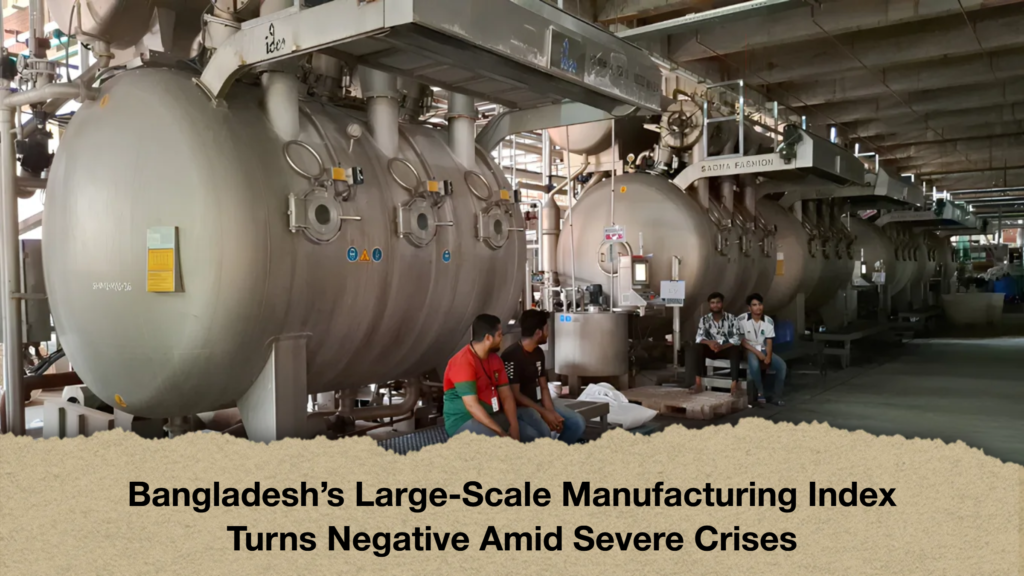
The textile and garment industries are bearing the heaviest burden. Bangladesh Textile Mills Association (BTMA) data highlights that roughly 900 out of 1,850 member factories have experienced complete production halts due to gas shortages. Knitwear, dyeing, washing, and spinning units have been hit hardest, with output dropping by up to sixty percent in major industrial hubs like Gazipur, Savar, and Chattogram. Government and industry records indicate that dozens of factories have closed permanently over recent months, displacing thousands of workers.
Economists warn that framing this downturn as a mere temporary demand shock overlooks deep-seated structural vulnerabilities. High borrowing costs, supply chain bottlenecks, and volatile exchange rates have eroded the sector’s competitive edge. Analysts stress that restoring industrial stability requires comprehensive policy interventions, including reliable energy supplies, foreign exchange market stabilization, and normalized credit flows rather than temporary financial stimuli.