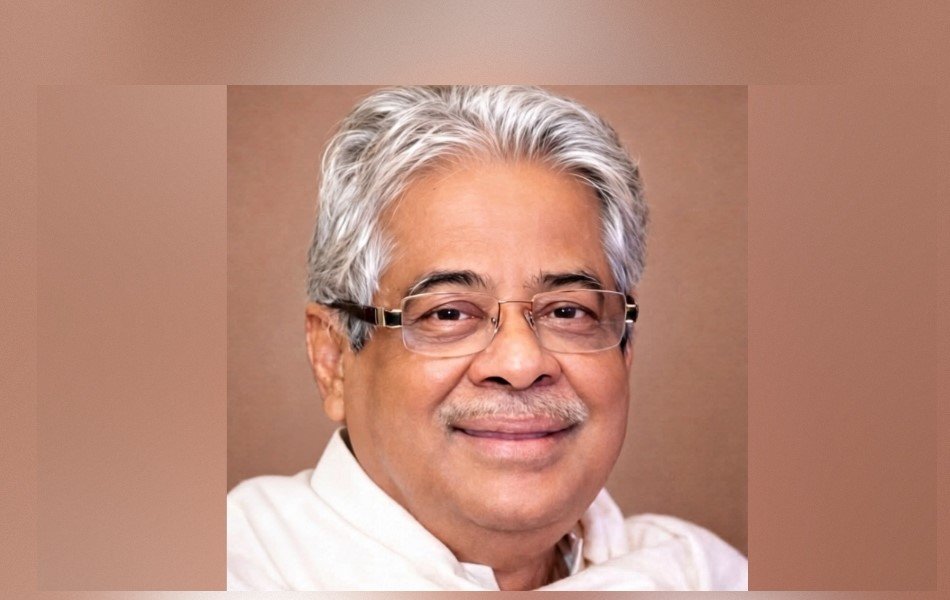
Gazi Mazharul Anwar remains one of the most influential lyricists in the history of Bangladeshi music, remembered for songs that gave lyrical expression to patriotism, love, longing, nature and the enduring bond between people and their homeland.
Born on 22 February 1943 in Taleshwar village of Daudkandi upazila in Cumilla, Anwar built a remarkable career spanning music, television and cinema. He was not only a lyricist but also a composer, story writer, screenwriter, producer and film director. Across several decades, his creative work became closely associated with some of the most memorable songs in Bangla popular culture.
Patriotism and love for the country were recurring themes in his writing. His lyrics often reflected the emotions surrounding Bangladesh’s soil, people and national identity. Among his best-known works are “Joy Bangla Banglar Joy”, “Akash-er Hate Achhe Ek Rash Neel” and “Ekbar Jete De Na Amar Chhoto Sonar Gay”.
The last of these captures a particularly familiar emotion: the longing to return to one’s birthplace. Its reference to a ‘little golden village’ evokes rural Bengal, childhood memories and the emotional pull of a place left behind. That simplicity was one of the defining strengths of Anwar’s writing. He could express profound feelings through language that remained accessible to ordinary listeners.
Several of his songs have endured across generations, while more than one of his works was included in a BBC Bangla survey of the greatest Bangla songs of all time. Such recognition reflected the lasting place his lyrics had secured in the region’s musical heritage.
Anwar’s professional career as a lyricist began in 1964, when he started writing songs for Radio Pakistan. He was associated with Bangladesh Television from its early years, contributing songs and plays as the new medium developed. His entry into the film music industry came in 1967 through the film ‘Ayna O Oboshishto’.
Cinema soon became another major field of his creative activity. He worked in several areas of filmmaking, including story, screenplay, dialogue, production and direction. His first directed film, ‘Nantu Ghatak’, was released in 1982.
The scale of his songwriting was extraordinary. Over the course of his career, he wrote more than 20,000 songs, according to accounts of his work. His lyrics were performed by leading singers from successive generations, allowing his writing to reach audiences with different musical tastes and cultural experiences.
His repertoire covered a broad emotional landscape. There were songs about romantic relationships and separation, as well as compositions centred on nature, humanity, social life and patriotism. His writing also drew strongly on the spirit of the Liberation War and the idea of Bangladesh as a homeland.
Anwar’s songs often had a narrative quality. Their characters and subjects could be lovers, ordinary working people, freedom fighters or the country itself. Rather than relying on complicated language, he frequently used familiar expressions and everyday emotions, turning them into memorable lyrical phrases.
His contribution was not confined to songwriting. As a filmmaker and producer, he became part of Bangladesh’s wider cultural and cinematic development. His achievements earned him numerous honours, including the Bangladesh Chalachitra Sangbadik Samity Award. He received the Ekushey Padak in 2002 and the Independence Award in 2021, two of the country’s major state recognitions.
His artistic legacy has also continued through his daughter, Dithi Anwar. She has performed many of her father’s songs at cultural events and television programmes, helping keep his work familiar to newer audiences.
Gazi Mazharul Anwar died on 4 September 2022, bringing to an end a career that had stretched across more than five decades. His death marked the loss of a prolific writer whose work had connected music, cinema and the cultural experiences of generations of Bangladeshis.
Yet the passing of the writer did not mean the disappearance of his words. His songs continue to be performed and remembered because the emotions within them remain recognisable. Love for home, memories of childhood, affection for the land and a sense of national belonging do not belong to a single era.
For many listeners, Anwar’s lyrics remain closely tied to personal memories as well as to Bangladesh’s broader cultural history. His songs have travelled from radio and cinema to television and later generations of performers, maintaining a presence well beyond the circumstances in which they were first written.
His legacy, therefore, lies not simply in the enormous number of songs he produced, but in the ability of those songs to remain meaningful over time. Through clear language and emotionally resonant imagery, he gave enduring form to feelings shared by millions.
Gazi Mazharul Anwar is no longer here to write new songs. But the vast body of work he left behind continues to speak through performers and listeners, ensuring that his contribution to Bangladeshi music and culture remains part of the national memory.