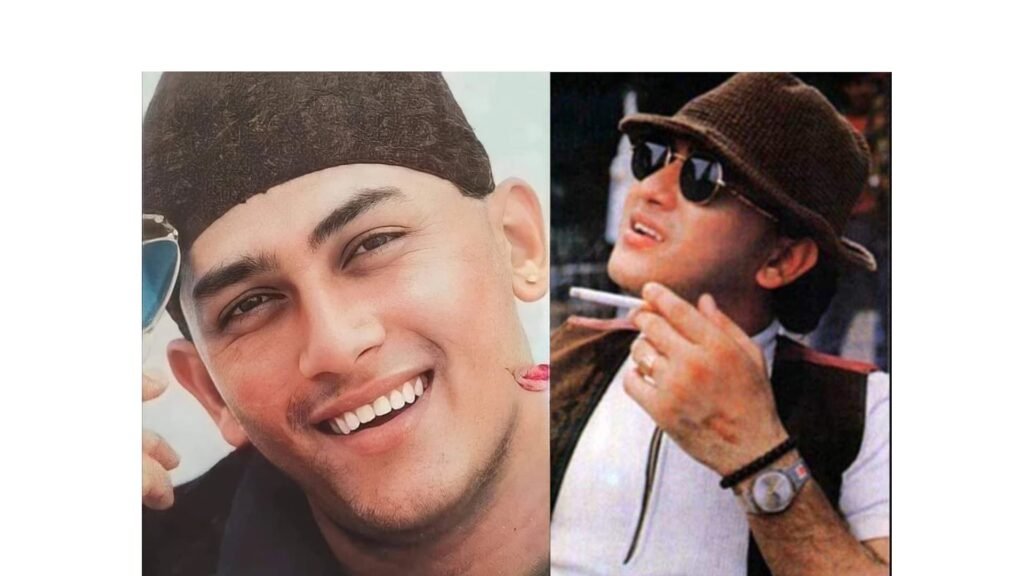
Three decades have passed since Salman Shah, one of the most recognisable faces of Bangladeshi cinema in the 1990s, died at a remarkably young age. Yet his presence remains visible across popular culture. His films continue to appear on television and digital platforms, while his songs, dialogues, fashion and on-screen persona are repeatedly shared across social media.
Salman Shah’s career lasted only around four years, but that brief period was enough to establish him as one of the defining stars of his generation. Films such as Keyamat Theke Keyamat, Tumi Amar, Sotter Mrittu Nei and Tomake Chai helped create a distinct image that differed from the conventional heroes of the time.
His appeal extended beyond acting. Salman Shah brought a distinctly urban style to the screen, reflected in his clothing, hairstyle, mannerisms and portrayal of romantic characters. For many young viewers in the 1990s, he represented a changing image of the Bangladeshi film hero. His performances combined youthful energy with a more contemporary appearance, helping him develop a connection with audiences that went beyond individual films.
The brevity of his career has also become an important part of his enduring legacy. He never reached an age at which audiences might have watched his appearance and screen persona change with time. Instead, his image remained closely associated with youth. As the years passed, that frozen image contributed to the perception of Salman Shah as a permanently young figure in Bangladeshi popular culture.
On 6 September 1996, Salman Shah was found unconscious at his residence in Eskaton, Dhaka. His death subsequently became the subject of investigations and prolonged legal proceedings. Several police reports described the death as suicide. His mother, Neela Chowdhury, however, has consistently rejected that conclusion and maintained that her son was killed.
The dispute surrounding the circumstances of his death has continued for nearly three decades. Investigations, legal decisions and proceedings have changed over the years, but the questions surrounding the case have remained part of public discussion.
In June this year, permission was granted to exhume Salman Shah’s remains as part of efforts to investigate the circumstances of his death. That order was subsequently cancelled. The development once again brought the long-running controversy into public attention, demonstrating how unresolved the issue remains despite the passage of time.
The continuing interest in Salman Shah is not limited to the circumstances of his death. His work has found an audience among people who were not even born when he died. His films, songs and memorable scenes continue to circulate, allowing younger generations to discover an actor whose career ended before many of them had entered the world.
Every year, 6 September brings a fresh wave of tributes from admirers. Fans organise remembrance and prayer gatherings, while social media platforms fill with photographs, film clips, songs and personal recollections. Fan communities, including groups such as Team Salman Shah, have also played a role in preserving his memory.
Film screenings have provided another way for his work to reach younger audiences. When films such as Tomake Chai are screened at the Bangladesh Film Archive, they can attract viewers from generations far removed from the period in which Salman Shah was active.
The digital era has given his legacy another dimension. Clips from his films can now reach audiences instantly through social media, while old songs and dialogues are frequently rediscovered and shared. His 1990s fashion has also returned to public attention, with elements of his hairstyles and clothing continuing to inspire nostalgia among younger viewers.
That lasting appeal illustrates the unusual place Salman Shah occupies in Bangladesh’s cinematic history. His career was short, but its cultural impact has proved considerably longer. He became associated with a particular moment in the country’s film industry, yet his image has continued to cross generational boundaries.
Salman Shah’s story, therefore, is about more than nostalgia. It is also about the enduring influence of a performer who made a significant mark in a short period, and about a death whose circumstances have remained the subject of dispute for decades.
On 6 September 1996, a young life came to an abrupt end in an apartment in Eskaton. The films stopped, but the audience did not forget. Thirty years later, Salman Shah remains a familiar presence in Bangladeshi popular culture—and the story surrounding his death is still without a universally accepted ending.