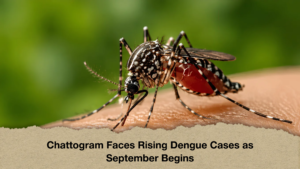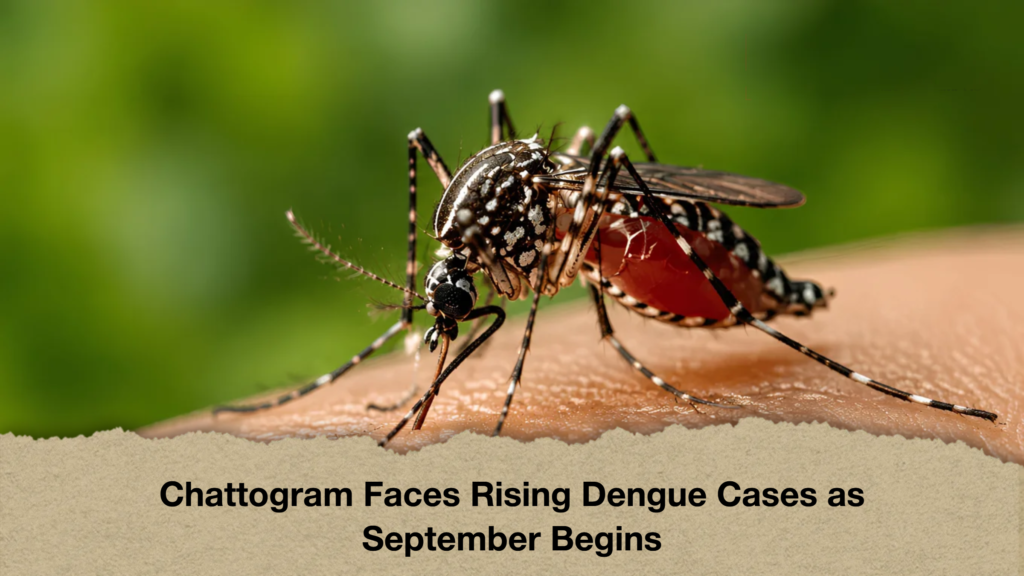
Chattogram is seeing a sharp rise in dengue infections at the beginning of September, raising concerns that the situation could become more difficult to manage in the coming weeks. According to figures from the Civil Surgeon’s office, 367 people were diagnosed with dengue during the first five days of September across the district and metropolitan areas, while one person has died.
The pace of infections has become particularly concerning when compared with the previous month. In August, Chattogram recorded 1,202 dengue cases and two deaths. With 367 cases already reported in the first few days of September, health officials and public health experts are warning that the number could climb considerably if preventive measures are not intensified.
The official figures may not fully reflect the scale of the outbreak. Cases diagnosed at private hospitals and clinics may not always be incorporated into government records immediately, meaning the actual number of infections could be higher than the reported total.
Public health experts have urged authorities to act before the seasonal rise becomes more severe. They have stressed the need to destroy breeding grounds of Aedes mosquitoes, identify areas where infections are concentrated, strengthen hospital preparedness and step up public awareness campaigns.
The timing is significant. Chattogram has experienced increasing dengue transmission during periods when rainfall and standing water create favourable conditions for Aedes mosquitoes to breed. Water left in containers, rooftops, construction sites and other exposed places can provide breeding grounds. Preventing such accumulation is therefore a key part of controlling transmission.
Md Sajedur Rahman, Chattogram’s Civil Surgeon, said the number of dengue patients was expected to continue rising during this period and that the increase could persist until around the middle of October. He said efforts were under way to raise public awareness and that supplies required for dengue diagnosis had also been increased.
Health officials are also stressing the need for greater caution after a patient becomes infected. The early stage of dengue commonly involves fever, which can lead patients and their families to focus mainly on managing the temperature. However, the fourth to seventh days after infection can be a particularly critical period.
According to the Civil Surgeon, fever may subside during this stage, creating the impression that the patient is recovering. That apparent improvement can sometimes result in reduced vigilance at precisely the point when close observation remains necessary.
Patients diagnosed with dengue have therefore been advised to remain under medical guidance from the beginning of the illness rather than assuming that a reduction in fever means the danger has passed. Families should continue monitoring the patient’s condition and seek medical attention promptly if the condition worsens or concerning symptoms develop.
The latest figures have placed renewed attention on both mosquito control and medical preparedness in Chattogram. Authorities face the task of reducing Aedes breeding sites while ensuring that healthcare facilities can cope with a possible increase in patients.
For residents, preventive measures remain equally important. Eliminating stagnant water around homes and workplaces, maintaining cleanliness and taking suspected dengue symptoms seriously can help reduce the risk of further transmission.
With September only beginning, the coming weeks are likely to be crucial for Chattogram’s dengue response. A coordinated effort involving mosquito-control activities, timely diagnosis, adequate medical preparation and sustained public awareness will be necessary to prevent the current rise from developing into a larger health crisis.