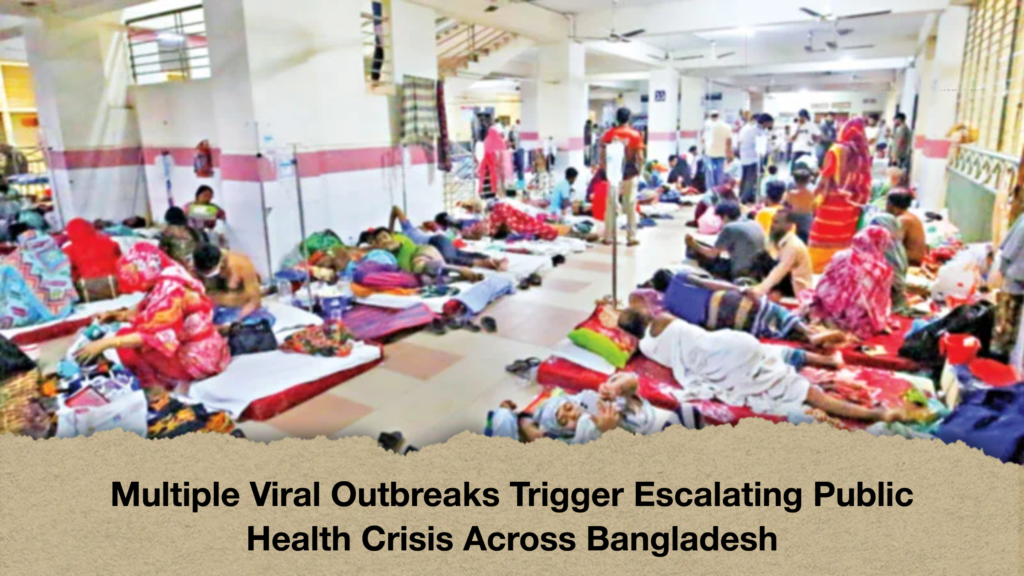
A complex surge of concurrent viral infections has left households across Bangladesh dealing with persistent fevers, creating unprecedented pressure on the nation’s healthcare system. Hospitals and clinics, particularly in urban centres, report a heavy influx of patients suffering from a chaotic overlap of symptoms driven by the simultaneous transmission of dengue, measles, chikungunya, influenza, and respiratory syncytial virus (RSV). The alarming confluence of these pathogens has prompted medical experts to issue urgent warnings against treating high body temperatures as ordinary seasonal fevers.
Healthcare facilities in Dhaka are bearing the brunt of the emergency. At the Bangladesh Shishu Hospital and Institute in Shyamoli, long queues spill out from the outpatient departments every morning. Patient volumes at the institution’s medicine department have spiked dramatically, rising from a daily average of roughly 260 patients last month to over 450. Across both outpatient and emergency units, more than 500 children are seeking treatment daily. Between six to eight per cent of these young patients require immediate hospitalisation, with toddlers and infants under five years old accounting for the vast majority of admissions.
Diagnosing these overlapping infections has created a clinical and financial ordeal. Because conditions like dengue, measles, and influenza share initial signs—such as high fevers, rashes, and severe fatigue—physicians are forced to run extensive, multi-pathogen blood panels. This diagnostic bottleneck delays targeted treatment plans while laboratory results remain pending, all while placing an immense financial burden on families paying for multiple diagnostic assays out of pocket.
According to virologists at Bangladesh Medical University, recognizing the nuanced differences between these diseases is critical. Dengue, driven predominantly this season by the DEN-2 serotype along with DEN-3 strains in rural and southern regions, presents with severe retro-orbital pain, spinal aches, and a risk of fatal haemorrhaging or circulatory shock. Measles presents a different danger; its post-febrile rashes spread systematically, frequently leading to life-threatening secondary pneumonia. Meanwhile, chikungunya leaves patients struggling with debilitating joint inflammation that lingers for weeks, RSV causes acute respiratory distress in toddlers, and seasonal influenza (Types A and B) spreads rapidly through overcrowded public transport and schools.
At the same time, national surveillance data underscores a staggering secondary crisis in measles transmission across the country.
Nationwide Measles Outbreak Statistics
| Epidemiological Parameter | Recorded Figures |
| Suspected Measles Hospital Admissions (24-Hour Period) | 761 |
| Suspected Measles Deaths (24-Hour Period) | 3 |
| Confirmed Measles Deaths (24-Hour Period) | 1 |
| New Hospital Visits for Measles Symptoms (24-Hour Period) | 843 |
| Total Confirmed Measles Cases (Since March 15) | 19,641 |
| Total Confirmed Measles Deaths (Since March 15) | 100 |
| Total Suspected Measles Hospital Admissions (Cumulative) | 163,105 |
| Total Suspected Measles Deaths (Cumulative) | 891 |
| Daily Peak Dengue Hospitalisations (Mid-August Baseline) | 753 |
| Dengue Fatalities (Mid-August Baseline Year-to-Date) | 74 |
Public health experts warn that actual transmission figures for these diseases are likely far higher than official records suggest, as limited diagnostic capacity prevents routine testing for every symptomatic patient. Specialists strongly advise against self-medication, internet-based diagnoses, or delaying professional clinical evaluation, cautioning that late hospital presentations drastically narrow the window for effective medical intervention.