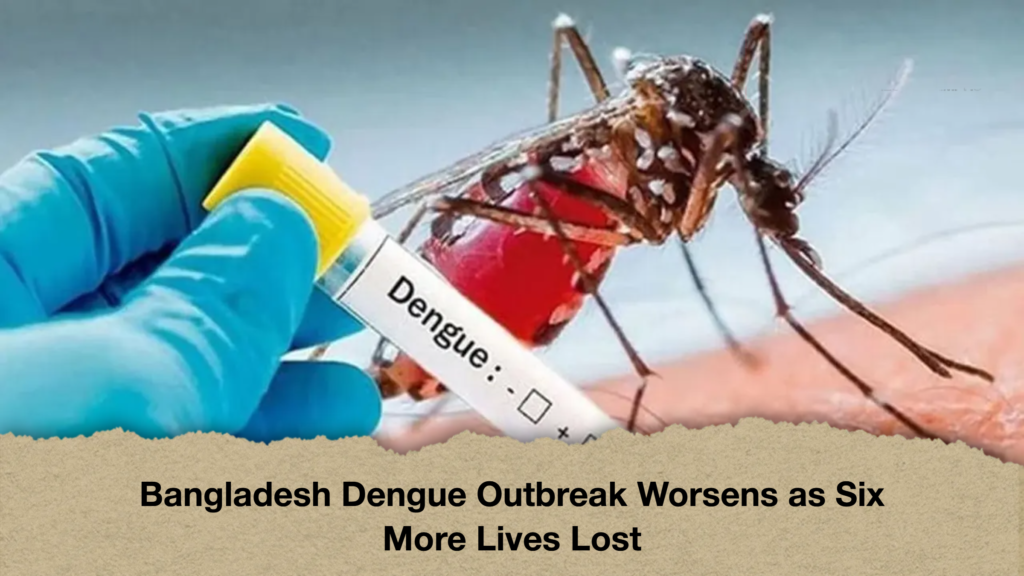
Bangladesh faces an escalating public health crisis as health authorities confirmed six further deaths from dengue fever within the past 24 hours. The nation’s total fatality count for the current year has now climbed to 164. Official bulletins released by the Health Emergency Operation Centre and Control Room under the Directorate General of Health Services (DGHS) paint a grim picture of vector-borne infections spreading rapidly across multiple administrative divisions.
Alongside the latest reported fatalities, medical facilities across the country admitted 1,593 new patients suffering from the mosquito-borne illness over the same period. Regional health reports indicate that Khulna division recorded the highest single-day mortality rate with two deaths. Meanwhile, one patient each succumbed to the virus across the divisions of Dhaka, Barishal, Mymensingh, Rajshahi, and Rangpur.
Pressure on healthcare infrastructure continues to mount as the cumulative number of hospitalised dengue patients in Bangladesh reached 55,163. The geographic distribution of new hospital admissions highlights that the outbreak has expanded well beyond the capital, establishing a widespread presence nationwide.
| Region | New Hospital Admissions (Past 24 Hours) |
| Barishal Division | 159 |
| Chittagong Division | 165 |
| Dhaka Division (outside City Corporations) | 383 |
| Dhaka North City Corporation | 171 |
| Dhaka South City Corporation | 132 |
| Khulna Division | 290 |
| Mymensingh Division | 82 |
| Rajshahi Division | 137 |
| Rangpur Division | 65 |
| Sylhet Division | 9 |
Dengue fever, caused by the dengue virus and transmitted primarily through the bites of infected female Aedes aegypti mosquitoes, presents a persistent challenge to tropical regions. High humidity, stagnant water accumulated during seasonal rains, and uncontrolled urban storage create ideal breeding environments for the vector. Typical symptoms range from sudden high fever, severe headache, behind-the-eye pain, and joint aches to fatigue and skin rashes. In severe cases, the illness can progress to dengue haemorrhagic fever or shock syndrome, marked by plasma leakage, acute respiratory distress, severe bleeding, and organ impairment.
Public health analysts urge municipal bodies to accelerate vector-eradication drives, particularly routine larvicidal fogging and clear-outs of clogged drainage lines. Citizens are advised to eliminate standing water sources around residences, utilise mosquito nets, and seek prompt medical advice at the onset of fever symptoms to reduce critical clinical complications.