Dengue infections are continuing to rise in Cox’s Bazar, with Rohingya refugees accounting for a substantial share of the cases recorded in the district this year. Between 1 January and 15 September, a total of 3,856 people were diagnosed with dengue in Cox’s Bazar. Of them, 2,507 were Rohingya refugees. Six people died from the disease during the period, all from the Rohingya community.
Figures from the Cox’s Bazar Civil Surgeon’s Office show that dengue has also affected local communities across several upazilas. Among local residents, Teknaf has recorded the highest number of cases in recent months. Up to 15 September, 332 people had been diagnosed with dengue in the upazila, while 294 were admitted to hospital.
Maheshkhali recorded 268 cases, with 267 patients requiring hospital admission. In Chakaria, 261 people were diagnosed and 159 were admitted. Ukhia reported 195 cases, of whom 193 were hospitalised.
Dengue cases have also been reported elsewhere in the district. Cox’s Bazar Sadar recorded 95 infections, with 94 patients admitted to hospital. Eidgaon reported 58 cases and 55 admissions. Ramu recorded 53 cases, while Pekua and Kutubdia reported 14 and 13 cases respectively. A further 17 cases were identified in the municipal area, while 43 came from other parts of the district.
At present, 35 dengue patients are receiving treatment in hospitals across Cox’s Bazar. The district headquarters hospital is treating 22 of them. Maheshkhali has four patients under treatment, while Teknaf and Chakaria each have three. Two patients are receiving treatment in Ukhia and one in Pekua.
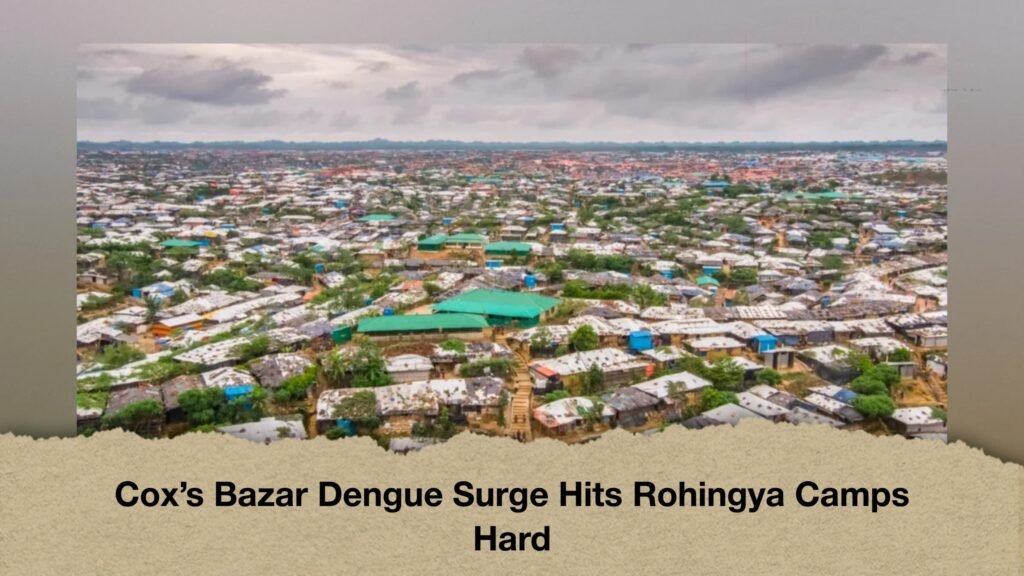
The situation in the Rohingya camps has drawn particular attention from health authorities. According to health department figures, 2,507 dengue cases had been identified in the camps by 29 August, with 2,505 patients admitted to hospital. Health officials subsequently reported 135 new cases in the camps during the current week, suggesting that transmission remains active.
Dr Abu Toha Md Rijuānul Haque Bhuiyan, chief health co-ordinator at the Office of the Refugee Relief and Repatriation Commissioner in Cox’s Bazar, said five camps had recorded the highest dengue infection rates relative to their populations.
Nayapara RC Camp recorded the highest rate at 1.61 per cent. The rate was 0.81 per cent in Camp 14, 0.34 per cent in Camp 26, 0.31 per cent in Camp 19 and 0.12 per cent in Camp 4 Extension.
Dr Bhuiyan said overcrowding, inadequate drainage and stagnant water during the rainy season were creating favourable conditions for the breeding of Aedes mosquitoes, which transmit dengue. Although the monsoon is nearing its end, the continued rise in infections has prompted renewed concern over disease control inside the camps.
The environmental conditions in the camps pose a particular challenge for dengue prevention. Dense settlements, limited drainage and water accumulating in different locations can create breeding sites for mosquitoes. Preventive measures therefore require not only treatment for those who fall ill but also efforts to reduce stagnant water and improve cleanliness around residential areas.
Sarwar Jahan Chowdhury, president of the Ukhia upazila unit of the BNP and a former upazila chairman, said the large Rohingya population in the area was one factor behind the scale of the outbreak in the camps. He also pointed to rubbish and stagnant water in different locations as conditions that could encourage Aedes mosquito breeding.
Ukhia Upazila Nirbahi Officer Panna Akter said dengue tends to become more prevalent during the monsoon season and stressed the need for greater public awareness. She also urged residents not to become overwhelmed by fear of the disease, saying that increased awareness could help reduce both infections and deaths.
The latest figures indicate that dengue is affecting both Rohingya refugees and local residents across Cox’s Bazar, although the Rohingya camps account for a large proportion of the reported cases. With new infections still being detected, health officials are facing the challenge of controlling mosquito breeding in densely populated settlements while ensuring timely treatment for patients.
The persistence of dengue towards the end of the rainy season has added to the concern. For the camps in particular, maintaining effective drainage, preventing water from remaining stagnant and addressing potential mosquito breeding sites remain central to efforts to contain further transmission.