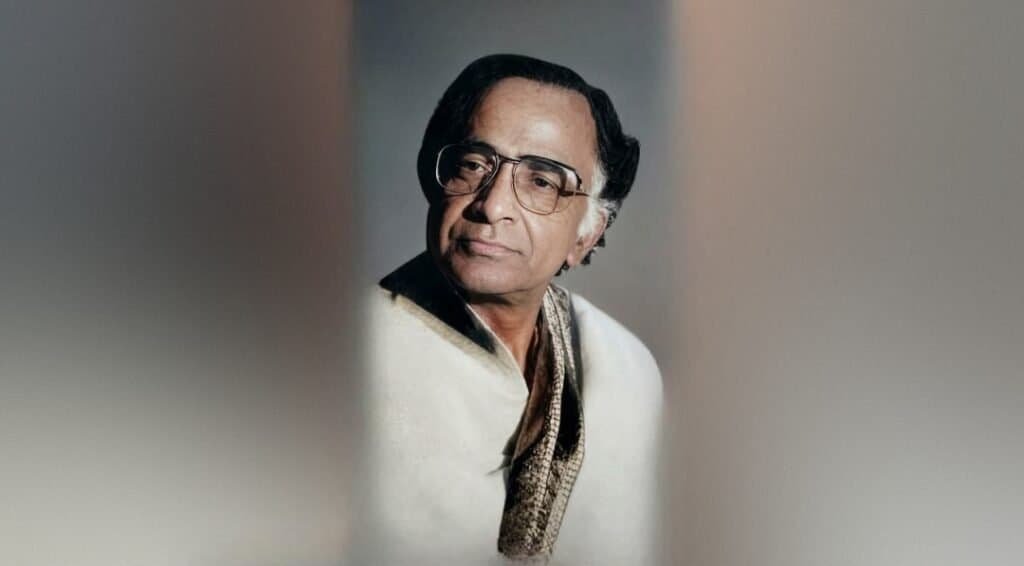
Amalendu Biswas remains one of the most celebrated figures in the history of Bengali folk theatre, remembered for his remarkable acting, commanding stage presence and lifelong dedication to jatra, a traditional form of Bengali theatrical performance. Through his work as an actor and director, he made a lasting contribution to the development of jatra in Bangladesh, earning the admiration of audiences and establishing himself as an influential figure in the country’s cultural heritage.
For Biswas, jatra was much more than entertainment. It offered a means of exploring history, mythology, literature, political ideas and the realities of everyday life. On stage, he brought historical heroes, defiant personalities and memorable mythological figures to life through expressive performances and powerful dialogue delivery. His ability to convey a character’s emotions, inner conflicts and motivations helped distinguish him from other performers of his generation.
His artistic journey also reflected the enduring importance of traditional theatre in Bengal, where live performances have long provided a popular means of storytelling and cultural expression.
Early Life and Family Background
Amalendu Biswas was born on 29 May 1925 in Yangon, Myanmar. His father, Surendra Lal Biswas, worked in the customs department there, while his mother was named Gyanada Devi. The family’s ancestral home was in Masjidia village, in Sitakunda Upazila of Chattogram district, Bangladesh.
His early life was shaped by a variety of experiences that eventually led him towards the performing arts. Although he initially pursued conventional employment, his growing interest in acting, theatre and cultural activities gradually became the defining influence on his career.
The transition from salaried work to a life devoted to performance was a significant decision. Biswas eventually committed himself to an art form that demanded considerable discipline, sustained effort and an ability to connect with audiences through live storytelling.
From Employment to a Life in Theatre
After sitting his matriculation examination in 1941, Biswas joined the Air Force in Calcutta. He later left that position and worked for a period in the police department. In 1944, he passed his First Arts examination from Robertson College. Three years later, in 1947, he joined the then East Pakistan Railway as an accountant.
Despite these professional commitments, his interest in theatre, acting and mass music continued to grow. His involvement in cultural activities increasingly drew him away from the routine of conventional employment and towards the stage.
Biographical accounts also mention his participation in the anti-Ayub movement and state that a warrant was issued against him in connection with his involvement. This aspect of his life reflects the intersection of cultural engagement and political circumstances during that period.
A decisive moment came in 1950, when Biswas established Babul Theatre with several fellow artists. The initiative marked the beginning of a new phase in his artistic career. He eventually left his railway job to devote himself fully to jatra.
Under his leadership, Babul Theatre developed into the popular Babul Opera. The troupe became central to his work as a performer and director, providing a platform through which he could pursue his artistic ambitions and contribute to the wider development of traditional Bengali theatre.
His commitment extended beyond establishing a successful troupe. He sought to strengthen an established theatrical tradition and make its stories, characters and dramatic possibilities accessible to audiences.
A Versatile Actor and Accomplished Director
Biswas distinguished himself through the breadth of his performances. He appeared in mythological, historical and social productions, demonstrating an ability to portray characters with widely differing personalities and emotional demands.
His greatest strength lay in his command of dramatic expression. Through his voice, gestures and delivery of dialogue, he conveyed the inner struggles of the characters he portrayed. Whether the role demanded courage, grief, defiance or authority, he brought considerable emotional intensity to the stage.
Over a theatrical career spanning approximately 27 years, he established himself as both an accomplished actor and a respected director. His productions covered a wide range of subjects, drawing on history, literature, politics and social life.
Among the notable jatra productions associated with his acting and direction were Michael Madhusudan, Ekṭi Poisa, Janoar, Samrat Shahjahan Badshah, Lenin, Nawab Sirajuddaula, Sohrab-Rustom, Achal Poisa, Chand Sultana, Rahugras and Jaliat.
These productions demonstrated the capacity of jatra to present stories that extended beyond traditional mythology. Historical personalities, social conflicts and literary subjects could all be adapted for the stage, allowing audiences to engage with a wide variety of themes through an accessible theatrical form.
Biswas’s performances were known for their energy, emotional depth and dramatic impact. His ability to identify with a character helped make the stories more immediate for audiences, while his work as a director enabled him to shape productions around the demands of the narrative and the strengths of the performers.
One of the notable achievements of his career came in 1978–79, when his production of Michael Madhusudan, in which he also acted, received widespread acclaim. The success highlighted his capabilities as both a performer and a director, reinforcing his standing in the world of Bengali folk theatre.
Artistic Partnerships and Family Life
Collaboration was an important part of Biswas’s theatrical career. Renowned performer Manjushree Mukherjee, widely known in jatra circles as the “First Lady” of the art form, appeared as the heroine in many of his productions.
Their artistic partnership became a particular attraction for theatre enthusiasts. In a performance tradition that relies heavily on expressive acting, dramatic exchanges and strong character relationships, the contributions of leading performers can be crucial to a production’s appeal.
Biswas’s personal life was also closely connected with the performing arts. His wife, Jyotsna Biswas, was a distinguished jatra performer known as the Empress of Jatra. Their daughter, Aruna Biswas, went on to become a recognised actress in film and television.
The family’s connection with the arts reflects the enduring relationship between theatre and the wider cultural life of Bengal. Through different generations, its members have remained associated with performance and entertainment.
Awards and Recognition
Biswas received significant recognition for his achievements in acting and directing. At the Jatra Festival organised by the Bangladesh Shilpakala Academy in 1979–80, he received the Best Actor honour and award on two consecutive occasions, according to his biographical account.
The recognition reflected his contribution to a theatrical form that requires performers to sustain audience engagement through voice, movement, expressive gestures and compelling storytelling. Jatra has historically brought dramatic narratives to large audiences, often combining heightened acting styles with music and emotionally charged dialogue.
Biswas’s contribution to the arts was also recognised posthumously through the Ekushey Padak, one of Bangladesh’s important civilian honours, awarded for outstanding contributions to the country’s cultural life.
The honour recognised his individual achievements while drawing attention to the cultural significance of the traditional theatre form to which he had devoted much of his life. His career demonstrated how jatra could serve as a vehicle for artistic expression while retaining its strong connection with popular audiences.
His Final Years and Enduring Legacy
Amalendu Biswas died on 13 October 1987. His death was a major loss for the jatra community and for those who admired his work on stage. Yet his influence did not end with his passing. His performances, directorial achievements and commitment to the art form have secured his place in the history of Bengali theatre.
His life illustrates how an artist can leave a lasting mark not only through individual performances but also through sustained efforts to develop an entire theatrical tradition. By leaving conventional employment to pursue jatra, Biswas made a long-term commitment to an art form that depended on the dedication of performers, directors and theatre companies.
His work also highlights the continuing cultural value of traditional performance. Jatra has served generations of audiences as a means of experiencing stories drawn from history, mythology, literature and society. Artists such as Biswas helped sustain that tradition by bringing a wide range of characters and themes to the stage.
For younger performers, his career offers an example of artistic commitment, versatility and respect for the craft of acting. His achievements as a director also underline the importance of leadership and creative judgement in bringing a production to life.
On the anniversary of his death, Amalendu Biswas is remembered as a towering figure of Bengali jatra theatre. His contribution to acting, direction and the development of traditional performance remains an important part of Bangladesh’s cultural heritage.
His life was a testament to the enduring power of artistic dedication. Through his performances and his work with Babul Opera, he helped preserve and enrich a theatrical tradition that continues to hold a distinctive place in Bengali culture.
A respectful tribute to Amalendu Biswas, the legendary master of the jatra stage, whose artistic legacy lives on in the history and collective memory of Bengali theatre.