To truly understand Eastern Africa is to understand the very dawn of our existence. This is a region where the earth literally cracked open to give birth to soaring mountains, where endless savannahs host the most dramatic wildlife migrations on the planet, and where the echoes of our earliest ancestors still linger in the dust of ancient gorges. Spanning a vast and incredibly diverse landscape, Eastern Africa is not just a destination; it is an experience that humbles, educates, and inspires.
From the snow-capped peaks of Mount Kilimanjaro to the deep, silent jungles of the Virunga Mountains, and from the bustling economic hubs of Nairobi and Dar es Salaam to the ancient, winding alleys of Stone Town, this region is a breathtaking tapestry of extremes.
Geography and Natural Landmarks: The Architecture of the Earth
The geography of Eastern Africa is defined by immense, world-renowned natural landmarks that shape the climate, the wildlife, and the lives of the people who call it home.
-
The Great Rift Valley: This immense geographical trench cuts through the region like a massive scar. Visible from space, the Rift Valley is a geological marvel where tectonic plates are slowly pulling apart. This tectonic activity has birthed hot springs, deep escarpments, and a chain of alkaline lakes that are famous for hosting millions of vibrant pink flamingos.
-
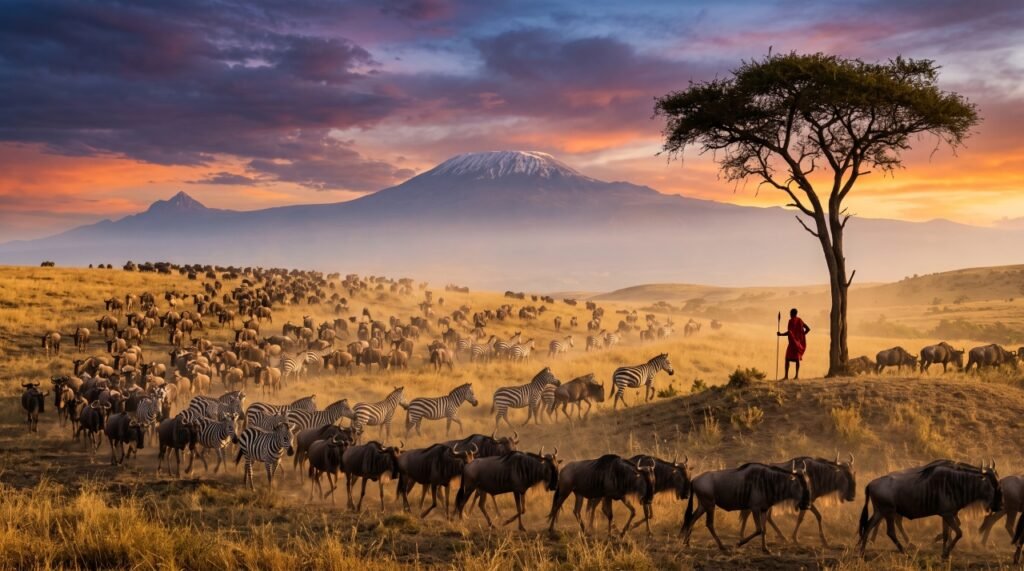
The Roof of Africa: The region is dominated by monumental peaks. Mount Kilimanjaro in Tanzania stands as Africa’s highest mountain. Scaling its slopes takes climbers through five distinct climate zones, from dense rainforest at the base to arctic conditions at the glacier-capped summit. Nearby, Mount Kenya offers a rugged, arguably more technical climbing challenge and holds deep spiritual significance for the local Kikuyu people.
-
The African Great Lakes: Eastern Africa is a region of immense freshwater bodies. Lake Victoria, shared by Uganda, Kenya, and Tanzania, is the largest tropical lake in the world and the primary source of the legendary White Nile. To the south lies Lake Tanganyika, the longest freshwater lake globally and plunging to staggering, lightless depths, hosting hundreds of endemic fish species.
-
The Swahili Coast and Islands: The eastern seaboard is fringed with coral reefs and white-sand beaches bordering the warm Indian Ocean. The Zanzibar Archipelago (part of Tanzania) is historically famous as the “Spice Islands,” offering a humid, fragrant, and visually stunning contrast to the dry inland savannahs.
Human Origins and History: The Cradle of Humankind
You cannot separate Eastern Africa from the story of human evolution. The unique geological conditions of the Rift Valley have preserved a fossil record that is unparalleled anywhere else on Earth.
-
Olduvai Gorge and Koobi Fora: Located in northern Tanzania, Olduvai Gorge is often referred to as the Cradle of Humankind. Here, paleoanthropologists Louis and Mary Leakey discovered fossilized remains and early stone tools belonging to Homo habilis and Homo erectus. Similarly, the Koobi Fora region in Kenya has yielded fossilized hominid skulls that pushed back our understanding of human history by millions of years.
-
The Swahili Coast and Trade: Long before European explorers arrived, the coast of Eastern Africa was a thriving hub of international commerce. Monsoon winds carried merchants from the Arabian Peninsula, Persia, and India to trade goods like ivory, gold, and spices. This centuries-long interaction birthed the Swahili culture—a beautiful blend of Bantu African traditions with Arab and Islamic influences, complete with stunning coral-stone architecture.
-
Colonialism and Independence: The late 19th and early 20th centuries brought brutal European colonization, with Britain, Germany, and Italy carving up the territories. The mid-20th century, however, witnessed powerful independence movements. Leaders like Julius Nyerere in Tanzania and Jomo Kenyatta in Kenya led their nations to self-rule, paving the way for the modern nation-states we see today.
Wildlife, Safaris, and Ecotourism: Africa’s Last Eden
For many, Eastern Africa is synonymous with the word “safari” (which translates simply to “journey” in Swahili). The region is fiercely dedicated to preserving its biodiversity, offering the most iconic wildlife viewing on earth.
-
The Great Migration: Often billed as the greatest wildlife show on earth, this annual circular movement involves over a million wildebeests, hundreds of thousands of zebras, and gazelles traversing the Serengeti-Mara ecosystem. Driven by seasonal rains, the herds cross crocodile-infested rivers while being relentlessly stalked by lions, leopards, and cheetahs.
-
The Big Five: Ecotourists travel from all corners of the globe for a chance to witness the “Big Five”—lions, leopards, rhinos, elephants, and Cape buffaloes. Conservation efforts in parks like the Ngorongoro Crater, Tsavo, and the Maasai Mara have been critical in pulling species like the black rhino back from the brink of extinction.
-
Mountain Gorillas: Moving away from the savannah and into the dense, misty rainforests of Rwanda and Uganda, ecotourism takes a different shape. Gorilla trekking in the Bwindi Impenetrable Forest and the Virunga Massif is a highly regulated, deeply emotional experience. Strict permit systems ensure that tourism directly funds the protection of these critically endangered, deeply intelligent primates.
-
A Unified Tourism Vision: The East African region is increasingly promoting itself as a single, unified destination for international travelers. Initiatives like the East Africa Tourism Barometer track vital industry data, showing robust resilience.
Countries, People, and Culture: A Tapestry of Diversity
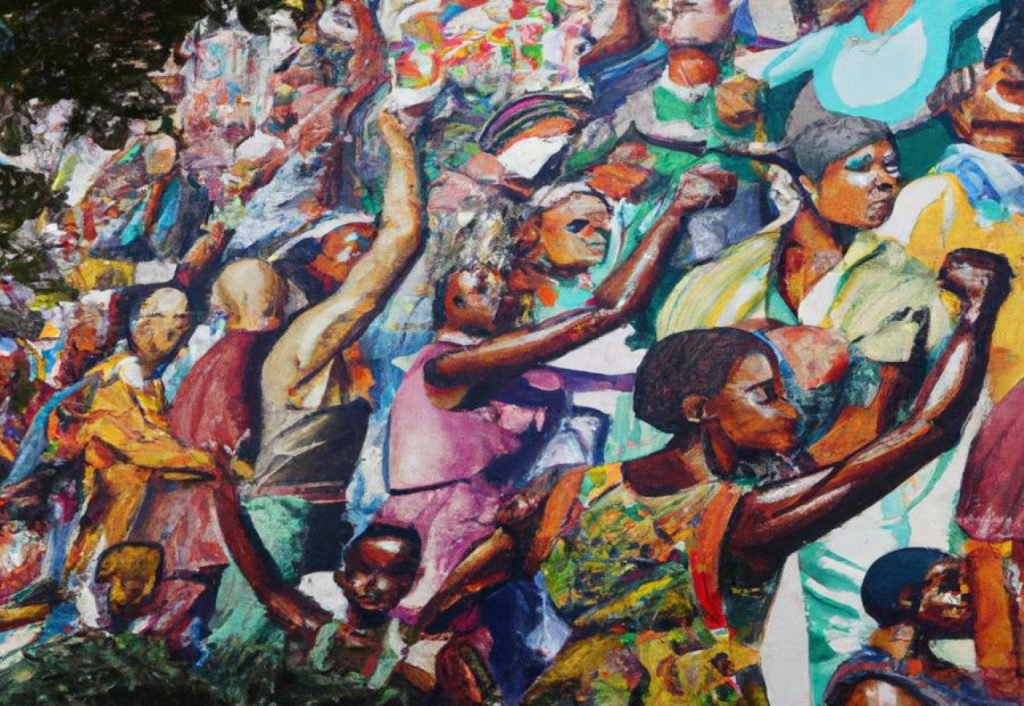
Eastern Africa is not a monolith. It is an incredibly vibrant, culturally dense region marked by hundreds of distinct ethnic groups, languages, and traditions.
-
The Nations: The region is anchored by the East African Community (EAC), an intergovernmental organization that recently expanded to include eight partner states: the Republic of Burundi, the Democratic Republic of Congo, the Republic of Kenya, the Republic of Rwanda, the Federal Republic of Somalia (which became a full member in March 2024), the Republic of South Sudan, the Republic of Uganda, and the United Republic of Tanzania.
-
Languages: While English and French are widely used in business and government due to colonial legacies, Kiswahili is the true linguistic glue of the region. It is the lingua franca that connects merchants in Mombasa to farmers in eastern DRC.
-
Traditions and Modernity: The cultural landscape is a fascinating mix of the ancient and the ultra-modern. Indigenous groups like the Maasai in Kenya and Tanzania maintain their traditional, semi-nomadic pastoralist lifestyles, recognizable by their vibrant red shukas and intricate beadwork. Meanwhile, just a few hours away in cities like Nairobi and Kigali, a booming tech-savvy youth culture is driving innovations in mobile banking, contemporary art, and globally recognized Afro-pop music.
Economies and Development: Integration and Growth
Eastern Africa contains some of the fastest-growing economies on the continent, heavily driven by regional integration, agriculture, technological innovation, and a resilient tourism sector.
-
The Economic Engine of Tourism: The natural landscapes are not just beautiful; they are vital economic lifelines. Tourism in the East African region is a massive economic driver. Before the pandemic, tourism contributed an average of 8.1% to the regional GDP, generated 17.2% of export earnings, and accounted for about 7% of employment.
-
Post-Pandemic Resurgence: The sector has seen an incredibly fast-paced recovery. In 2023, EAC tourism receipts fully recovered, reaching US$ 7.7 billion—a staggering 24% higher than pre-pandemic levels. Kenya and Tanzania led this charge, recording recovery levels of 53% and 30% above their pre-pandemic figures, respectively.
-
The Push for a Single Market: The East African Community (EAC) is actively working toward deeper economic and political integration. The ultimate vision of the EAC includes a Common Market allowing the free movement of goods, labor, and capital, a Monetary Union with a single currency, and eventually a Political Federation. To boost the tourism sector across borders, organizations like the East Africa Tourism Platform (EATP) successfully advocated for a single tourist visa and the use of national IDs for travel between certain partner states like Kenya, Rwanda, and Uganda.
Eastern Africa is a region where the past and the future collide daily. It is a place that guards the fragile history of human origins while simultaneously racing toward rapid digital and economic integration. Whether you are observing a leopard resting in a massive acacia tree, bargaining in a vibrant Swahili spice market, or witnessing the incredible economic renaissance of its capital cities, Eastern Africa leaves an indelible mark on the soul.