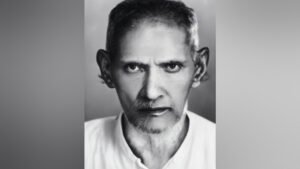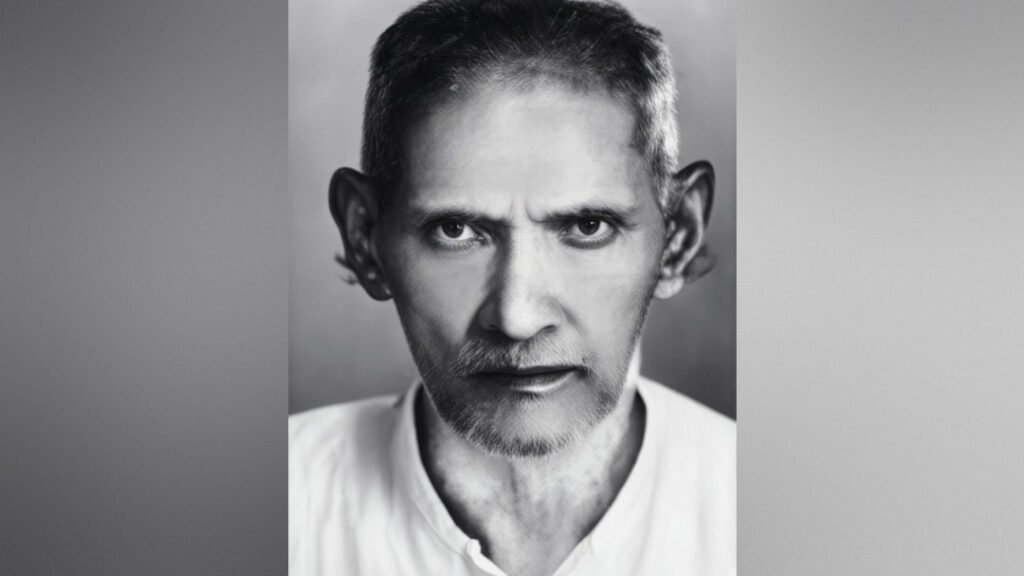
In the history of Bengali literature, some figures are remembered not simply for the works they produced, but for the literary heritage they rescued from oblivion. Abdul Karim Sahityabisharad was one such scholar. Through decades of painstaking research and manuscript collecting, he brought forgotten poets, literary works and fragments of Bengal’s cultural history back into scholarly attention.
Sahityabisharad was a writer, literary historian, researcher, collector of ancient Bengali manuscripts, editor and commentator. His work was particularly significant in documenting the contribution of Muslim poets and writers to medieval Bengali literature. By tracing manuscripts that had received little attention, he helped broaden the understanding of a literary tradition shaped by different communities, regions and historical periods.
Abdul Karim was born on 11 October 1871 in Suchakradandi village in Patiya, Chattogram. His father, Munshi Nuruddin, died before his birth, while his mother passed away when he was still very young. He was subsequently raised by his uncle, Ashiruddin. Despite losing both parents at an early age, his appetite for education and knowledge remained undiminished.
He passed the Entrance examination from Patiya High School in 1893 and began his professional life as a teacher. After teaching at several schools, he joined the office of the Divisional Commissioner in Chattogram. At one stage of his career, he served as a divisional school inspector. He retired from service in 1934.
His employment provided a livelihood, but literature became his lifelong pursuit.
His interest in ancient Bengali manuscripts gradually developed into an extensive research mission. He travelled from village to village in search of old manuscripts, many of which remained in private homes, old chests and neglected storage spaces. At the time, numerous manuscripts were poorly preserved and vulnerable to deterioration.
Sahityabisharad recognised that these manuscripts were not merely ageing pieces of paper. Their pages contained evidence of Bengal’s language, literary traditions, social life and cultural development. Preserving them therefore meant preserving material that could help future generations understand the region’s literary past.
This conviction made him one of the pioneers of Bengali manuscript research.
The contribution of Muslim poets to medieval Bengali literature was one of his principal areas of study. Manuscripts in his collection helped researchers learn more about poets such as Daulat Qazi, Alaol, Syed Sultan and Muhammad Khan. His investigations also brought the names and literary works of nearly a hundred Muslim poets to wider attention, many of whom had previously received little or no representation in established accounts of Bengali literary history.
His achievement, therefore, extended well beyond collecting manuscripts. He helped recover portions of Bengali literary history that had remained obscure.
In 1920-21, the Bangiya Sahitya Parishad published a two-volume catalogue of the Bengali manuscripts he had collected under the title Bangala Prachin Puthir Bibaran. The publication became an important reference for manuscript studies. A substantial part of his collection was later preserved in institutional repositories, including the Dhaka University Library. His manuscript legacy is also connected with collections associated with Chittagong University and the Varendra Research Museum. The Department of Bengali at Dhaka University subsequently published a catalogue of preserved manuscripts under the title Puthi Parichiti.
Accounts differ over the exact size of his manuscript collection. Some sources cite around 1,700 manuscripts, while others refer to more than 2,500. The variation in the figures does not alter the significance of his work. His sustained effort to locate, document and preserve such material was itself a major contribution to the study of Bengali literature.
Sahityabisharad was also a dedicated editor and researcher. He edited and published 11 works of ancient Bengali literature. Among his notable writings was Islamabad, a work dealing with the history and culture of Chattogram.
He also co-authored Arakan Rajsabhay Bangla Sahitya with Dr Muhammad Enamul Haq. Published in 1935, the research work explored Bengali literary activity in the Arakan royal court and shed light on an important setting in the historical development of Bengali literature.
His scholarship extended beyond manuscript collection. He published numerous articles in periodicals and examined different aspects of Bengali literary history. His research into Muslim poets helped bring greater attention to literary traditions that had previously received comparatively limited treatment. Rather than viewing Bengali literature through a narrow religious lens, his work contributed to a broader understanding of its diverse historical development.
His writings also reflected a clear interest in Bengali language and cultural identity. He regarded language and literature as important elements of the cultural heritage of the Bengali people. His research demonstrated how literary traditions could be understood through the interaction of different historical, social and cultural contexts.
His contribution received recognition from several literary and cultural circles. The Chattal Dharmamandali conferred on him the title ‘Sahityabisharad’, while the Nadia Sahitya Sabha awarded him the title ‘Sahityasagar’. He preferred the title ‘Sahityabisharad’ and eventually incorporated it into his name.
A remark attributed to the writer Mahbub Ul Alam has also become associated with his legacy. After seeing him from a distance, Mahbub Ul Alam is said to have remarked to Kshitimohan, “He is not merely an individual; he is an institution.” The comment has often been used to convey the scale of Sahityabisharad’s collecting, research and editorial work.
He carried out much of this work at a time when scholars had none of the digital archives, modern preservation facilities or rapid communication systems available today. Finding a manuscript could require extensive travel and personal contact, while examining and preserving old texts demanded patience and sustained effort.
His work was therefore rooted in a combination of curiosity, persistence and a deep commitment to literary heritage. He did not simply gather old manuscripts; he sought to understand their contents, identify their authors and establish their place within the wider history of Bengali literature.
Many manuscripts that might otherwise have remained forgotten in old homes or deteriorated through neglect were brought into the sphere of literary research through his efforts. His collection and scholarship helped introduce new names, texts and historical chapters into discussions of Bengali literature.
Abdul Karim Sahityabisharad died in Chattogram on 30 September 1953. Decades after his death, his manuscript collection, research and edited works continue to be regarded as valuable resources for the study of Bengali literature. In recognition of his contribution, the Government of Bangladesh awarded him the Independence Award posthumously in 1995.
His legacy is not confined to the books he wrote or edited. It also survives in the manuscripts he rescued, the poets whose names he brought to wider attention and the literary traditions he helped document.
By searching through the yellowing pages of old manuscripts, Abdul Karim Sahityabisharad sought to recover Bengal’s forgotten past. In doing so, he helped place a rich body of literary heritage within reach of later generations.
His life remains closely associated with the preservation of Bengal’s manuscript tradition and the recovery of overlooked chapters in Bengali literary history.