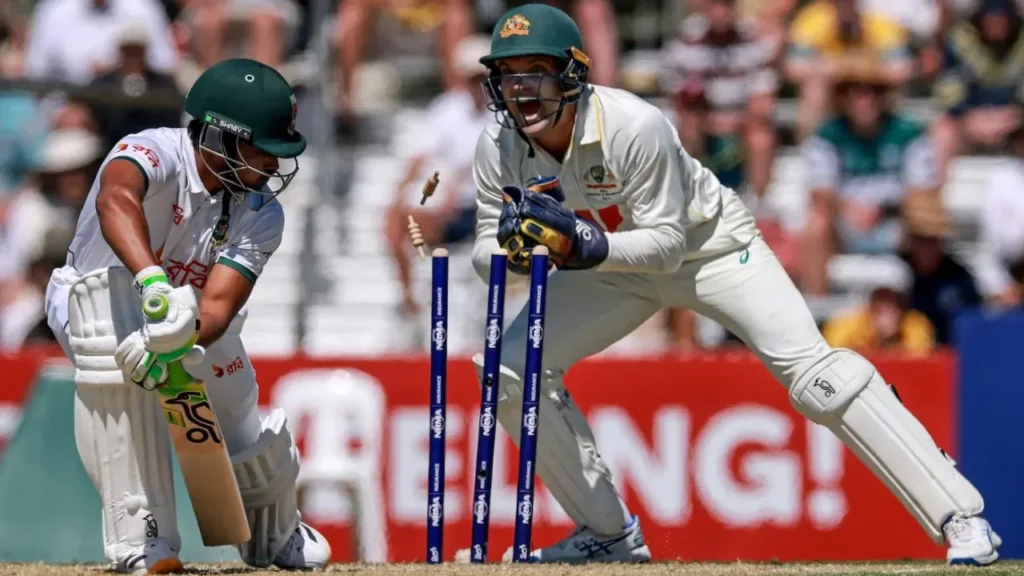
Bangladesh captain Najmul Hossain Shanto has called for more regular opportunities to play in Australia, arguing that repeated exposure to demanding conditions would improve both the experience and performance of the country’s cricketers.
Shanto made the appeal after Bangladesh suffered an innings-and-51-run defeat to Australia in the second Test in Mackay. The result ended the series on a disappointing note for Bangladesh, who had shown encouraging signs earlier in the tour but struggled to cope with the conditions in Mackay.
Bangladesh first toured Australia in 2003, meaning the team had to wait 23 years before returning for another full tour. Shanto believes such a long gap is not beneficial for a side seeking to become more competitive in overseas Test cricket.
“We need to be regular,” Shanto said after the Mackay Test. He stressed that playing more often in similar conditions would help the players adapt and develop the skills required to succeed away from home.
For Bangladesh, the challenge in Australia was particularly evident with the bat. Shanto pointed to the extra bounce from the surface and movement through the air as factors that made batting difficult. The conditions tested the technique, judgement and patience of the visiting batters, with the difficulties affecting the line-up as a whole rather than just individual players.
Australian conditions can present a markedly different challenge from those encountered by Bangladesh at home. The combination of pace, bounce and movement can leave little room for error, particularly for batters who have limited experience on such surfaces. Regular exposure, Shanto suggested, would allow players to become more accustomed to these demands rather than having to adjust after long periods away from Australia.
Despite the heavy defeat in Mackay, the Bangladesh captain does not view the experience solely as a setback. He believes difficult tours can provide valuable lessons for the team and help players understand what is required to compete in unfamiliar environments.
According to Shanto, Bangladesh must learn to embrace such conditions if the team is to make progress as a unit. The lessons from Australia could prove useful in future overseas assignments, particularly when facing fast bowlers on pitches offering significant bounce and movement.
The tour itself had contrasting moments for Bangladesh. After returning to Australia following a lengthy absence, the team produced an encouraging performance in Darwin before the Mackay Test exposed weaknesses against the home side. The series therefore offered both positive signs and clear areas for improvement.
Shanto’s call for more regular tours reflects a wider challenge for Bangladesh cricket: building experience outside familiar conditions. Players can only develop a strong understanding of overseas pitches, weather and match situations through repeated exposure. For younger members of the squad in particular, regular international cricket in Australia could help accelerate that learning process.
After waiting 23 years to return, Bangladesh will now leave Australia with a difficult result but also with valuable experience. Shanto’s message is straightforward: another long wait should not be necessary. Regular opportunities to compete in Australia, he believes, could help turn hard lessons into stronger performances in the future.