The figures were released by the Directorate General of Health Services (DGHS) in its regular dengue update on Saturday, 24 October. The reporting period covered Friday at 8 am to Saturday at 8 am.
With the latest fatalities, the total number of deaths attributed to dengue in Bangladesh since January this year has risen to 376. The cumulative number of people admitted to hospital with the disease has reached 121,699, according to the health authorities.
The number of hospital admissions recorded so far this year has already exceeded the full-year totals for both 2024 and 2025. The figures underline the scale of the outbreak, although comparisons between a partial year and complete annual totals should be made with the difference in reporting periods in mind.
In 2025, Bangladesh recorded 102,861 dengue-related hospital admissions and 413 deaths nationwide. In 2024, the country reported 101,214 admissions and 575 deaths.
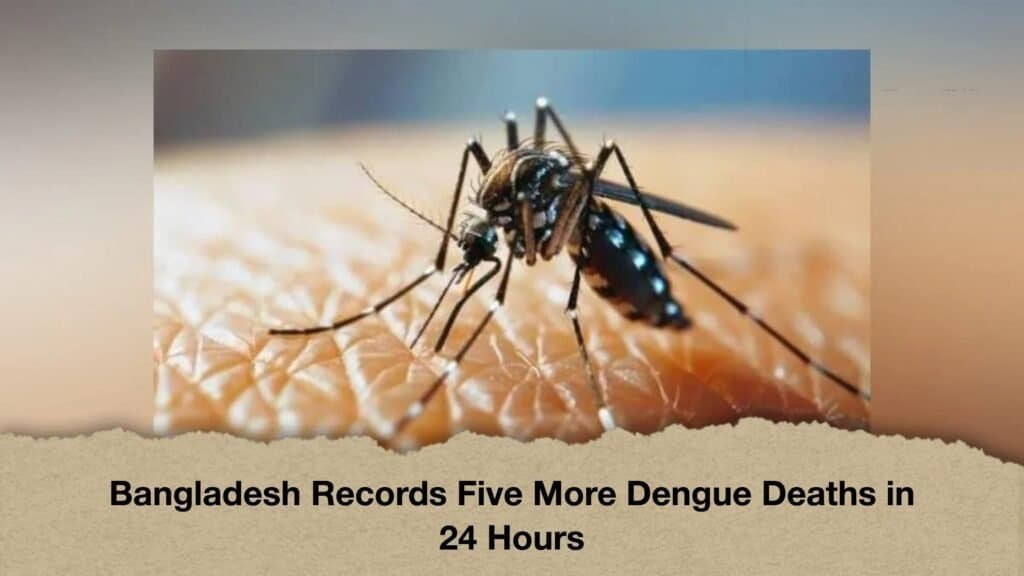
Dengue is transmitted to humans through the bites of infected Aedes mosquitoes. These mosquitoes can breed in stagnant water collected in household containers, flower pots, discarded tyres, coconut shells and other objects that retain water. The removal of potential breeding sites is therefore a key part of efforts to limit transmission.
Common symptoms include fever, headache, muscle and joint pain, pain behind the eyes and nausea. While many patients recover with appropriate care, some develop severe dengue, which can lead to serious complications and become life-threatening.
Warning signs include severe abdominal pain, persistent vomiting, bleeding, unusual weakness and breathing difficulties. Anyone experiencing such symptoms should seek urgent medical attention. Patients suspected of having dengue should consult a qualified healthcare professional rather than relying on self-medication.
Dengue can also become more dangerous around the time a fever subsides, making continued observation important even when the temperature begins to return to normal. Doctors’ advice should be followed regarding monitoring, hydration and treatment.
Public health experts generally stress that controlling mosquito breeding is essential to reducing the spread of dengue. Regularly emptying containers that collect water, keeping water-storage vessels covered and maintaining clean surroundings can help reduce the number of breeding sites. Protection against mosquito bites is also important, particularly in areas experiencing high transmission.
The latest figures highlight the continuing public health challenge facing Bangladesh. With 121,699 hospital admissions and 376 deaths recorded between January and 24 October, sustained mosquito-control measures, public awareness and timely medical care remain central to the response.