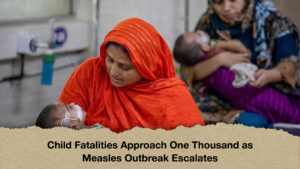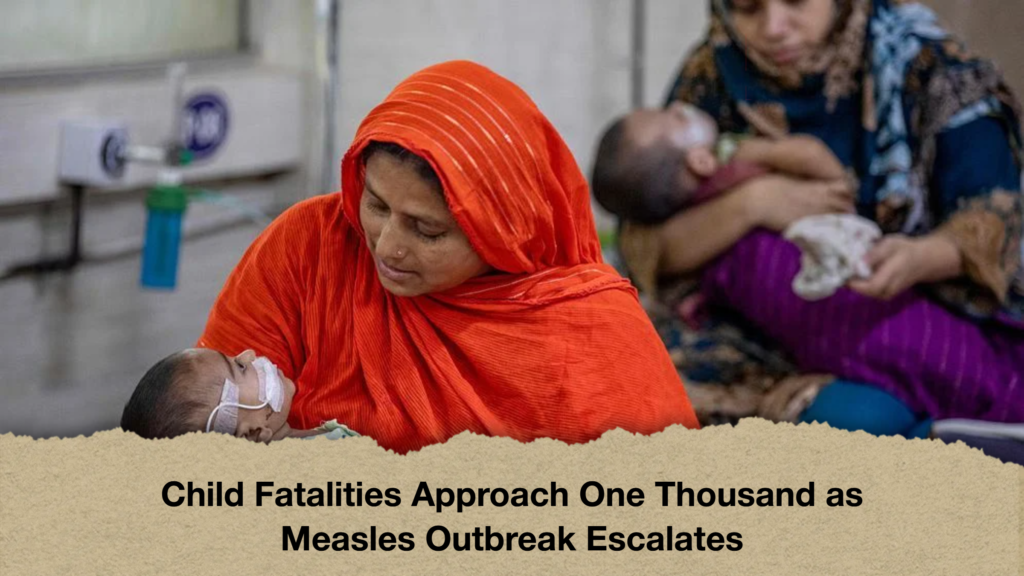
Two more children have succumbed to measles and suspected measles symptoms, pushing the total national death toll close to a grim milestone. Official figures released by the Directorate General of Health Services (DGHS) control room on Tuesday, 8th September, confirm that the aggregate number of fatalities has now reached 999. Alongside the newly reported deaths, healthcare facilities recorded 1,236 fresh infections over the preceding 24 hours, underscoring an unrelenting burden on the country’s public health infrastructure.
Data compiled by the health authority since the onset of the outbreak on 15th March reveals a stark disparity between laboratory-confirmed cases and symptomatic fatalities. Out of the 999 total deaths registered over this period, 100 cases—roughly 10 per cent—were definitively confirmed as measles through clinical diagnostics. The remaining 899 fatalities, accounting for nearly 90 per cent of the total, involved children who died exhibiting clinical symptoms directly compatible with the disease. This heavy proportion of suspected deaths highlights severe challenges in rapid laboratory testing and diagnostic throughput during a large-scale epidemic.
Measles remains one of the world’s most virulent airborne viral diseases, transmitted through respiratory droplets from infected individuals. Early symptoms typically mirror severe respiratory infections, characterized by high fever, runny nose, coughing, and conjunctivitis, followed days later by a distinctive maculopapular rash that spreads across the body. Young children are particularly susceptible to severe secondary complications, including lethal pneumonia, encephalitis, and acute gastroenteritis leading to severe dehydration. Vulnerability rises sharply among malnourished infants or those with compromised immune systems.
The steady accumulation of fatalities over nearly six months has raised severe concerns among epidemiologists and pediatric specialists. While routine immunization via the Measles-Rubella (MR) vaccine provides robust protection, outbreak surges of this magnitude signal critical gaps in population immunity, localized pockets of low vaccine coverage, or delays in seeking medical intervention.
The health authority continues to track infection trends and maintain field surveillance across affected regions. Emergency medical teams are prioritizing early detection, the distribution of high-dose Vitamin A supplements to reduce complication rates, and the isolation of suspected cases. Public health experts emphasize that accelerating catch-up vaccination drives and improving immediate clinical care for symptomatic children remain paramount to curbing transmission and preventing further loss of life.