Industrial activity across Bangladesh has lurched to a near-complete standstill following three weeks of an escalating natural gas supply crisis. The deficit has hit heavy manufacturing, export-oriented textile and garment sectors, and essential consumer goods production, threatening the stability of the national economy. Interruptions to liquefied natural gas (LNG) imports and reduced domestic pipeline pressure have left energy-dependent plants unable to maintain even minimal operational output.
The disruption has rippled through domestic supply chains. Major conglomerates, including the Meghna Group of Industries and TK Group, have ceased operations at key manufacturing facilities. Meghna Group—which operates 57 industrial units spanning edible oil, sugar, paper, cement, and chemical processing—suspended all factory activities on Wednesday.
Mostafa Kamal, Chairman and Managing Director of Meghna Group, confirmed that the minimum gas pressure required to operate heavy machinery is completely absent, while concurrent electricity rationing has compounded the issue. In urgent communications sent to the Ministry of Power, Energy and Mineral Resources and the Ministry of Commerce, industrial leaders have requested immediate state intervention to restore utility baselines.
The operational hiatus extends across multiple key manufacturing hubs:
-
Chittagong and Narayanganj: Heavy industries clustered around Chittagong Port—primarily steel re-rolling, glass, and cement—are completely idle. Similarly, steel mills in Narayanganj have reported a month-long stoppage due to low pressure.
-
Hobiganj Industrial Area: Gas lines servicing 171 factories in the district were cut on Wednesday. Facilities owned by major entities such as PRAN-RFL Group, Square Group, Transcom, Jamuna Industrial Park, Badsha Group, and Sayham Group remain offline, leaving more than 150,000 workers without active duties.
-
Gazipur Belt: According to Gazipur Industrial Police estimates, 525 factories—representing 12 to 15 per cent of the total industrial footprint in the area—have halted production entirely. Larger units attempting to run on reduced capacity report output dropping by at least 40 per cent.
-
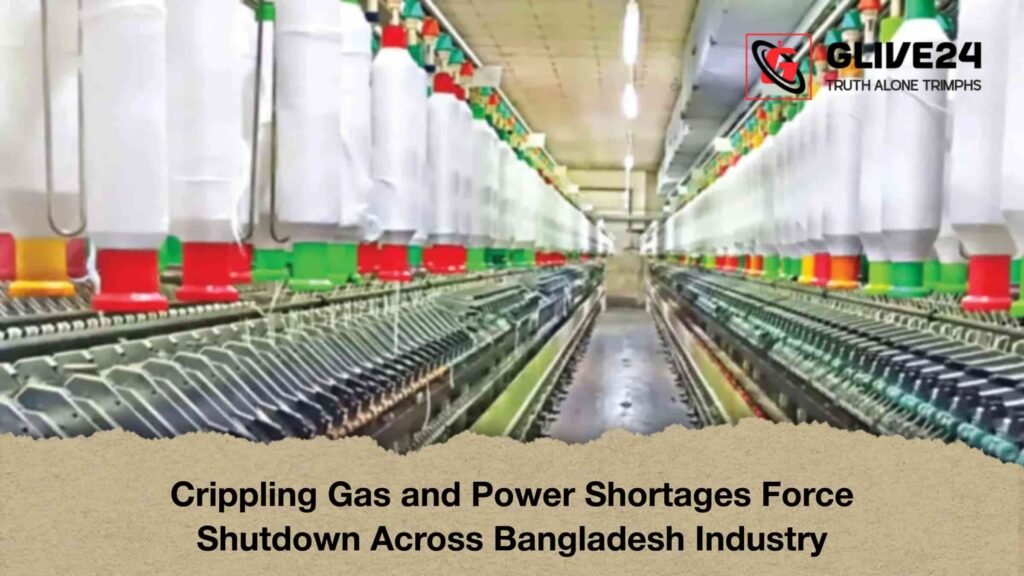
Textiles and Ready-Made Garments (RMG): The Bangladesh Garment Manufacturers and Exporters Association (BGMEA) and the Bangladesh Knitwear Manufacturers and Exporters Association (BKMEA) report widespread downtime. Key operations including dyeing, finishing, and stenting are entirely reliant on gas. While some spinning mills have attempted to rely on diesel generators, high internal temperatures caused by non-operational chillers have degraded yarn quality. Running large facilities on diesel generators incurs a cost of up to 7 million Bangladeshi Taka (£46,000) daily per major corporate group—an expenditure executives deem financially unsustainable.
Regional distribution data underlines the shift in utility allocation that triggered the industrial shortfall. Over recent weeks, national energy authorities reallocated gas from industrial pipelines toward state electricity generation and residential networks to manage public discontent regarding rolling blackouts.
| Sector / Indicator | Baseline Supply Level | Current Supply Level | Primary Impact Notes |
| Power Generation Allocation | 680 million cubic feet/day | ~1,000 million cubic feet/day | Increased to stabilize domestic grid blackouts |
| Fertilizer Production Allocation | Constant | 140 million cubic feet/day | Prioritized for national agricultural input |
| Industry & Household Combined | 1,600–1,650 million cubic feet/day | ~850 million cubic feet/day | Drastic reduction across non-power pipelines |
| Effective Industrial Pipeline Allocation | ~1,100 million cubic feet/day | 550–600 million cubic feet/day | Insufficient for heavy manufacturing pressure |
| PRAN-RFL Group Output (Hobyganj/Gzipur) | 100% capacity | Below 50% capacity | Alternative fuel doubled operational expenses |
| BGMEA/BKMEA Factory Operations | 100% capacity | Below 30–50% capacity | Fabric shortages threatening export timelines |
| Gazipur Industrial Unit Status | ~3,500 units active | 525 units fully closed | Remaining units running at reduced capacity |
| Bangladesh Textile Mills Assoc. (BTMA) | Full operations | Over 70% offline | Dyeing and stenting halted without gas |
| Hobiganj Industrial Zone Status | 171 plants active | 171 plants suspended | 150,000 workforce currently idle |
| Commercial Transport Disruptions | Regular CNG supply | Network grid failures | Highway blockades in Jamalpur & Brahmanbaria |
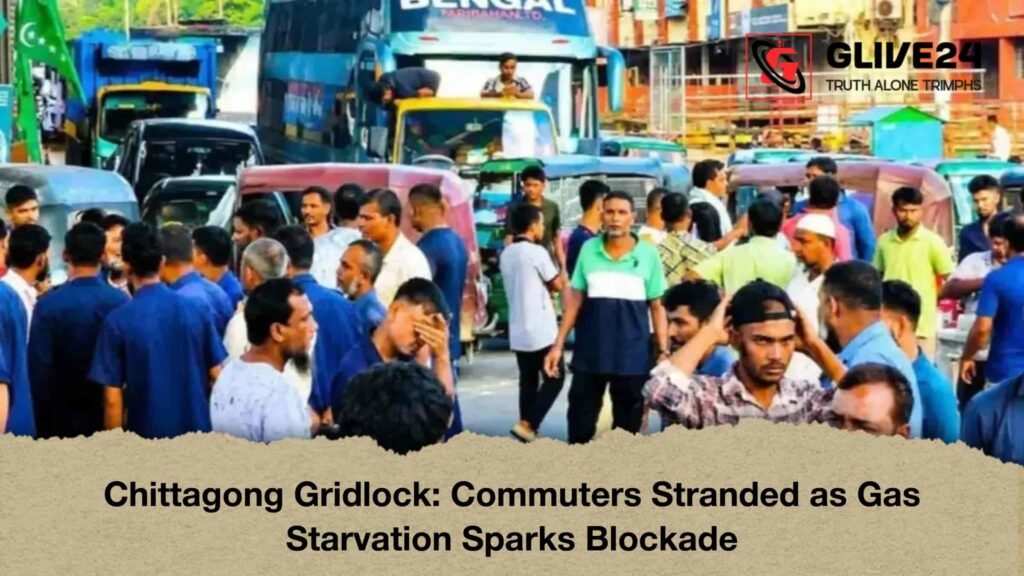
The economic fallout has spilled over into public infrastructure. In Jamalpur, compressed natural gas (CNG) station outages triggered road blockades along the Jamalpur-Tangail regional highway by transport operators facing zero pipeline pressure. A similar demonstration temporarily obstructed the Dhaka-Sylhet highway at Srail in Brahmanbaria before highway police cleared the passage.
Business representatives are calling for a temporary diversion of natural gas supplies from state-run fertilizer plants to core export and consumer manufacturing units until maritime coal shipments resume and normal LNG supply chains stabilize. Sector analysts warn that prolonged delays in restoring utility pressure will inevitably lead to missed export deadlines, customer cancellations, and reduced foreign currency earnings.