The government plans to reintroduce water bus services along Dhaka’s circular river route through private-sector investment, aiming to provide residents with an alternative mode of transport while also promoting river-based tourism and recreation.
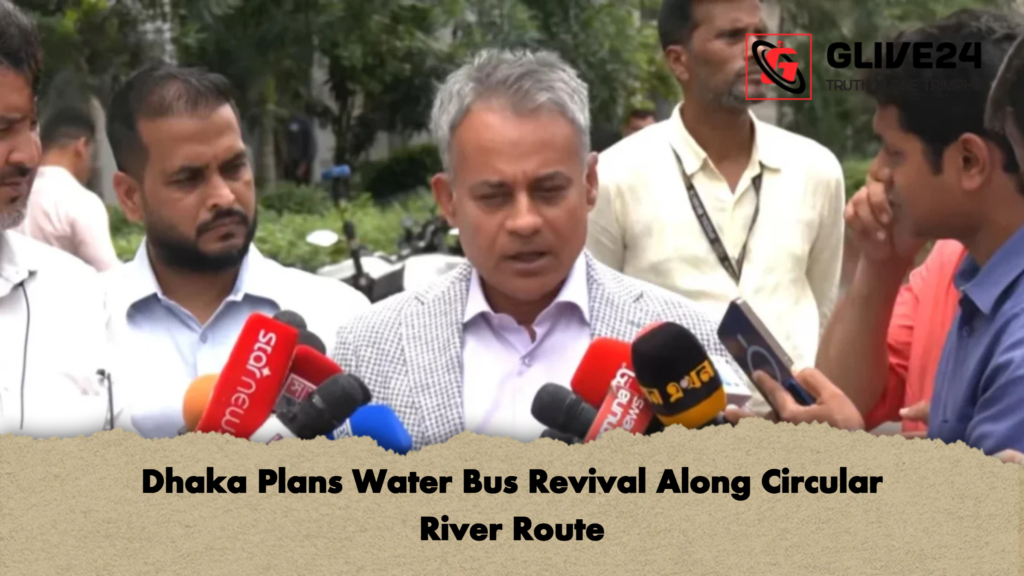
Road Transport and Shipping Minister Sheikh Robiul Alam disclosed the plan to journalists after a meeting with the Prime Minister at the Secretariat on Sunday (2 August). He said the government intends to finalise the plan within the next two months and bring private operators into the initiative before launching services in phases.
The proposed network is expected to cover parts of the river route from Ashulia through Sadarghat to Narayanganj. However, the entire stretch is not currently suitable for passenger transport. While some sections have the potential to support regular water-based commuting, others face a range of obstacles, including environmental pollution and infrastructure constraints.
The minister acknowledged that attracting passengers to a relatively long river route will be difficult when road transport can often take less time. For water buses to become a practical alternative, the service will need to be frequent, reliable and convenient enough to persuade commuters to choose the river over congested roads.
The government is therefore considering a model in which water buses would operate at intervals of 15 to 20 minutes on longer routes. Such a frequency, however, would significantly increase operating costs. The authorities are consequently looking at ways to make the proposed service commercially sustainable rather than relying solely on public funding.
Dhaka has previously seen attempts to establish water bus services. The Bangladesh Inland Water Transport Corporation (BIWTC) operated such services in the past, but the initiative struggled to attract sufficient passengers. According to the minister, passenger shortages, river pollution and high operating costs contributed to losses of around Tk 5.7 billion over the past decade, eventually leading to the suspension of the service.
The new plan is intended to address those shortcomings before services resume. Sheikh Robiul Alam said several private entrepreneurs have expressed interest in operating water buses. Their proposals reportedly extend beyond conventional passenger transport, with plans to explore the potential of river-based tourism and leisure activities.
That broader approach could give the circular river route a new role in the capital’s transport and recreational landscape. However, the success of the initiative will depend heavily on the condition of the rivers and the surrounding environment. The minister described river pollution as one of the biggest challenges facing the project, arguing that people would be reluctant to use waterways for commuting or recreation if the rivers remain polluted.
As part of the plan, relevant agencies have been assigned responsibilities related to cleaning the waterways, improving the environment along both riverbanks and making the routes more attractive to passengers and visitors. A review meeting is expected to be held in two to three months to assess progress.
Infrastructure is another concern. Low bridges at several points along the waterways, including the Tongi railway bridge, may obstruct the movement of water buses. The minister said road bridges could be raised where necessary to facilitate navigation. For railway bridges, however, an alternative arrangement is being considered under which passengers could disembark on one side, cross the obstruction and board another water bus on the other side.
The government is also reviewing the reasons behind the previous water bus project’s financial losses. According to the minister, inadequate passenger numbers, polluted waterways and the inability to operate a sufficient number of vessels were among the main factors behind the poor performance.
No separate budget has yet been allocated for the revived project. The minister said the relevant government agencies would initially carry out their respective responsibilities, while additional funding could be considered later if required.
The proposed revival comes amid continued efforts to diversify Dhaka’s transport options and make greater use of the capital’s extensive waterways. Whether the new service can succeed where earlier efforts struggled will depend on several factors: regular and frequent operations, convenient access for passengers, cleaner rivers, improved infrastructure and a financially viable operating model. The government is now expected to work with private investors and relevant agencies to finalise the framework before moving towards phased implementation.