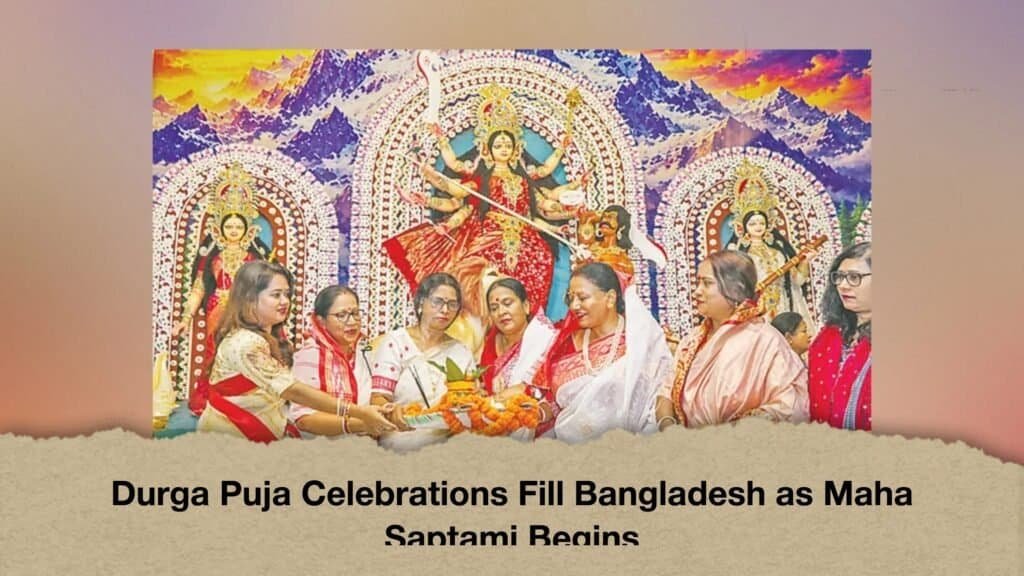
The sound of traditional drums, conch shells and cymbals, accompanied by sacred chants and ululations, marked Maha Shashthi celebrations across Bangladesh on Friday, ushering in the annual autumn festival of Durga Puja. Today, Saturday, devotees are observing Maha Saptami with prayers and religious rituals at temples and temporary pavilions across the country.
Durga Puja is the largest religious festival for Bengali Hindus, bringing together worshippers for days of devotion, cultural activities and family gatherings. The festival commemorates Goddess Durga’s victory over evil and symbolises the triumph of good over malevolent forces.
This year, the observance of Maha Saptami is scheduled over two days. On the first day, the rituals, including the entry and installation of the Nabapatrika, the commencement of Saptami rites and the prescribed Maha Saptami worship, are scheduled to take place between 7.39am and 9.57am. The second day of the observance will be held on Sunday.
Sacred rituals at Dhakeshwari National Temple
At Dhakeshwari National Temple in the capital, the Shashthi rituals began at 9am on Friday beneath a bel tree in the temple’s fairground area. The site was decorated with flowers, while fruits, curd, mango leaves, bel leaves, sacred grass and other ritual items were arranged for the ceremony.
Lamps were lit, and incense filled the air as priests took their seats and began chanting sacred mantras. The rhythmic beats of dhak drums, the sound of conch shells, bells and traditional cymbals accompanied the prayers. Devotees added to the atmosphere with ululations, a customary expression of joy and devotion during Hindu religious ceremonies.
The priests also performed arati, a ritual in which light is offered to the deity. The Shashthi Kalparambha and the prescribed Shashthi worship were completed by 9.57am. Afterwards, the priests sprinkled holy water among the devotees as a blessing.
Worshippers then gathered at the temple’s Durga Puja pavilion to offer anjali, or floral offerings, and pray for the well-being of their families and communities.
During the prayer service, priest Dharmadas Chattopadhyay prayed for the welfare of all, expressing hope that misfortune would be removed and peace would prevail in every household.
Goddess Durga formally welcomed
The evening programme on Friday included the traditional invocation and Adhibas rituals, through which Goddess Durga is ceremonially welcomed for worship.
According to Hindu religious beliefs, Durga descends from Mount Kailash, her celestial abode, to visit the mortal world as a daughter returning to her parental home. Her arrival marks a significant moment in the festival, which centres on the victory of divine power over evil.
Hindu mythology recounts that the gods, defeated by demonic forces and driven from heaven, united their powers to create Goddess Durga. Emerging from their combined divine energy, she became the embodiment of strength and the destroyer of evil.
For devotees, Durga Puja is an occasion to worship the goddess and seek blessings for peace, prosperity and protection from misfortune. The festival also conveys the enduring message that good ultimately triumphs over evil.
According to traditional beliefs, Goddess Durga has arrived this year riding a horse and will depart by boat. Hindu traditions attach symbolic interpretations to the goddess’s mode of arrival and departure, although these interpretations form part of religious and customary beliefs.
Ashtami, Navami and Dashami celebrations ahead
The festival will continue with several important religious observances in the coming days. Maha Ashtami will be celebrated on Monday, followed by Maha Navami on Tuesday. Vijayadashami, which marks the conclusion of the festival and the immersion of Durga idols, will take place on Wednesday.
Maha Ashtami is among the most significant days of Durga Puja, when devotees gather for special prayers and anjali. Maha Navami features further worship and religious ceremonies, while Vijayadashami brings the celebrations to a close.
The immersion of the idols symbolises the goddess’s return to her celestial abode. The day is also associated with the exchange of greetings and good wishes among relatives, friends and members of the wider community.
For many worshippers, the festival offers an opportunity to renew their spiritual commitments while spending time with family and friends. The final days of the celebrations are therefore marked by both religious devotion and social gatherings.
More than 33,000 puja venues across Bangladesh
According to the Bangladesh Puja Celebration Council and the Metropolitan Universal Puja Committee, Durga Puja is being organised at 33,851 venues across the country this year. Of these, 258 are located within Dhaka metropolitan area.
Temples and temporary pavilions across the country have been decorated with idols, lights and colourful displays. Devotees are gathering to participate in prayers, rituals and other religious activities throughout the festival.
Although Durga Puja is the principal religious festival of the Hindu community, its celebrations also form an important part of Bangladesh’s cultural landscape. The festivities provide opportunities for people from different communities to exchange greetings and strengthen social bonds.
As Maha Saptami gets under way, worshippers across Bangladesh are continuing their observances with prayers and offerings, seeking peace, prosperity and the removal of evil. The celebrations will culminate on Wednesday with Vijayadashami and the ceremonial immersion of the goddess’s idols.