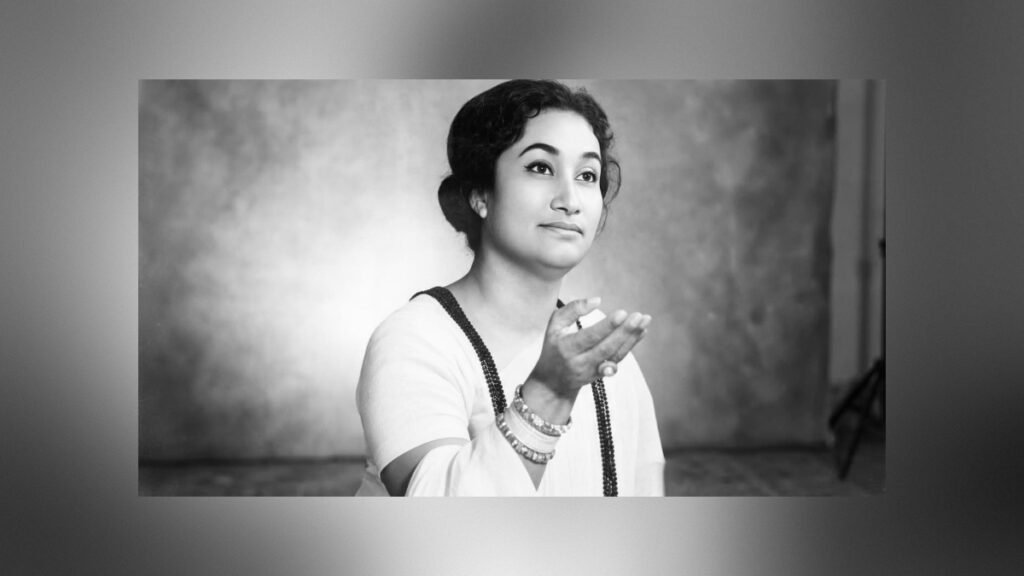
“Was this your final gift—leaving me with separation?” The emotional intensity captured in such lines reflects the extraordinary expressive range of Firoza Begum, one of the most revered voices in the history of Nazrul Sangeet. Her singing carried love, longing, devotion, rebellion and humanity, giving the songs of Kazi Nazrul Islam a distinctive place in the hearts of generations of listeners.
Some singers entertain an audience; others become part of a nation’s cultural memory. Firoza Begum belonged to the latter category. Her contribution to Nazrul Sangeet extended far beyond performance. Through her voice, interpretation and lifelong commitment to the music of Nazrul, she helped preserve and popularise a major part of Bengal’s musical heritage.
Firoza Begum was born on 28 July 1930 in the village of Raitail Ghonapara in Gopalganj. She was born into a distinguished family, to Khan Bahadur Mohammad Ismail and Begum Kawkabunnesa. Her interest in music emerged at an early age, and her artistic journey began while she was still a child.
At just 10 years old, she came into contact with Kazi Nazrul Islam and had the opportunity to receive training in his songs from the poet himself. That early association became an important foundation for her later career. Her talent was evident almost immediately. While still studying in Class Six, she performed on All India Radio, marking an unusually early entry into professional music.
In 1942, when she was only 12, a 78 rpm record featuring her Islamic songs was released by the renowned gramophone company HMV. The recording established her as a promising young voice at a time when opportunities for professional female singers were far more limited than they are today.
Her musical development continued through her association with composer, singer and lyricist Kamal Dasgupta. The two married in 1955. Firoza Begum had been living in Kolkata since 1954 before returning to Dhaka in 1967, where she continued to play a major role in Bangladesh’s cultural life.
Yet her most enduring identity was that of a Nazrul Sangeet exponent.
Her first record featuring Nazrul’s songs was released in 1949. Over the years, her voice became closely associated with the poet’s compositions. Following Nazrul’s illness, preserving the correct tunes and notations of his songs became an important cultural responsibility, and Firoza Begum played a significant role in ensuring that the compositions were performed in their appropriate musical form.
Her interpretation gave different dimensions to Nazrul’s work. Songs of love acquired tenderness and intimacy in her voice, while songs of separation carried a profound sense of longing. Devotional compositions reflected humility and spiritual feeling, whereas Nazrul’s rebellious songs resonated with strength and defiance.
In many ways, Firoza Begum became one of the principal voices through which later generations encountered Nazrul’s music.
Her repertoire, however, was not limited to Nazrul Sangeet. She performed modern Bengali songs, ghazals, qawwali, bhajans, hamd and naat. Her career also took her beyond Bangladesh, with more than 380 solo musical performances reported in different countries. Her distinctive voice and restrained yet expressive style earned her recognition across the region.
Throughout her long career, numerous recordings of her songs were released in different formats, including LPs, EPs, audio cassettes and CDs. She performed on stage and radio and remained active in the recording industry, leaving a distinctive artistic imprint across several generations of Bengali music.
One notable moment came in 1972, when she performed with Kamal Dasgupta at the Bangiya Sanskritik Sammelan in Kolkata. Their appearance was warmly received and remains a memorable part of their shared musical journey.
Firoza Begum’s contribution was recognised through numerous awards and honours. In 1979, she received the Independence Award, Bangladesh’s highest civilian honour, for her contribution to the arts. She was also awarded the Ekushey Padak, along with the Netaji Subhas Chandra Award, Satyajit Ray Award, Nasiruddin Gold Medal, Bangladesh Shilpakala Academy Gold Medal, Nazrul Academy Award and Churulia Gold Medal, among other distinctions.
Burdwan University awarded her an honorary D.Litt degree. In 2011, she received the Meril-Prothom Alo Lifetime Achievement Award, followed by the West Bengal Government’s Banga Bhushan honour in 2012.
But the most enduring measure of her contribution cannot be found in a list of awards. It lies in the continued presence of her voice in Bengali musical culture.
Firoza Begum died on 9 September 2014, aged 84. Her death marked the passing of one of the defining voices of Nazrul Sangeet. Yet the music she recorded continued to live on, reaching listeners long after she had left the stage.
Her legacy rests particularly in the way she brought Nazrul’s compositions into intimate contact with listeners. Her performances made the poet’s words and melodies accessible through emotion, clarity and musical discipline. For many admirers, her voice remains inseparable from their understanding of Nazrul’s songs.
A decade after her passing, her recordings continue to preserve that distinctive sound. The songs remain part of radio programmes, cultural events, personal music collections and the wider tradition of Bengali music.
Firoza Begum’s life was therefore more than the story of a celebrated singer. It was the story of an artist who devoted much of her career to carrying a major musical tradition from one generation to another.
She fell silent on 9 September 2014, but the songs did not.
Her voice still returns through love, separation, devotion and rebellion. Her artistic legacy remains firmly rooted in the cultural memory of Bengal, while her interpretations continue to give Nazrul’s timeless compositions a living presence.
Firoza Begum may no longer stand before an audience, but her voice remains there—in recordings, in memory and in the enduring music of Kazi Nazrul Islam.