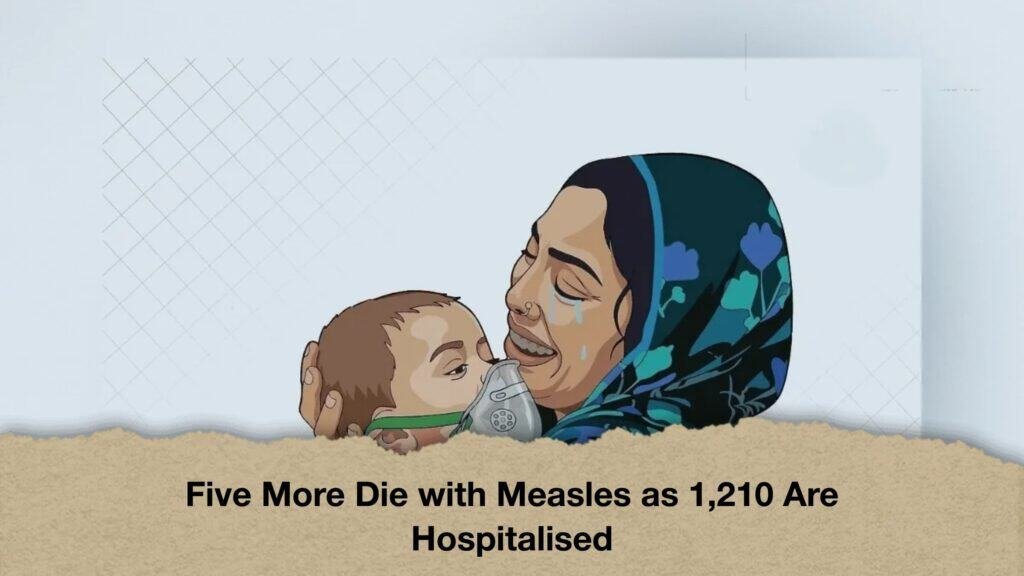
Five more people have died with symptoms of measles in Bangladesh over the past 24 hours, while 1,210 patients have been admitted to hospitals across the country with suspected measles or its symptoms.
The latest figures bring the total number of deaths from confirmed measles infections and measles-like symptoms to 1,186 since 15 March this year.
The Directorate General of Health Services (DGHS) disclosed the figures in its regular health bulletin on Friday, 16 October.
According to the DGHS, the latest hospital admissions were recorded between 8am on Thursday and 8am on Friday. Dhaka Division reported the highest number, with 480 patients admitted during the period.
Chattogram Division recorded 277 admissions, followed by Sylhet with 136, Barishal with 108, Khulna with 107 and Mymensingh with 70. Rajshahi reported 25 admissions, while Rangpur recorded the lowest number, at seven.
The figures show that Dhaka and Chattogram together accounted for more than half of all new hospital admissions reported during the 24-hour period.
Since 15 March, a total of 187,615 people with measles symptoms have been admitted to hospitals nationwide, according to the health authority. Of them, 180,002 have received treatment and been discharged.
The DGHS also reported 211,040 suspected measles cases over the same period. Laboratory tests confirmed measles in 22,972 patients.
The death toll includes 104 people who died from confirmed measles infections and 1,082 who died with symptoms of the disease. Together, the two categories account for 1,186 deaths since the outbreak-related reporting period began on 15 March.
Measles is a highly contagious viral disease that can spread through respiratory droplets and airborne particles released by an infected person. Common symptoms include fever, a runny nose, cough, red or watery eyes and a characteristic skin rash.
Although the disease primarily affects children, people of any age can become infected, particularly if they have not developed immunity through vaccination or previous infection. Severe cases can lead to complications such as pneumonia, dehydration and other potentially life-threatening conditions.
Health experts generally recommend seeking medical advice if symptoms suggest measles, particularly when a patient develops a high fever or shows signs of complications. Suspected cases should be managed according to healthcare professionals’ guidance to reduce the risk of transmission.
Vaccination remains one of the most effective ways to prevent measles and limit its spread. Ensuring that children receive the recommended doses is particularly important during periods of increased transmission.
The latest figures highlight the continuing burden on hospitals as new patients require treatment across all eight divisions. Sustained disease surveillance, timely medical care, public awareness and effective vaccination programmes remain important measures in efforts to control the outbreak.