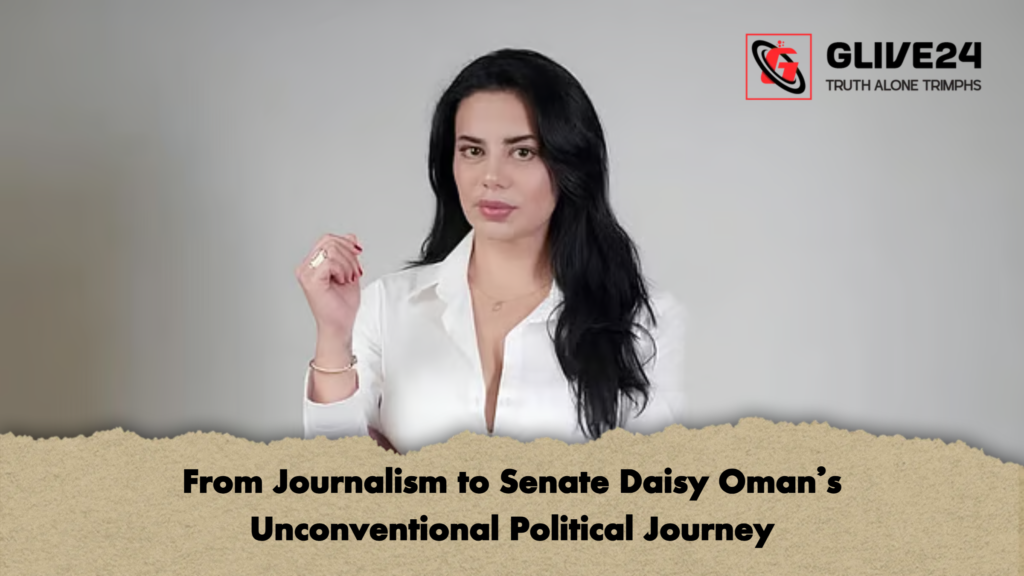
Colombia’s political landscape has been stirred by the rise of Daisy Alejandra Omaan Ortiz, a 33-year-old left-wing politician whose route to the national legislature has been markedly different from that of most lawmakers. Her professional journey has taken her from journalism to the adult entertainment industry and, eventually, into frontline politics. Her election to Colombia’s Senate has since drawn attention both at home and abroad, prompting wider discussions about political representation, social stigma and whether a person’s previous profession should influence their eligibility for public office.
Omaan was sworn in as a senator in Bogotá on Monday, representing the left-wing Historic Pact for Colombia coalition. She had been elected in March from the Norte de Santander region. Her arrival in the Senate has placed her personal history under intense public scrutiny, with debate focusing not only on her previous career but also on her political views and advocacy for social and economic rights.
Before entering politics, Omaan worked as a journalist. In 2017, she left journalism and entered the adult entertainment industry, where she became known professionally as Amaranta Hank. She quickly gained public recognition, although her career in the industry lasted only around two years. She subsequently stepped away from performing in front of cameras and began building a career in politics, eventually presenting herself as a full-time political figure.
One of the central issues associated with Omaan’s political platform is the protection of people working in the adult entertainment industry. She has argued that workers in the sector can face exploitation, discrimination and unsafe working conditions, particularly when dealing with companies and agencies. In her view, stronger legal protections and clearer regulations are needed to reduce the risk of abuse and ensure that workers have enforceable rights.
During her Senate campaign, Omaan addressed the issue in a video message, arguing that misinformation, prejudice and social double standards had contributed to the marginalisation of women working in the adult entertainment sector. She called for greater state involvement and a regulatory framework capable of protecting the rights and safety of those employed in the industry.
Her candidacy was not without controversy. Some critics argued that a person who had previously worked in pornography should not seek elected office. Omaan rejected that position, questioning why women with experience in the adult entertainment industry should be denied the opportunity to seek public support and serve in positions of political authority.
To reinforce her argument, she referred to the example of Italian former parliamentarian Ilona Staller, widely known as Cicciolina. Staller, who had worked in the adult entertainment industry, later became a member of Italy’s parliament. Omaan has used that precedent to argue that a person’s previous occupation should not automatically determine their suitability for political representation.
Omaan also maintains that her professional past has given her a perspective that could be valuable in public life. Her experience, she argues, has exposed her directly to questions surrounding discrimination, personal freedom and the economic realities faced by marginalised groups. She now intends to bring those perspectives into legislative debates and use her position in the Senate to raise issues that are often pushed to the margins of mainstream political discussion.
At the heart of her message is what she describes as a contradiction in society’s attitude towards the adult entertainment industry. While adult-oriented content is consumed widely, she argues, the people who work in the sector often face social rejection and are denied equal recognition in public life. Her political journey has therefore become part of a broader argument about whether society can separate a person’s professional past from their ability to contribute to public affairs.
Her political agenda, however, extends beyond the rights of adult entertainment workers. The left-wing senator has also expressed support for access to quality mental health services and has advocated stronger measures to prevent sexual abuse. These issues place her within a wider progressive political agenda focused on social protection, individual rights and greater institutional support for vulnerable communities.
Her election consequently represents more than an unusual personal career trajectory. It has opened a wider debate in Colombia about political representation, social acceptance and the tendency to judge public figures by their past occupations. Her path—from journalism to the adult entertainment industry and then to the country’s national legislature—challenges conventional assumptions about who can enter politics and what qualifications society considers acceptable.
The next phase of Omaan’s career will test whether she can move beyond the controversy surrounding her personal history and establish herself through legislative work. As a new senator, she will face the practical demands of parliamentary politics, including building alliances, advancing policy proposals and responding to scrutiny from both supporters and opponents. Her success will ultimately be judged not simply by the unusual nature of her past, but by the effectiveness of her work in office and her ability to turn her political promises into tangible action.