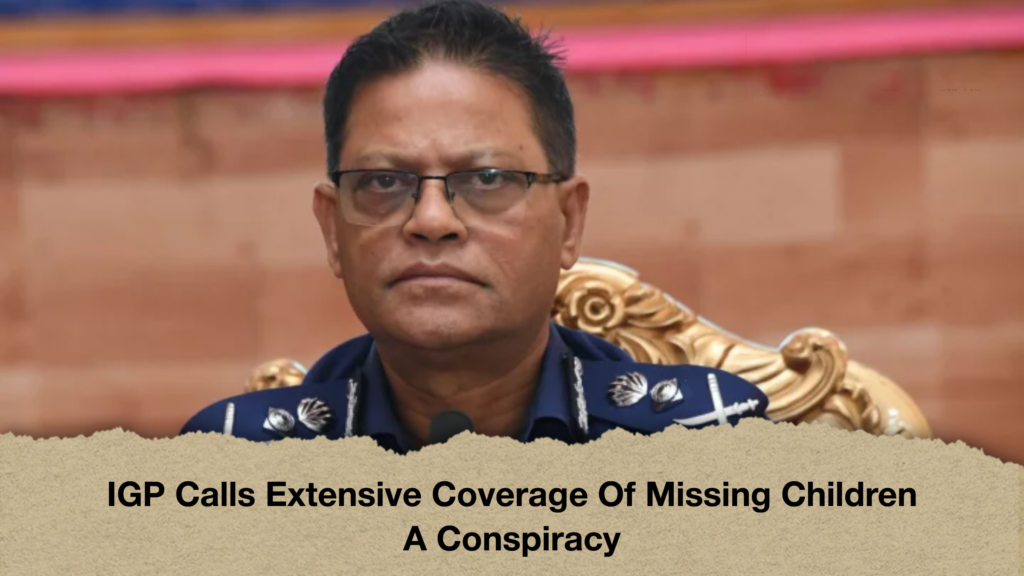
Police Inspector General Ali Hossain Fakir has described the extensive media coverage of incidents involving missing children as part of what he termed a “conspiracy”. He made the remarks on Saturday morning while taking part in a tree-planting and cleanliness programme at the Police Lines School in Rajarbagh.
The IGP said reports of children going missing were not a new phenomenon and had occurred in the past as well. However, he questioned why such incidents were now receiving heightened attention in the media.
“Cases of missing children existed before, but the extensive coverage of them in the media now is a conspiracy,” Ali Hossain Fakir said.
According to the IGP, authorities have been able to trace a large majority of children reported missing. He said 87 per cent of the missing children had subsequently been found.
The remarks come amid continuing public concern over the safety of children and the circumstances surrounding reports of missing minors. Such cases can generate considerable anxiety among families and communities, particularly when information spreads rapidly through traditional and social media platforms. The police response to missing-person reports therefore remains closely linked to public confidence, timely investigations and the accuracy of information circulated during searches.
The IGP also raised allegations concerning a small number of police personnel. He claimed that fewer than one per cent of Bangladesh Police officials were dishonest, while alleging that some of them were involved in conspiracies against the government. He said those officials had been identified.
Ali Hossain Fakir also accused some journalists and content creators of circulating what he described as fabricated and baseless information against the government. His comments reflect concerns within the authorities over the spread of unverified claims, particularly through rapidly expanding digital platforms.
Earlier, while attending a separate tree-planting programme at Viqarunnisa Noon School and College, the IGP spoke about the police response to drug trafficking and street crime. He said repeated operations against drugs and mugging had resulted in many offenders being brought under the law on multiple occasions.
However, he pointed to difficulties in keeping suspected drug dealers and muggers in custody for extended periods. According to him, gaps in the legal process often mean that such offenders cannot remain in prison for long after being arrested.
The comments highlight a broader challenge for law-enforcement agencies: arrests alone may not be sufficient to curb recurring offences unless investigations, prosecution and judicial proceedings can proceed effectively. The issue is particularly significant in cases involving drug trafficking and street crime, where repeat offending can contribute to public insecurity.
The IGP’s statements on missing children, police misconduct, media reporting and criminal justice were made during public programmes focused on environmental and community initiatives. His comments are likely to draw attention because allegations involving missing children and the circulation of information about such cases can have a direct impact on families seeking help and on public perceptions of law enforcement.