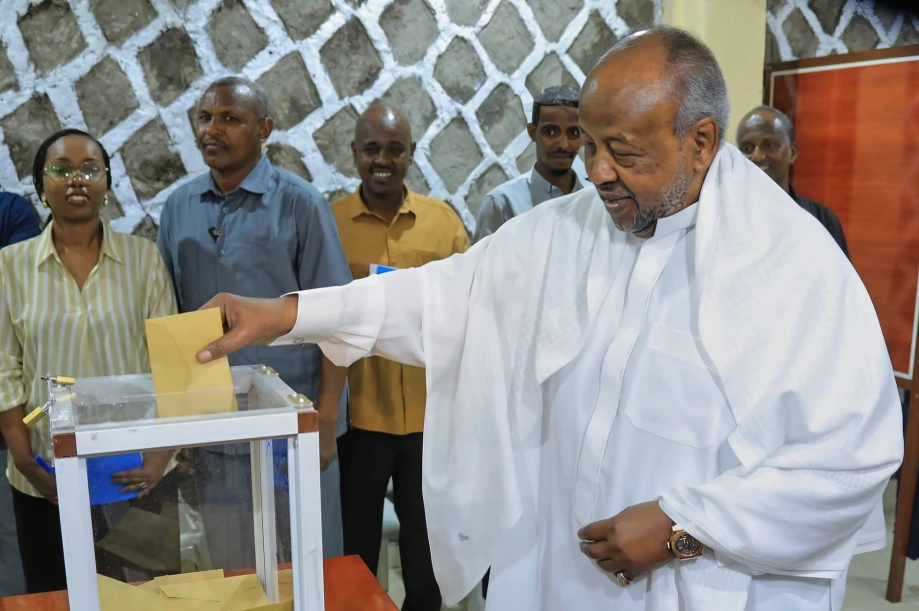
Reflecting on the political landscape of the Horn of Africa, April 2026 marked a significant continuity in leadership for the Republic of Djibouti. Following the presidential elections held on April 10, 2026, official results confirmed that incumbent President Ismaïl Omar Guelleh secured a decisive victory, capturing 97.81% of the vote. This triumph confirms his sixth consecutive term as the head of state for the small but strategically vital nation.
Governance And Political Context
Now 78 years old, President Guelleh has steered Djibouti for over two decades, having first assumed office in 1999. His rise to power followed the presidency of his uncle, Hassan Gouled Aptidon, effectively establishing a family-led political system that has defined the nation’s governance for over half a century.
The path to this sixth term was smoothed by significant legislative changes. In the year prior to the election, the country’s parliament voted to remove presidential age limits, a move that removed barriers to Guelleh’s continued candidacy.
The electoral process itself was marked by limited opposition. President Guelleh faced a single challenger, Mohamed Farah Samatar, a former member of the ruling party. This narrow field of candidates reflects a broader trend in Djibouti’s political environment, where opposition groups frequently opt to boycott elections, citing systemic restrictions on political freedoms and a lack of genuine competitive avenues. Election officials described the voting process as peaceful, with celebrations occurring at the presidential palace shortly after the results were confirmed.
Geopolitical And Economic Significance
Djibouti’s significance on the global stage far outweighs its small geographic size and population of approximately one million people. Situated at the mouth of the Red Sea and overlooking the Gulf of Aden, the country occupies one of the world’s most vital global shipping chokepoints.
This geographic positioning has made Djibouti a hub for international military presence. The nation hosts several permanent foreign military bases—including those operated by the United States, China, France, and Japan—each seeking to project influence and ensure security in a turbulent region.
Economically, Djibouti relies heavily on the revenue generated from these military hosting arrangements. Complementing this is the country’s role as a primary gateway for international trade, particularly through the provision of essential port services for landlocked neighbouring Ethiopia. Together, these factors form the bedrock of the Djibouti economy, ensuring the state remains a pivotal player in regional stability and global maritime logistics.
Election Summary And Governance Overview
| Metric | Detail |
| President | Ismaïl Omar Guelleh (Age 78) |
| Election Date | 10 April 2026 |
| Official Vote Share | 97.81% |
| Term Number | 6th Term |
| Key Opponent | Mohamed Farah Samatar |
| Governance Legacy | Succeeded uncle Hassan Gouled Aptidon in 1999 |
| Strategic Economic Drivers | Foreign military bases, port services (Ethiopia trade) |
| Regional Status | Strategic shipping hub (Red Sea/Gulf of Aden) |