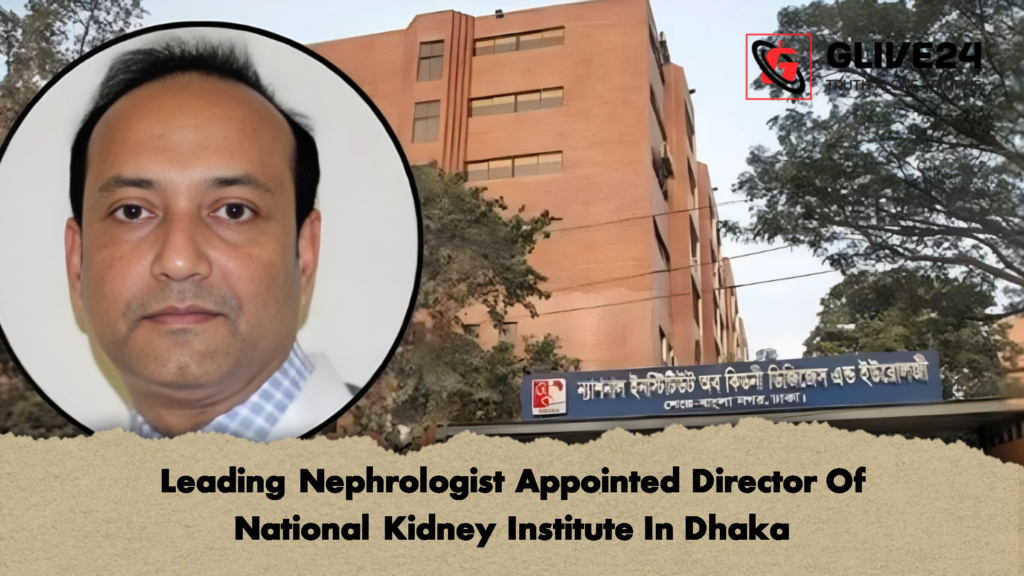
Distinguished kidney specialist Dr Mohammad Rashed Anwar has been appointed Director of the National Institute of Kidney Diseases and Urology, signalling a key leadership transition at one of Bangladesh’s foremost centres for specialised renal care.
The appointment was formalised through an official notification issued by the Ministry of Health and Family Welfare. Under the directive of the Health Services Division, Dr Anwar will serve concurrently as Director and Professor of Nephrology, combining administrative authority with academic leadership.
A career defined by steady advancement
Before assuming his new responsibilities, Dr Anwar served as Associate Professor of Nephrology at NIKDU, where he earned recognition for his clinical expertise and dedication to teaching. His subsequent in-situ promotion to Professor further underscored his professional standing and contributions to the field.
His elevation to Director comes at a time when Bangladesh is witnessing a growing burden of kidney-related diseases, making strong institutional leadership increasingly vital.
Academic foundation and medical training
Born on 1 January 1968, Dr Anwar completed his MBBS degree at Chittagong Medical College, a leading institution in medical education. He later pursued advanced training in nephrology, obtaining an MD from Bangabandhu Sheikh Mujib Medical University, widely regarded as the country’s premier postgraduate medical university.
His academic journey laid the groundwork for a career that integrates patient care, research, and medical education—three areas in which he has made sustained contributions.
Contributions to nephrology and healthcare services
Since entering government service in 2001, Dr Anwar has held several important roles within Bangladesh’s public healthcare system. His work has had a tangible impact on the development of kidney care services, particularly in:
- Treatment and management of chronic kidney disease (CKD)
- Expansion and modernisation of dialysis services
- Advancement of kidney transplantation programmes
- Training and mentoring of junior doctors and medical students
He has also contributed to academic research, co-authoring numerous scientific publications on kidney diseases, dialysis techniques, and transplant outcomes. These contributions have helped strengthen evidence-based medical practices in Bangladesh.
Colleagues and peers widely regard him as a committed educator who has played a significant role in nurturing future specialists in nephrology.
Appointment overview
| Category | Details |
|---|---|
| Name | Dr Mohammad Rashed Anwar |
| New Role | Director & Professor (Nephrology) |
| Institution | National Institute of Kidney Diseases and Urology (NIKDU) |
| Previous Position | Associate Professor (Nephrology) |
| Government Service Entry | 2001 |
| MBBS | Chittagong Medical College |
| MD (Nephrology) | Bangabandhu Sheikh Mujib Medical University |
| Areas of Expertise | CKD management, dialysis, transplantation |
| Research Role | Co-author of multiple scientific studies |
Expectations under new leadership
Healthcare professionals have expressed optimism that Dr Anwar’s appointment will bring renewed momentum to NIKDU’s operations. His leadership is expected to focus on improving both service delivery and institutional capacity.
Key anticipated priorities include:
- Expanding access to advanced dialysis facilities
- Strengthening kidney transplant infrastructure
- Promoting research and innovation in nephrology
- Integrating modern medical technologies into patient care
- Enhancing training programmes for healthcare professionals
Given the increasing prevalence of kidney diseases—often associated with diabetes, hypertension, and lifestyle changes—such initiatives are considered essential for improving national health outcomes.
Broader significance for Bangladesh’s healthcare system
The appointment comes amid ongoing efforts to modernise Bangladesh’s healthcare sector, with a growing emphasis on specialised institutions and advanced treatment capabilities. As a leading centre for renal and urological care, NIKDU occupies a central role in addressing the country’s rising demand for specialised medical services.
Dr Anwar’s combined experience in clinical practice, research, and administration positions him to guide the institute through a critical phase of development. His leadership is expected not only to enhance patient care but also to strengthen Bangladesh’s capacity in nephrology at both national and regional levels.
As he takes charge, stakeholders across the medical community will be closely observing how his tenure shapes the future of kidney care services and contributes to the broader advancement of specialised healthcare in Bangladesh.