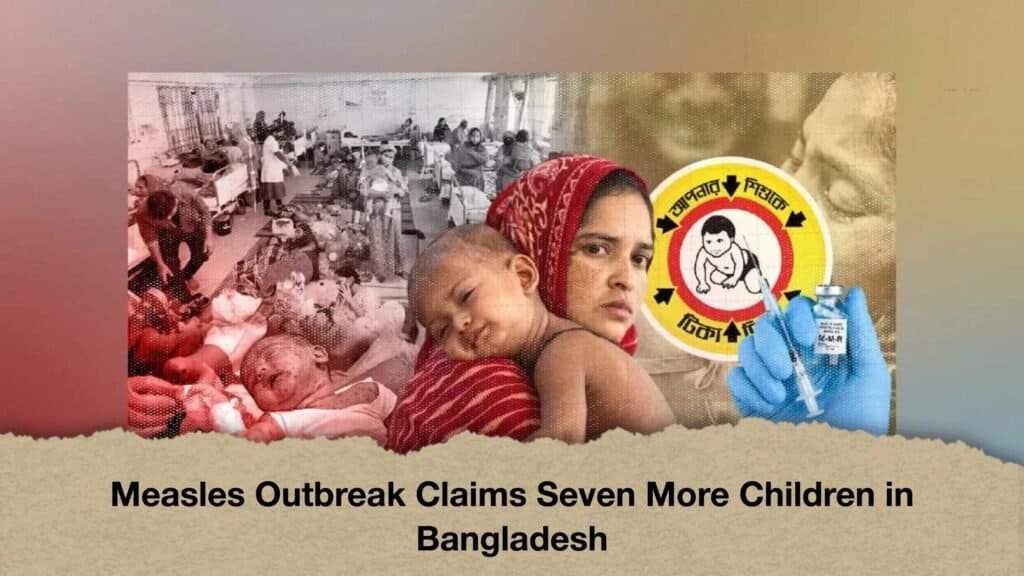
Seven more children have died with measles-related symptoms across Bangladesh in the past 24 hours, while 1,351 new suspected and confirmed cases have been recorded, according to the Directorate General of Health Services (DGHS).
The latest figures were released in the DGHS’s regular measles situation report on Friday, 27 November, highlighting the continuing public health concerns surrounding the outbreak.
According to the report, three deaths were recorded in Dhaka Division and another three in Sylhet Division. One additional death occurred in Khulna Division. All seven victims died with symptoms associated with measles during the 24-hour reporting period.
Since 15 March, the cumulative death toll from confirmed measles infections and suspected measles cases has reached 1,378, the DGHS reported. Of these, 106 deaths were attributed to laboratory-confirmed measles, while 1,272 involved patients who died with suspected measles symptoms.
The number of new suspected infections also remains high. A further 1,273 people developed symptoms consistent with measles during the latest reporting period, taking the cumulative number of suspected cases to 262,808 since 15 March.
In addition, 78 new confirmed infections were reported over the same 24 hours. This brings the total number of confirmed measles cases recorded across the country to 26,554.
The combined figure for new suspected and confirmed cases therefore stands at 1,351, reflecting the continued spread of the disease and the pressure it is placing on healthcare services.
Hospital admission figures provide another indication of the scale of the outbreak. Since 15 March, a total of 235,482 patients suspected of having measles have been admitted to hospitals across Bangladesh. During the same period, 226,440 patients have recovered sufficiently to be discharged and return home.
Measles is a highly contagious viral disease that spreads through respiratory droplets and airborne particles released when an infected person coughs, sneezes or breathes. Common symptoms include high fever, coughing, a runny nose, red or watery eyes and a characteristic rash that usually develops several days after the initial symptoms.
Although many patients recover with appropriate care, measles can cause serious complications, particularly among young children. These include pneumonia, severe diarrhoea, dehydration and, in some cases, life-threatening complications. Children who have not received the recommended measles-containing vaccines are particularly vulnerable to infection.
Vaccination remains the most effective way to prevent measles and reduce the risk of severe illness. Early recognition of symptoms, timely medical attention and appropriate infection-control measures are also important in limiting transmission, especially in households and communities with young children.
The latest DGHS figures underline the continuing challenge facing Bangladesh’s healthcare system. With suspected infections, confirmed cases and deaths still being reported, the outbreak remains a significant concern for child health and public health authorities.
The deaths recorded in Dhaka, Sylhet and Khulna also demonstrate that the impact is not confined to a single region. Continued surveillance, access to medical treatment and effective vaccination coverage remain essential to protecting vulnerable children and bringing the outbreak under control.