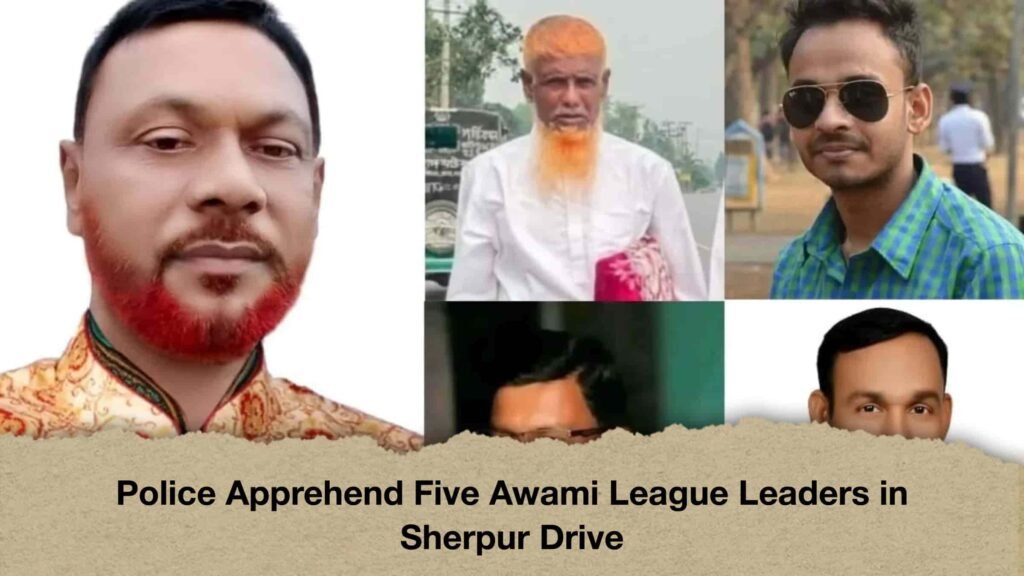
Law enforcement authorities in Nakla Upazila, situated within the northern district of Sherpur, have detained five individuals associated with the Bangladesh Awami League and its affiliate bodies following targeted drives conducted across various local venues.
The security operation, executed on the evening of 15 August, led to the arrest of key local grassroots figures. Those taken into custody have been identified as Mokhlesur Rahman (65), President of the Chandrakona Union Awami League; Habibur Rahman (57), General Secretary of Ward 1 Awami League in Nakla Municipality; Hamidul Islam (48), Vice-President of Ward 4 Gouradwar Union Awami Jubo League; Naeem Parvez (32), former Deputy Social Services Secretary of the Dhaka University Chhatra League central committee; and Sultan Miah (50), an activist representing the Ganapaddi Union Awami League.
Confirming the law enforcement drive, Ripon Chandra Gop, Officer-in-Charge (OC) of Nakla Police Station, explained that precautionary measures were implemented throughout the area to maintain public order and prevent potential disruptions or unlawful gatherings. Police officials confirmed that all five individuals were presented before the magistrate’s court the following day to facilitate ongoing legal proceedings.
The police actions have drawn sharp criticism from regional party leaders. Abdur Rashid Sarkar, Publicity and Publication Secretary of Nakla Upazila Awami League, strongly rejected the rationale behind the detentions. He claimed that none of the arrested individuals had pending warrants or active cases registered against them. Furthermore, he alleged that the drives were deliberately executed to thwart scheduled memorial programmes and peaceful observances organized by the political organisation.
Across the country, police departments routinely increase operational vigilance and deploy preventive measures around major national dates to mitigate security risks, prevent political unrest, and protect local infrastructure. Law enforcement authorities maintained that their actions in Nakla were purely preventive, aimed at upholding civil order, protecting citizens, and ensuring peace across the municipality and its surrounding rural unions.