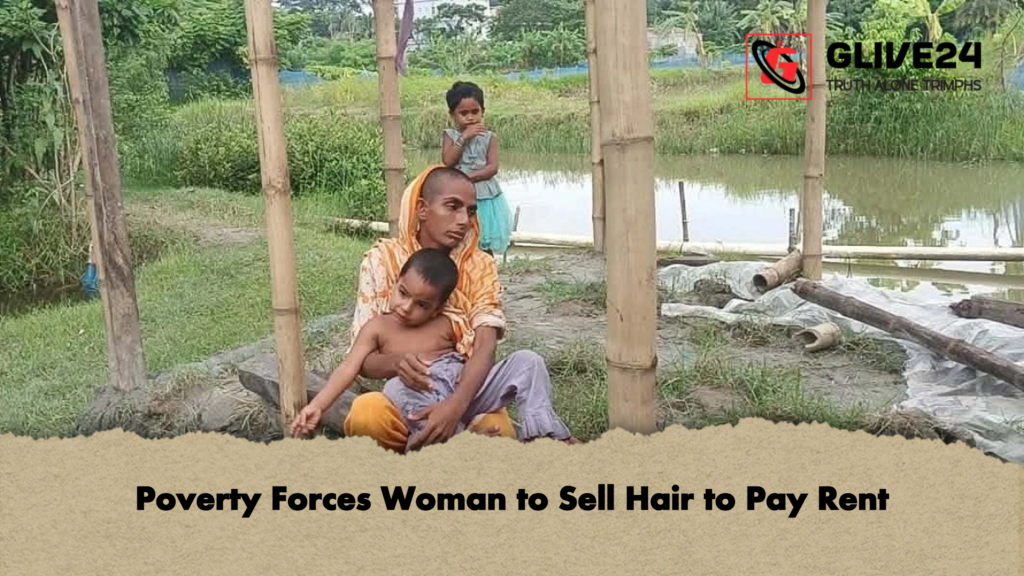
For Rehana Khatun of Santoshpur village in Rampal upazila of Bagerhat, meeting even the most basic needs of life has become a daily struggle. With no secure income and two children to support, she was forced to sell her own hair to raise Tk 500 to pay rent. Today, after losing the small rented shelter where she once lived, Rehana and her children are spending their days beside the Khulna-Mongla railway line.
According to local residents, Rehana had previously lived with her two children in a small makeshift rented room. Persistent difficulty in paying the rent eventually left her with no option but to leave. With nowhere else to go, she moved with her children to a vacant area of government land beside the railway line.
Some local residents have since helped her put up a basic bamboo framework intended to become a home. However, the structure has remained incomplete for several months. Rehana cannot afford the tin sheets, fencing materials or other essentials needed to turn it into a habitable shelter.
The unfinished structure now stands beside a railway bridge near the entrance to Santoshpur village. It has bamboo poles but no proper walls or roof. As a result, Rehana and her children remain exposed to intense heat, rain and difficult weather conditions. The shelter offers little protection, yet it is currently their only possible place to stay.
Local resident Ferdousi Begum said Rehana’s circumstances became particularly distressing when she noticed that Rehana had suddenly cut off her hair. When asked what had happened, Rehana reportedly broke down in tears and explained that she had sold her hair to collect Tk 500 for rent.
The incident has deeply affected people in the area, highlighting the extent of the family’s financial hardship. For Rehana, finding enough money for food and other daily necessities is already difficult. Without a stable source of income, even a modest expense can become an overwhelming burden.
Another resident, Rahim Sheikh, described Rehana’s situation as extremely distressing and urged the authorities to arrange proper accommodation for her and her children. Mahidul Islam said local people had managed to construct the bamboo framework, but assistance with tin sheets and fencing could make it possible to provide the family with a basic shelter.
Rehana said she continues to endure the hardship for the sake of her children. She has no secure home and struggles to arrange food for the family. Her greatest wish now is simple: to have a safe place where she can raise her children without fear of losing their shelter again.
Residents have called for government housing assistance for families facing extreme poverty and homelessness. They also believe that local representatives, charitable organisations and financially capable members of the community could help complete the unfinished structure.
Rehana’s story is a stark reminder of how poverty can push vulnerable families into desperate choices. For her and her two children, a roof over their heads is not a luxury. It is an urgent necessity.