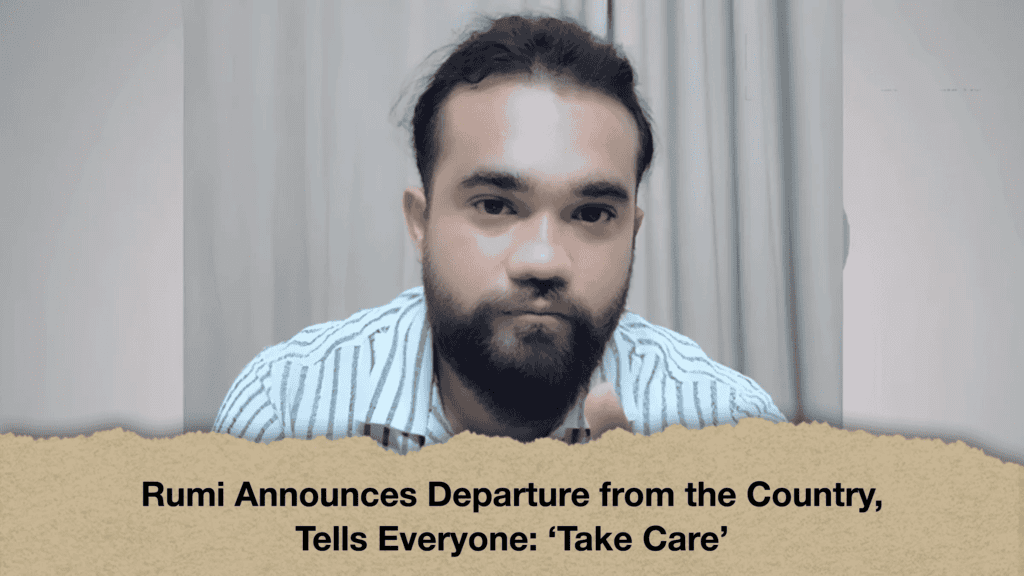
Shahjalal Rumi, the father of a seven-year-old child at the centre of a sexual abuse allegation involving a madrasa in Tongi, has said he has left Bangladesh. He disclosed the information in a text message sent at around 8pm on Monday, although he did not reveal which country he was in.
In the message, Rumi wrote: “I am no longer in this country. I am not thinking about these matters any more. Whatever happens, happens. You all stay well.”
He also accused the principal of Qariul Quran International Cadet Madrasa in Auchpara, Tongi, of making false statements. “Despite being an Islamic scholar, he has told many lies and continues to do so,” Rumi alleged in the message. The principal’s response to the accusation was not available.
The development comes amid a legal dispute following allegations that a seven-year-old pupil was sexually abused at the madrasa on 21 October. The allegation prompted a police case and drew widespread public attention after a video of a subsequent confrontation between the child’s father and a teacher circulated on social media.
According to the account of the incident, Rumi assaulted madrasa teacher Md Moslem Uddin after the allegation emerged. The teacher was subsequently handed over to the police. The incident generated debate across the country, with public discussion focusing both on the alleged abuse and on the decision to take the law into one’s own hands.
Following the incident, Rumi lodged a case at Tongi West Police Station alleging sexual abuse of his child. The complaint initiated a legal process through which the allegation against the teacher could be investigated and assessed by the relevant authorities.
A counter-case was subsequently filed on behalf of the madrasa’s principal. In that case, Rumi was accused of stealing Tk 1.7 million, along with other alleged offences. The counter-case added another dimension to the dispute, placing the child’s father at the centre of separate legal proceedings.
Rumi reportedly became less visible after the counter-case was filed. His latest message, in which he said he had left Bangladesh, is the first indication in the account of his current whereabouts, although it provides no details about his destination or when he departed.
His statement alone does not independently establish the circumstances of his departure. No further information was available about whether he had informed the authorities, whether his departure would affect the proceedings, or what steps might follow in either case.
The allegations against the teacher and the accusations against Rumi remain matters for the legal process to examine. Neither the allegation of sexual abuse nor the charges brought in the counter-case should be treated as established fact without the findings of the relevant investigation and judicial proceedings.
The case has also drawn attention to the importance of protecting children in educational and religious institutions. Allegations of sexual abuse require a careful investigation that prioritises the child’s safety, privacy and well-being while ensuring that the rights of all parties are respected.
Rumi’s announcement that he has left the country raises questions about the next stage of the legal proceedings, but the available information does not establish whether his departure will affect either case. The circumstances surrounding the allegations, the counter-case and the father’s reported departure remain to be clarified through reliable information and the appropriate legal process.