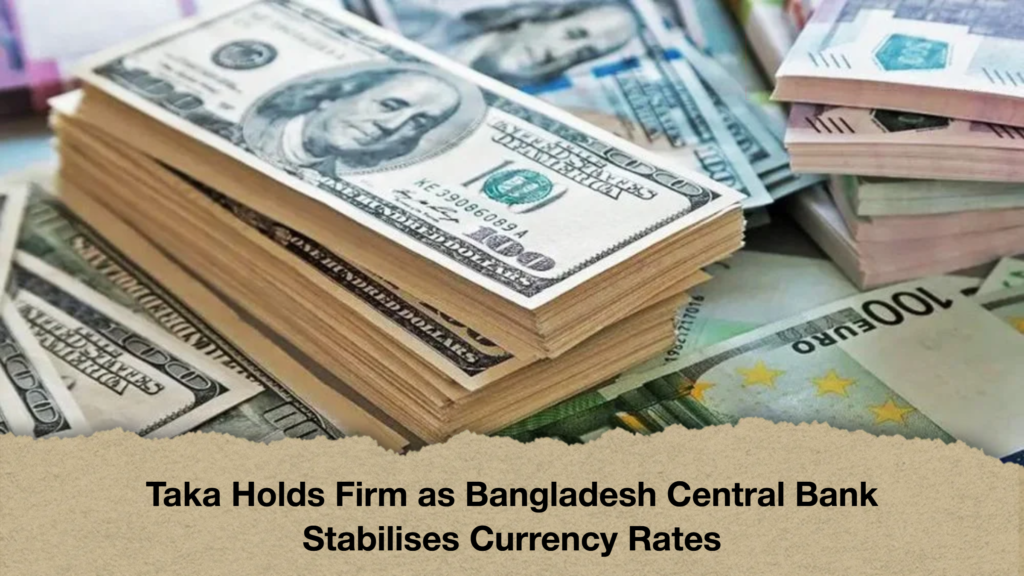
Bangladesh’s foreign exchange market displayed renewed stability on Thursday, 24 September 2026, as the domestic currency held its ground following recent policy adjustments linked to International Monetary Fund (IMF) loan conditions.
Commercial banks and central bank figures recorded interbank US dollar rates hovering around 123.15 taka. This follows a volatile period in July when the dollar initially opened at 122.85 taka before climbing to a peak of 123.82 taka. The subsequent easing of greenback valuation offers welcome operational predictability to local importers and commercial traders.
Recent fluctuations stemmed largely from central bank interventions designed to satisfy IMF structural benchmarks, which required gradual exchange rate corrections and currency depreciation. Despite ample liquidity within commercial banking channels, regulatory authorities adjusted values to align closer with market dynamics. Tight central bank oversight paired with steady inward remittance flows from migrant workers has narrowed the historical spread between official bank rates and kerb market figures.
| Foreign Currency | Exchange Rate in Taka (BDT) |
| US Dollar | 123.15 |
| Euro | 140.14 |
| British Pound | 163.01 |
| Canadian Dollar | 87.30 |
| Australian Dollar | 86.64 |
| Chinese Yuan | 18.34 |
| Singapore Dollar | 96.18 |
| Indian Rupee | 1.28 |
| Malaysian Ringgit | 30.24 |
| Saudi Riyal | 32.81 |
| Qatari Riyal | 33.73 |
| Kuwaiti Dinar | 399.39 |
| UAE Dirham | 33.60 |
Financial analysts note that maintaining stable exchange rates remains vital for controlling import-driven inflation, particularly regarding essential food commodities, industrial raw materials, and fuel shipments. While currency values fluctuate based on international trading sessions and market demand, current trends suggest a more balanced foreign exchange environment for Bangladeshi enterprise going into the final quarter of the year.