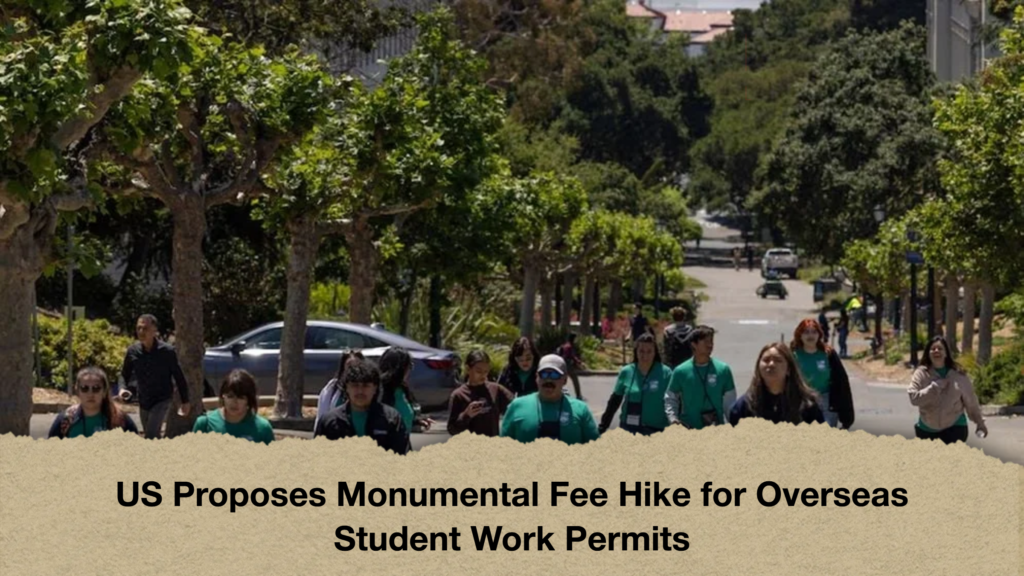
The United States Department of Homeland Security (DHS) has unveiled a sweeping regulatory proposal that threatens to radically alter the financial landscape for international students seeking practical work experience in America. Under the new draft rules, foreign scholars on F-1 visas could face training fees reaching as high as $70,000 (£53,500) to participate in the Optional Practical Training (OPT) scheme, alongside a proposed $30,000 fee for additional work training extensions.
Details of the unprecedented fee restructure were outlined in an official government notice published on Wednesday, signalling a dramatic shift in Washington’s immigration policy. Currently, international candidates pay approximately $500 to cover the administrative processing of their OPT permits. If enacted, the proposal would represent a multi-thousand-per-cent increase, posing an immediate financial barrier for thousands of scholars planning post-graduation careers in North America.
The OPT initiative is a vital component of the American higher education framework. It permits enrolled F-1 visa holders to work up to 20 hours per week in positions directly related to their field of study during academic terms. Furthermore, it offers graduates a temporary window to secure full-time, hands-on employment within their discipline after completing their degree. Students specializing in Science, Technology, Engineering, and Mathematics (STEM) subjects enjoy extended provisions, allowing them to remain and gain valuable professional training in the country for up to three years.
For many international graduates, OPT acts as an irreplaceable stepping stone to build professional networks and transition onto the H-1B skilled worker visa pathway. However, this talent bridge faces severe strain amidst broader immigration crackdowns. The Trump administration has actively pursued restrictive measures and higher filing fees across various employment-based visa categories, including the H-1B system.
Homeland Security officials defended the proposal, contending that the elevated fee structure and administrative overhaul are designed to curb immigration fraud, improve systemic transparency, and protect employment prospects for domestic workers.
Legal experts and academic institutions expect immediate courtroom challenges over the statutory validity and disproportionate burden of the proposed fees. The public has been given a 30-day period to submit comments on the notice, after which DHS must allow a further 60 days following final rule approval before implementation. Prospective students worldwide must now weigh whether the soaring costs will redefine the value of pursuing higher education in the United States.